
To seize the global opportunities brought about by the rapid development of artificial intelligence (AI) technology and to further promote the deep integration of cutting-edge technology with the real economy and the digital economy, Ju.com officially announces the establishment of a $30 million AI special investment fund.
This fund will systematically invest around core AI technologies and the next generation of intelligent product forms. Key investment areas include, but are not limited to: • AI foundational models and underlying technologies • AI Agent products and solutions, encompassing autonomous decision-making, task execution, and automation scenarios • Intelligent robotics-related products, including software-driven robots, Embodied AI, and human-robot collaboration systems • Convergent applications of AI and Blockchain / Web3, such as smart contract automation, on-chain governance and risk control, and decentralized intelligent execution systems • Commercialization and implementation of AI in fields like fintech, enterprise services, content generation, and data analytics
This special fund will invite several listed companies and industrial capital to co-invest. By leveraging synergies from industrial resources, application scenarios, and financial support, it aims to provide portfolio projects with full-cycle empowerment, from technology validation and commercial implementation to long-term strategic partnerships.
Ju.com has always adhered to a long-term value and technological innovation-oriented approach, continuously building an open, robust, and sustainable technology investment ecosystem. The establishment of this AI special fund represents a crucial strategic move by Ju.com in the context of cutting-edge technology and the intelligent trend, and also reflects our high recognition of the long-term industrial value of AI, AI Agent, and robotics technologies.
In the future, Ju.com will collaborate with outstanding entrepreneurial teams, technical talent, and industrial partners worldwide to jointly promote the large-scale application and industrial upgrading of the next generation of intelligent products.
This is hereby announced.
#AI #Jucom


JU Blog
2026-01-09 04:40
Ju.com Announcement on the Establishment of a $30 Million AI Special Investment Fund

Disclaimer:Contains third-party content. Not financial advice.
See Terms and Conditions.
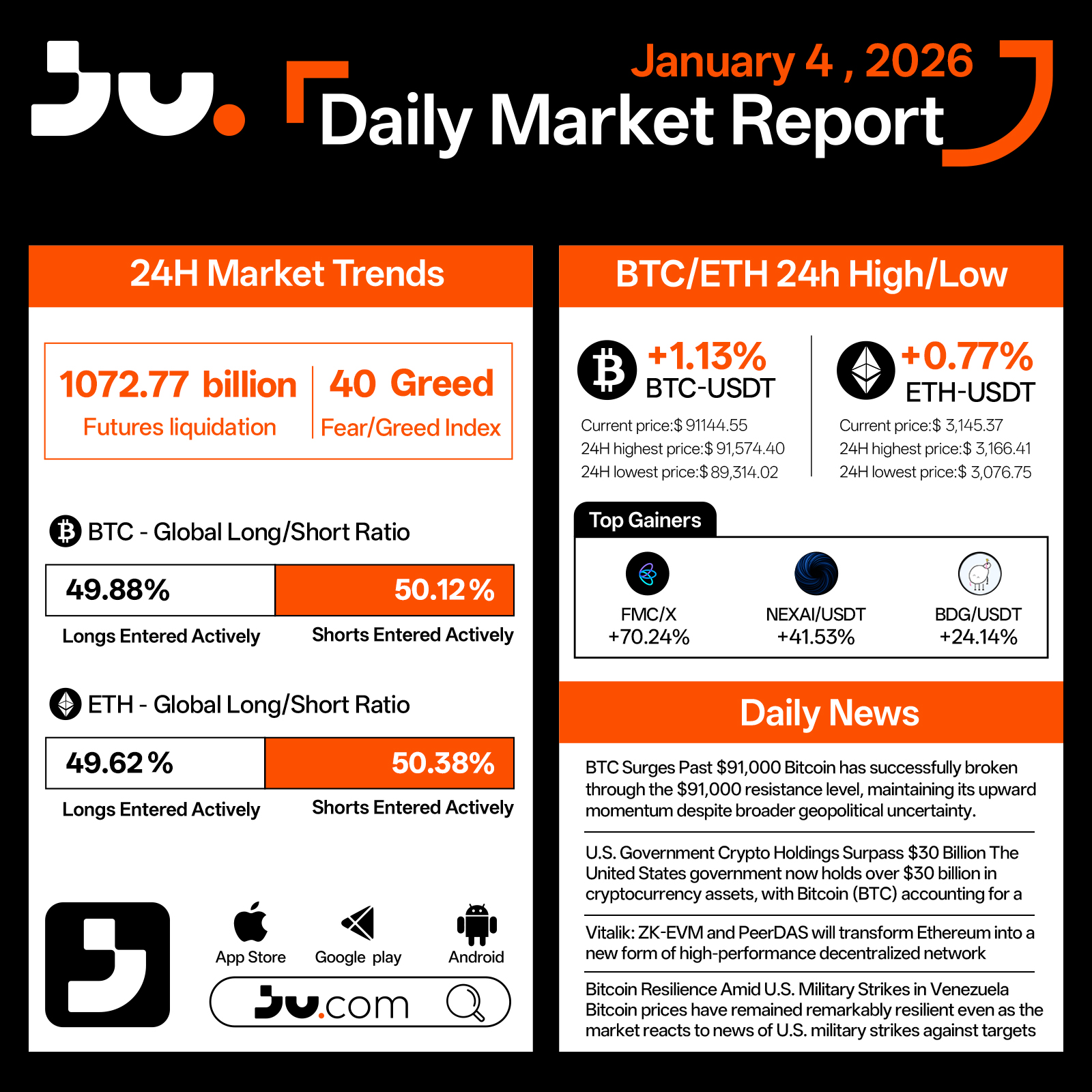
On January 4, the crypto market carried forward its early-year momentum, with Bitcoin decisively breaking through a key resistance level and lifting overall sentiment. Over the past 24 hours, market activity expanded notably, with total turnover and liquidations reaching $107.27 billion, while the Fear & Greed Index climbed to 40, signaling a clear rebound in risk appetite compared with year-end conditions.
Bitcoin rose 1.13% to $91,144.55, posting an intraday high of $91,574.40 and a low of $89,314.02. The successful break above the $91,000 level and subsequent consolidation suggest sustained bullish momentum. Ethereum followed with a 0.77% gain to $3,145.37, trading within a $3,166.41–$3,076.75 range and maintaining a steady correlation with BTC’s upward move. Positioning remained balanced, with BTC longs at 49.88% and ETH longs at 49.62%, indicating that the advance has been driven more by spot demand and trend-following capital than by excessive leverage.
Structural opportunities remained active across smaller-cap assets. FMC/X surged 70.24%, while NEXAI/USDT and PIPPIN/USDT advanced 41.53% and 24.14%, respectively. These moves reflect selective capital rotation as traders respond to Bitcoin’s breakout without broad-based risk expansion.
Macro and fundamental signals added depth to the move. The U.S. government disclosed that its cryptocurrency holdings now exceed $30 billion, with Bitcoin accounting for 97% of the total, reinforcing BTC’s status as the dominant digital reserve asset. On the Ethereum front, Vitalik Buterin stated that ZK-EVM and PeerDAS will transform Ethereum into a new form of high-performance decentralized network, strengthening long-term scalability and data availability narratives. Despite heightened geopolitical headlines, including reports of U.S. military strikes in Venezuela, Bitcoin prices remained resilient, underscoring its growing role as an asset capable of withstanding external shocks.
Overall, the opening days of 2026 show a market regaining directional clarity. Bitcoin’s breakout provides a clear technical anchor, while Ethereum’s roadmap supports medium-term confidence. With liquidity and sentiment improving in tandem, the crypto market appears to be entering the early phase of a new structural advance.
#cryptocurrency #blockchain
JU Blog
2026-01-09 04:40
Bitcoin Breaks Above $91K as Risk Appetite Rebounds Amid Geopolitical Noise - Jan 4, 2026
Disclaimer:Contains third-party content. Not financial advice.
See Terms and Conditions.
2025 marked prediction markets' breakthrough into mainstream consciousness. Polymarket alone processed over 95 million trades with $21.5 billion in volume, while the entire ecosystem reached $40-44 billion. With 1.77 million total users and monthly actives stabilizing at 400,000-500,000, these numbers dwarf many DeFi protocols.
💰 The Reality Check: Why 95% Lose
Only 5.08% of wallets realized profits over $1,000, with just 30.2% profitable overall. The top 0.04% of addresses captured over 70% of total profits, accumulating $4 billion in realized gains. This zero-sum game demands strategy over speculation.
🔄 The Turning Point: ICE's $2B Investment
In October 2025, the NYSE parent company ICE valued Polymarket at $9 billion with a $2 billion investment. The platform acquired a CFTC-licensed exchange for U.S. market re-entry and announced migration from Polygon to its own Ethereum L2 (POLY). Market expects token generation event after the 2026 World Cup.
🚨 Risk Controls: The Zero Line of Defense
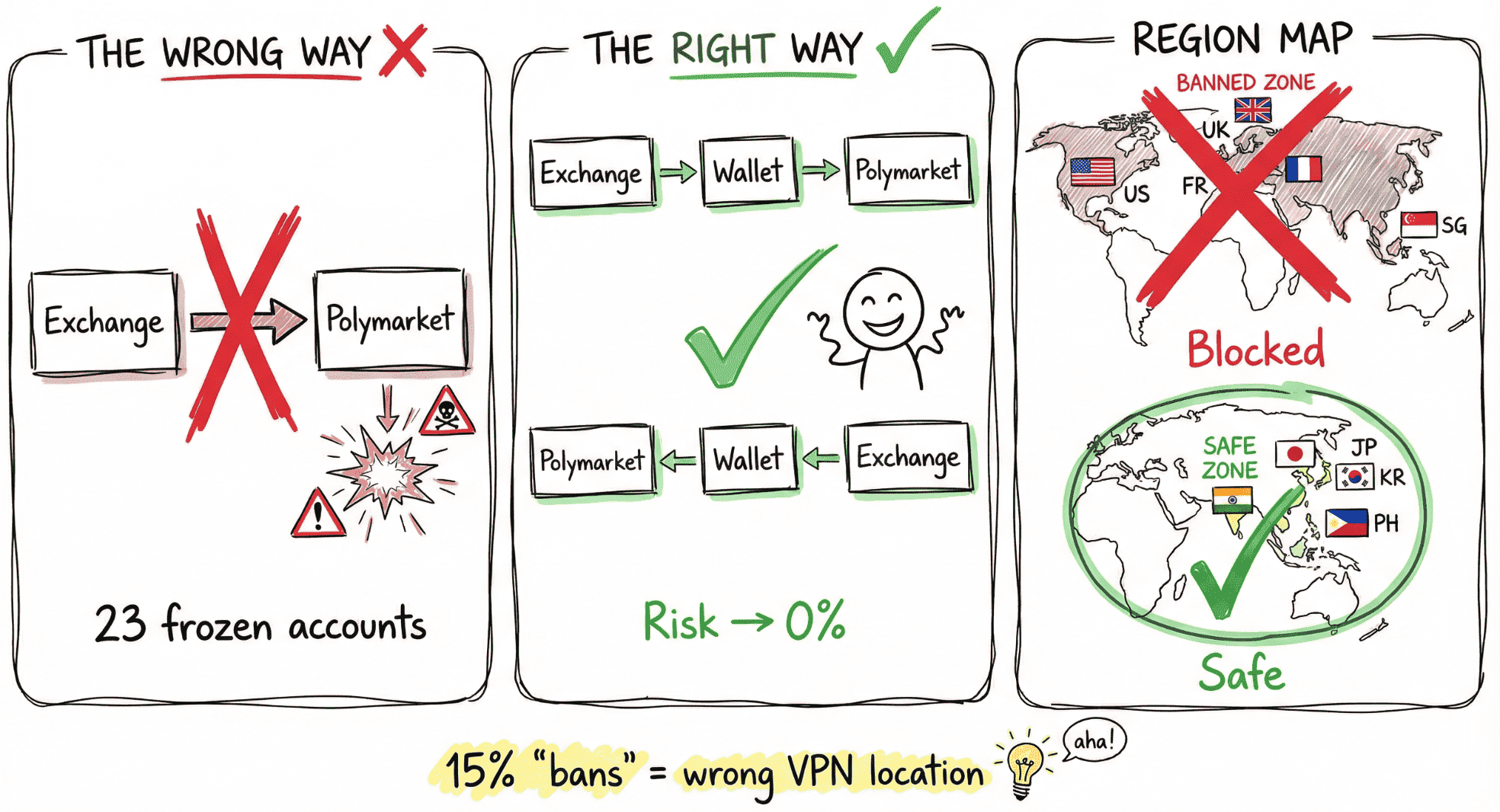
Never withdraw directly from exchanges to Polymarket. The correct flow is Exchange → Wallet → Polymarket for deposits, and reverse for withdrawals. This extra step costs minimal gas but eliminates account freeze risks. Explicitly prohibited regions include USA, UK, France, Ontario, Singapore, Poland, Thailand, and Taiwan. Recommended regions are Japan, Korea, India, Philippines, Spain, Portugal, and Netherlands.
📊 Airdrop Positioning: Become a High-Quality User
The platform values users who keep markets efficient and participate in price discovery. Key weight factors include Maker orders over Taker orders, Split/Merge operations for ~4% annual position rewards, diverse market participation across crypto/politics/sports/culture/economics, multiple time horizons from short-term to long-term markets, and sustained holding periods. The optimal trade size is $50-$500, with behavioral diversity and holding time carrying the highest weights.
🎯 Six Arbitrage Strategies for Profit
Cross-platform arbitrage exploits price differences where YES on Platform A plus NO on Platform B totals under $1. Multi-outcome arbitrage buys all mutually exclusive options when their combined YES prices sum below $1. Cross-event arbitrage identifies semantically identical events priced differently on the same platform. Term structure spread trades mispriced time value, buying longer-dated options while selling shorter ones. Rule-edge trading focuses on settlement criteria rather than headlines, finding value in the fine print. High-probability compounding targets events over 90% probability with under 72 hours to settlement, generating 80-150% annualized returns through disciplined execution.
💡 The Long-Term Builder's Edge
Prediction markets are approaching their "iPhone moment." Technology is ready, early user education is complete, and breakout events are imminent. Success rewards those who build information advantages, understand underlying mechanics, and prepare systematically. Don't chase short-term gains—build repeatable edges through compliant fund flows, line-by-line rule verification, and disciplined execution from low-risk arbitrage to late-stage strategies.
Read the complete survival guide with advanced strategies and risk mitigation: 👇 https://blog.ju.com/polymarket-prediction-markets/?utm_source=blog
#Polymarket #PredictionMarkets #Crypto #DeFi
JU Blog
2026-01-14 05:26
Polymarket Survival Guide: Your Edge in the $40B Prediction Markets Boom
Disclaimer:Contains third-party content. Not financial advice.
See Terms and Conditions.

The consolidation of major crypto assets within key price ranges does not necessarily signal the end of a trend. It more likely reflects a shift in market rhythm following increased institutional participation.
ETF flows have allocation characteristics, and their behavioral patterns differ significantly from retail sentiment. When volatility declines and options markets become more cautious, it often indicates that the market is waiting for new external variables.
In such phases, emotion-driven trading strategies tend to be less effective.
Terry-HODL
2025-12-23 11:37
Bitcoin and Ethereum Consolidation Reflects a New Post-Institutional Rhythm
Disclaimer:Contains third-party content. Not financial advice.
See Terms and Conditions.

A listing wave among domestic chip companies. Recently, a number of domestic AI chip firms have accelerated capitalization: Moore Threads listed on Shanghai’s STAR Market with a market cap that once exceeded RMB 300 billion (longbridge.com); MetaX followed; Biren Technology launched a Hong Kong IPO plan targeting about $600 million in fundraising (finance.yahoo.com). This wave suggests that in AI chips, “domestic substitution” has become a clear direction strongly favored by capital markets. Even though domestic GPUs still lag global leaders in near-term performance, investors remain willing to support these companies at high valuations.
Certainty carries a premium. Under high geopolitical uncertainty, the certainty of domestic substitution itself commands a premium. Compared with projects that may be technically superior but strategically uncertain, domestic AI chips offer a clearer investment logic: regardless of external conditions, China’s demand for sovereign and controllable compute is structural and increasing. That certainty is why capital pays. In other words, capital does not always chase the theoretical “best” solution; it often favors the most sustainable solution. As domestic substitution becomes a national strategy and a market consensus, companies aligned with that direction are viewed as having long-term value. This explains the strong investor enthusiasm even when short-term profitability remains limited.
A shift in market preferences. The listing boom reflects a shift in how markets evaluate opportunities. In earlier cycles, investors chased high-growth, high-risk concepts; now, amid geopolitical and supply-chain risks, certainty and controllability have become key evaluation criteria. For companies, this implies that aligning with strategic national direction and delivering indispensable value improves the chance of sustained capital support. Domestic AI chip companies are leveraging this tailwind to grow rapidly, strengthening industrial resilience while creating a synergy between industry and capital.

Zacik
2026-01-07 03:17
Domestic AI Chips Going Public Faster: Capital Markets Are Paying for “Certainty”
Disclaimer:Contains third-party content. Not financial advice.
See Terms and Conditions.

PancakeSwap incubates the prediction market platform Probable, which is far more than just adding a product feature. It also reveals the strategic evolution of top DeFi applications: Expanding from a single "trading venue" to a comprehensive "on-chain casino/casino" ecosystem.
Strategic logic deduction:
1. User retention and value-added: The prediction market has strong entertainment and user stickiness , which can effectively improve user engagement rate and stay time, guide traffic to the PancakeSwap main station and create new sources of income.
2. Ecosystem collaboration: Probable seamlessly integrates PancakeSwap's liquidity and exchange functions to form an experience loop. Its automatic token conversion is the best example.
3. Seize the track: The prediction market is regarded as a key track in 2026 by institutions such as a16z, with huge trading volume (the peak of the sector in 2025 will reach $10 billion per month). PancakeSwap seizes the position in advance through incubation.
Challenge: Faced with the Network Effect and Liquidity Depth of mature platforms such as Polymarket (with monthly trading volume exceeding $2 billion), Probable needs to prove that its "zero commission" strategy is enough to attract users to migrate.
Analysis of ecosystem strategy:https://blog.ju.com/probable-prediction-market-bnb-chain/?utm_source=blog #DeFi #ecosystem #strategy #competition #PancakeSwap
JCUSER-efxs8yPn
2025-12-25 10:07
PancakeSwap's ambition: Why do top DEXs want to incubate a prediction market?
Disclaimer:Contains third-party content. Not financial advice.
See Terms and Conditions.
The frequent emergence of security incidents and regulatory developments is not accidental, but a natural consequence of market expansion.
As the crypto market becomes increasingly integrated into the broader financial system, security and compliance are no longer optional add-ons, but integral components of systemic competitiveness.
Future industry differentiation may depend less on who is more aggressive, and more on who is more stable, transparent, and sustainable.
Terry-HODL
2025-12-23 11:37
Security and Regulation Are Becoming Core Variables in the Crypto Market
Disclaimer:Contains third-party content. Not financial advice.
See Terms and Conditions.
Against the backdrop of the US having established a leading advantage through legislation such as the GENIUS Act, the a16z report points out that the United Kingdom still has a "short but significant window period" to shape its unique competitive advantage through wise regulation.
Opportunities and challenges in the United Kingdom:
- Opportunity : About 12% of United Kingdom adults hold cryptoassets, and blockchain is expected to contribute 40 billion pounds to the United Kingdom economy by 2035. Clear and forward-looking regulation can help London upgrade from a traditional financial center to a "crypto innovation center".
- The challenge (which is also the core of the proposal) : action must be taken quickly to establish predictable regulatory environments , otherwise projects and capital will flow to jurisdictions with clearer rules (such as the US).
The key implication of the report: Crypto regulation has become a strategic tool for competition between countries . If the United Kingdom wants to not fall behind, it must coordinate and compete with the US on key issues such as decentralized frameworks and stablecoin mutual recognition, and build its own attractiveness.
In short: This is not only rule-making, but also a competition for future financial has the voice over and economic growth points. Do you think the United Kingdom can seize the opportunity?
International Competition Analysis: https://a16zcrypto.com/posts/article/steps-uk-drive-growth-protect-consumers
#InternationalCompetition #UnitedKingdom #US #Strategy #EconomicGrowth
JCUSER-efxs8yPn
2025-12-25 10:07
UK-US Crypto Regulation "Competition"
Disclaimer:Contains third-party content. Not financial advice.
See Terms and Conditions.
The claim that “DeFi is dead” does not reflect decline, but rather the disappearance of boundaries.
Stablecoins, compliance interfaces, and institutional capital are gradually integrating on-chain finance with traditional financial systems. This weakens extreme narratives, but expands real-world application potential.
The true challenge lies in identifying which projects can adapt to this role transition and survive within the new framework.
Terry-HODL
2025-12-23 11:37
When People Say “DeFi Is Dead,” They Are Actually Describing Integration
Disclaimer:Contains third-party content. Not financial advice.
See Terms and Conditions.
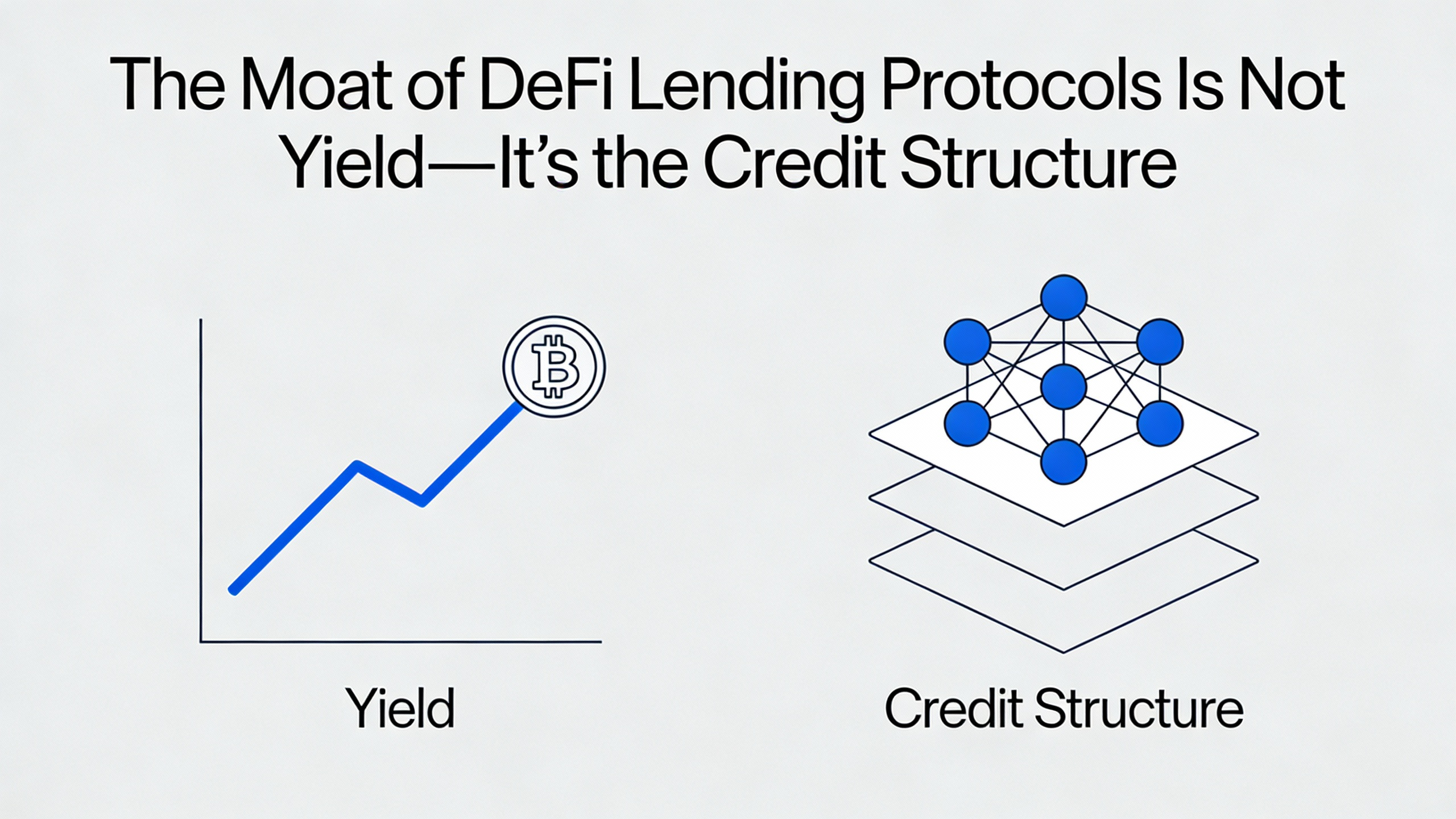
The yield illusion and the real moat. For a long time, discussion around DeFi lending has been dominated by APY (annualized yield), with many users treating high yield as the key measure of protocol competitiveness. However, a more essential competitive point is who controls the allocation of on-chain credit—the moat of lending protocols lies in the underlying mechanisms of credit creation and risk management, not in superficial interest rates.
Lending protocols are the on-chain credit hub. The reason leading lending protocols (such as Aave and Compound) are hard to replace is not because they offer the highest rates, but because they sit at the core of the DeFi credit value chain: interest rate formation, liquidation mechanisms, and collateral structure are all built around them. Traditional banks, leveraging low-cost deposits and unsecured high-risk lending, enjoy spreads far beyond the overcollateralized on-chain model (btcc.com). By contrast, DeFi protocols have structurally limited profit space because they lack the ability to expand credit through unsecured lending (btcc.com). In this sense, lending protocols function as the central hub of the on-chain credit market, providing foundational credit supply and risk-bearing capacity for crypto finance.
Structural competition beats yield competition. Yield aggregators and “curators” can optimize user experience and pool capital to raise headline yields, but they still rely on base protocols for interest rate sources and cannot replace the core role of credit creation and risk control. Just as in traditional finance, asset managers can be flexible, but the banking system remains the credit core. Similarly, DeFi is shifting from “competing on rates” to “competing on structure.” Going forward, the players that build more stable and efficient on-chain credit systems (for example, incorporating on-chain credit scoring or supporting real-world asset collateral) and meet real-economy financing needs will gain the upper hand. Control over credit allocation is the true moat.
Zacik
2025-12-24 17:51
The Moat of DeFi Lending Protocols Is Not Yield—It’s the Credit Structure
Disclaimer:Contains third-party content. Not financial advice.
See Terms and Conditions.
The approval of fee-related proposals within the Uniswap community sends an important signal: DeFi is transitioning from a usage-oriented narrative to a value-distribution-oriented narrative.
In the past, protocols emphasized activity and scale. Now, they are directly addressing how value flows back to stakeholders. This shift enhances DeFi’s interpretability in the eyes of institutions and long-term capital.
From a long-term perspective, mechanism maturity matters more than short-term price fluctuations.
Terry-HODL
2025-12-23 11:37
Uniswap’s Fee Mechanism Adjustment Signals a Shift in the DeFi Narrative
Disclaimer:Contains third-party content. Not financial advice.
See Terms and Conditions.
Market scale makes stricter standards inevitable. Frequent security incidents and regulatory actions are not “bad news” for crypto; they are an inevitable response to the industry entering deeper development. As crypto assets become integrated into the broader financial system, security and compliance shift from optional to mandatory. In 2025, total crypto losses from theft reportedly reached $3.4 billion (bankinfosecurity.com), making hacking a non-ignorable systemic risk. This forces exchanges and protocols to invest more in security—upgrading smart contract audits, multisig custody, and risk control systems. Regulators are also moving quickly: Europe’s MiCA framework, Hong Kong’s licensing regime, and U.S. enforcement actions are bringing crypto further into mainstream compliance structures.
Competition is shifting toward stable operations. As security and compliance become hard constraints, competitive evaluation standards change accordingly. Future differentiation will not be about who is more aggressive in bull markets or who pursues higher risk/higher return, but about who can operate long-term under transparent, stable, and compliant frameworks. Projects that ignore security vulnerabilities or remain in regulatory gray zones will struggle to earn trust from mainstream users and capital—and may be forced out. Conversely, companies that protect user assets and embrace compliance will have stronger long-run opportunities. For example, some leading exchanges now proactively publish proof-of-reserves and introduce third-party audits, recognizing that “trustworthiness” has become a new competitive advantage.
A maturity-driven reshuffle. A new industry reshuffle driven by security and regulation is likely to make the crypto sector more mature and resilient. In the short term, stricter standards can create pain for some participants; in the long term, they improve the industry’s credibility. Just as traditional finance earned public trust through strong regulation, crypto must establish similar trust foundations. As bubbles and vulnerabilities are squeezed out, remaining players will be those combining innovation with compliance. After this reshuffle, crypto will enter a healthier and more orderly phase—more capable of integrating with the mainstream financial system.

Zacik
2025-12-24 17:51
Security and Regulation Are Reshaping Competitive Standards in Crypto
Disclaimer:Contains third-party content. Not financial advice.
See Terms and Conditions.
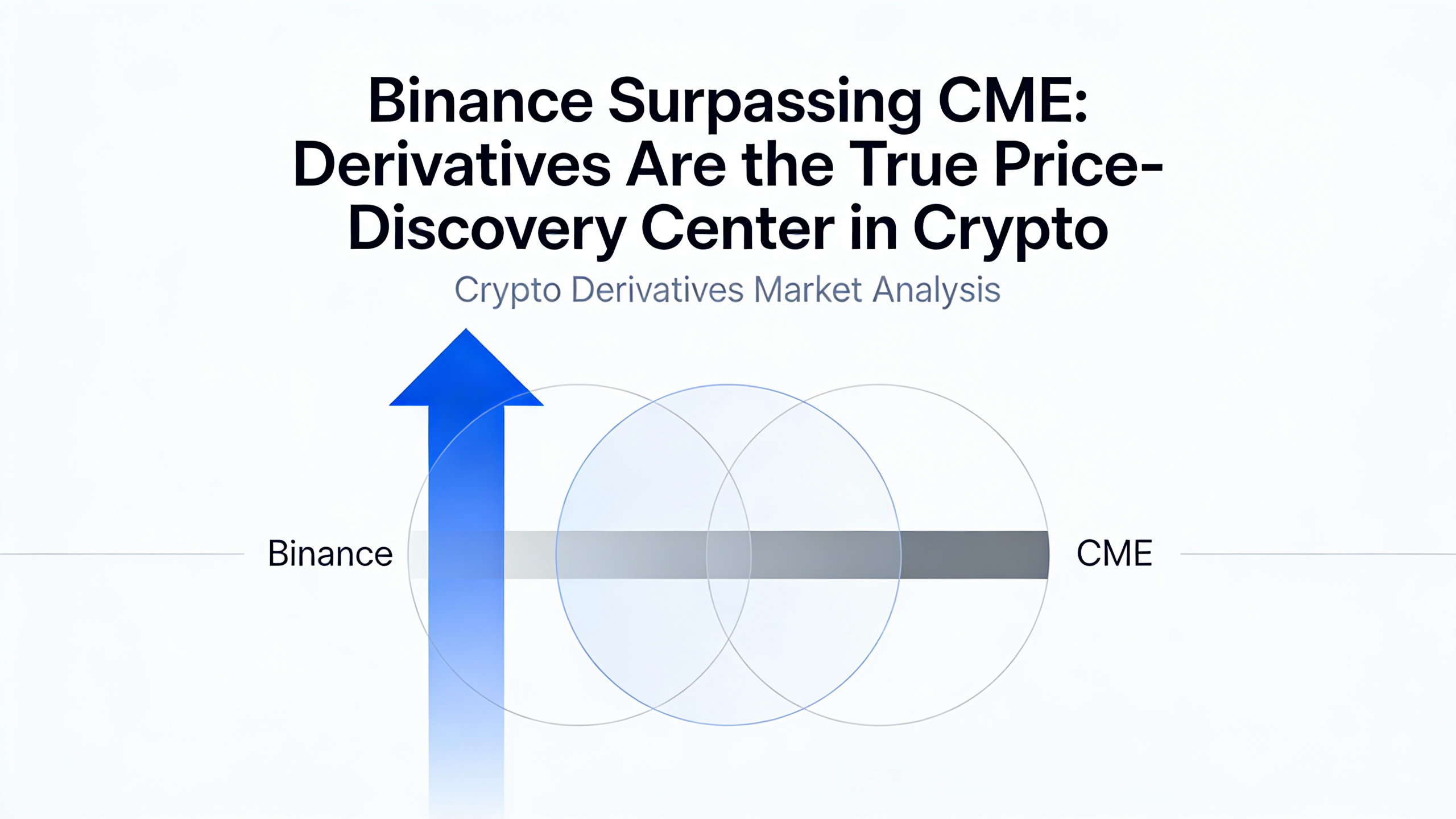
Pricing power is shifting from Wall Street to crypto-native platforms. Recently, Binance’s Bitcoin futures open interest surpassed that of CME (the Chicago Mercantile Exchange) (rootdata.com). This symbolic milestone suggests that global crypto pricing power is shifting from traditional financial institutions to crypto-native platforms. In traditional markets, CME has often been treated as an authoritative venue for price discovery; today, crypto platforms that run 24/7—like Binance—offer superior liquidity and depth. Bitcoin’s price behavior is increasingly driven by these high-liquidity, low-friction derivatives markets.
This reflects institutional migration, not a retail victory. Importantly, Binance surpassing CME does not mean retail traders are “beating” Wall Street. If anything, it reflects institutions increasingly using crypto-native platforms to trade more efficiently. Many institutions find they can access higher leverage, richer counterparty networks, and longer trading hours via perpetuals and futures on exchanges like Binance, improving strategy execution. By contrast, regulated venues like CME offer compliance benefits but have limited trading hours and typically lower leverage, which can be less suitable for global high-frequency activity. As a result, more institutional capital flows toward the venues with the best liquidity—making crypto exchanges the functional price anchor.
Derivatives increasingly determine market direction. Looking forward, crypto price discovery will increasingly occur in derivatives rather than spot. As more institutions and professional capital participate—and as retail also engages futures and options—derivatives volumes have remained multiples of spot. Derivatives offer more flexible strategy tools and abundant liquidity, effectively anchoring crypto’s pricing center. For investors, tracking derivatives indicators (open interest, funding rates, basis, options skews) is often more informative than watching spot alone.
Zacik
2025-12-24 17:51
Binance Surpassing CME: Derivatives Are the True Price-Discovery Center in Crypto
Disclaimer:Contains third-party content. Not financial advice.
See Terms and Conditions.
Compute is rising to the level of a strategic resource. From tighter U.S. controls on high-end chip exports to China, to Chinese firms seeking GPU capacity through indirect routes, recent developments show that compute has become a key strategic resource in geopolitical competition. It is no longer just a technical metric; it influences national competitiveness, industrial positioning, and capital allocation. The U.S. has repeatedly tightened restrictions, even banning certain modified or down-spec versions of H200 GPUs for China. Meanwhile, Chinese tech companies pursue “workarounds”: accelerating domestic GPU development on one hand, and accessing top-tier chips via overseas cloud services, intermediaries, and other channels on the other. Reports suggest that previously restricted Nvidia H200 and B200 GPUs have quietly appeared domestically.
The compute race is the AI race. In the era of large models, stable access to compute determines how fast a firm can train models, iterate products, and build an AI ecosystem. This elevates AI chips to an economic importance comparable to oil and electricity in earlier eras. Governments and tech giants are investing heavily to secure compute leadership. In capital markets, valuations of compute-related companies have surged, reflecting investors’ view that compute is a new kind of “hard currency.” In essence, AI competition is increasingly a competition in resource allocation capabilities—advanced algorithms still require massive compute. Once compute supply is constrained, AI development can be seriously impaired.
Geoeconomic structures are shifting around compute. The compute arms race is reshaping the global technology landscape and geoeconomic structure. Regions with compute advantages will likely take the lead in the next AI revolution; economies constrained in compute access may fall behind in digital competition. This also explains why countries treat AI chips as strategic assets under strict control. For companies, securing compute supply early and improving compute efficiency will become a core competitive differentiator.

Zacik
2025-12-24 17:51
The AI Chip “Arms Race”: Compute Is Becoming a New Geoeconomic Resource
Disclaimer:Contains third-party content. Not financial advice.
See Terms and Conditions.

もしあなたが眠っている間に暗号資産が自動で増えていくとしたら? それこそが JBank の使命です。
自動報酬システムと使いやすいステーキング機能により、初心者でも上級者でも簡単に“寝てても稼げる”資産運用ができます。チャートも不要、トレードも不要。ただステーキングするだけで、資産が24時間働いてくれます。
“お金が自分より働く世界”を探しているなら JBank へ。
#パッシブ収益 #資産成長 #JBankグローバル
詳細はこちら: Linktree: https://linktr.ee/jbankglobal メール: [email protected] 公式サイト: https://jbank.vip/

JBank - Jerry
2025-11-22 11:52
JBANK | 寝ている間にも暗号資産が増える一番かんたんな方法
Disclaimer:Contains third-party content. Not financial advice.
See Terms and Conditions.

Bitcoin bags are getting blown out today, as the price of BTC falls to nearly $80,000 and marks a new seven-month low.
- The continued downward pressure on its price has pushed Bitcoin into a so-called death cross—when the average price of an asset over the short term falls below the average price over the long term. It’s a technical pattern that typically signals extended bearish momentum. For traders who study charts, it confirms what permabulls don’t want to hear: It’s over—at least for now.
- It’s happening as the crypto market as a whole shrinks to $2.91 trillion, shedding nearly $60 billion in the past 24 hours alone. Almost every single coin in the top 100 by market cap is bleeding red.
- The Fear and Greed Index, which measures market sentiment on a scale from 0 to 100, has cratered to 14 points—just four points above the year's low of 10 back in February. When this index drops below 20, it signals "extreme fear," and right now, traders are absolutely terrified.
- But it's not just crypto drama driving the market selloff. The macro picture is turning nasty. Just weeks ago, markets were pricing in a 97% chance the Federal Reserve would cut interest rates in December. Now? Those odds have collapsed to somewhere between 22% and 43%, depending on which metric you check.
- Fed officials are openly divided, with many signaling they'd prefer to keep rates unchanged through year-end. For risk assets like crypto that thrive on easy money, this is poison.
- On Myriad, a prediction market developed by Decrypt’s parent company Dastan, traders are now overwhelmingly convinced that Bitcoin will not mark a new all-time high this year, placing odds at almost 90% that BTC will not top the $126K mark that it hit on October 6.
- The bearish vibes are so strong, Myriad traders also currently place 40% odds that Bitcoin falls as low as $69K. So how low will it go? Here’s what the charts say.
- Bitcoin opened today at $86,691 and immediately sold off, hitting an intraday low of $80,620 before bouncing slightly to its current price at $85,187. That's a 1.61% drop on the day after being almost 5% down over the last 24 hours. More importantly, for traders, it further confirms the death cross pattern that's been progressively forming since its all-time high in early October. The death cross pattern was first confirmed on Wednesday as Bitcoin slid to around $88,000—now it’s fallen deeper.
- Here's what's happening on the charts: Exponential Moving Averages, or EMAs, help traders identify trend direction by tracking the average price of an asset over the short, medium, and long term. When the short-term 50-day EMA falls below the longer-term 200-day EMA, it means bears are in control and the longer-term bull market structure has been broken.
- For Bitcoin, the 50-day EMA has now decisively crossed below the 200-day EMA. In short, this tells traders market momentum has shifted from bullish to bearish. The gap between both EMAs increases the more the price of BTC trades below those targets—and the bigger the gap, the stronger the trend.
- The price of Bitcoin is now trading well below both EMAs, which creates a situation where each bounce attempt faces immediate resistance, increasing the gap between the two EMAs, making the bearish trend even stronger. Bulls trying to push higher will need to first reclaim the 50-day EMA, then tackle the 200-day—a double wall of resistance that's historically tough to crack in one go.
- As for other technical indicators, the Average Directional Index, or ADX, sits at 41, which is considered "strong." ADX measures trend strength regardless of direction, with readings above 25 indicating a clear trend is in place. At 41, this tells us we’re not seeing just a minor correction, but a potentially extended move lower.
- The Relative Strength Index, or RSI, has plunged to 23.18, placing Bitcoin deep in oversold territory. RSI measures momentum on a scale from 0 to 100, with readings below 30 signaling oversold conditions where assets are potentially undervalued. However, "oversold" doesn't mean the selling has to stop—in strong downtrends, RSI can remain in oversold territory for extended periods as prices continue grinding lower. But, yes, this also provides hopium for momentum traders as it signals that the worst of it may be over. (The worst being an accelerated crash, not necessarily a steady drop.)
- The Squeeze Momentum Indicator is flashing "bearish impulse," meaning selling pressure is intensifying rather than easing. Meanwhile, the Volume Profile Visible Range (VPVP) shows the price of Bitcoin trading "below" key volume nodes, suggesting there's not much buying interest at current levels.
- So, everything is bearish, clearly. But where's the next support? How low can the price of BTC go? The chart reveals several key horizontal levels to watch.
- The immediate danger zone is $80,697, which briefly held today but looked shaky. If that breaks, the next major support sits at $74,555, followed by $65,727, and potentially all the way down to $53,059 if panic really sets in during a crypto winter. Those price levels have previous consolidation zones where significant trading volume accumulated, making them natural landing spots for oversold bounces.
- For resistances, traders will watch for BTC’s price breaking past $90,000 again and look at $100,000 as the major psychological target.
- Ethereum opened at $2,830.7 and dropped as low as $2,621 intraday before stabilizing around $2,798—a 1.16% loss on the day. While not as dramatic as Bitcoin's selloff, ETH's technical picture is equally concerning.
- Unlike Bitcoin, Ethereum hasn't fully confirmed its death cross yet—the 50-day EMA is still technically above the 200-day, giving it a "long" signal on an indicator that is obviously hours away from changing to bearish. The gap is razor-thin and closing fast. More importantly, ETH’s price is trading well below both EMAs, rendering that technical distinction somewhat meaningless. The bearish momentum is clearly established.
- A good way to see the natural support zones is using the Fibonacci retracements: a set of natural clusters that appear during a trend, showing supports and resistances in a specific timeframe—not because of price, but because of natural proportions.
- Right now, ETH is testing the 0.618 Fibonacci level at approximately $2,755. If this level breaks, the next Fibonacci support doesn't appear until $2,180, which would represent a massive 22% drop from current prices, and would resolve a price market on Myriad betting on ETH’s moon or doom.
- The ADX for Ethereum is even stronger than Bitcoin's at 46, indicating the downtrend is rock-solid. Meanwhile, RSI sits at 28.46—not quite as oversold as Bitcoin but definitely in stressed territory. The Squeeze Momentum Indicator shows "bearish impulse" here too, confirming sellers are in control.
- XRP is showing relative strength compared to its larger peers, down just 0.50% to close at $1.98 after opening at $1.99 and hitting an intraday low of $1.81796. Don't let that modest percentage fool you though—the technical damage is real.
- Like Bitcoin, the Ripple-linked XRP has confirmed a full death cross with its 50-day EMA now below the 200-day. The price of XRP is trading beneath both EMAs, and with an ADX of 32, the downtrend has enough strength to continue. While 32 isn't as extreme as Bitcoin's 41 or Ethereum's 46, it's still well above the 25 threshold that confirms a trend is in place rather than just random chop.
- The RSI at 32.86 shows XRP is approaching oversold territory but hasn't quite reached the extreme stress levels of Bitcoin and Ethereum. This could mean two things: either XRP has more downside before finding equilibrium, or it's showing genuine relative strength that could make it a safer harbor if the broader market continues tanking.
- XRP had such a crazy year that its price action shows only two major horizontal support levels that should concern XRP holders—and that would be very painful for hodlers, considering the movement from the all-time high to those targets.
- The next major support zone sits at $1.589, which represents a potential 20% drop from current levels. If that breaks, there's very little support until $0.66, a catastrophic 67% plunge from current prices and almost 80% from all-time high zone that would take XRP back to early 2024 levels.
The Squeeze Momentum Indicator is showing "bearish impulse," and like the other coins, the volume profile indicates XRP’s price is trading below key volume levels, meaning there's not much buying interest stepping in to defend current prices.
#Bitcoin #BitcoinDeathCross #Jucom #cryptocurrency #blockchain $BTC/USDT $JU/USDT $ETH/USDT
Lee | Ju.Com
2025-11-22 13:17
😱 Bitcoin in a Death Cross: How Low Will We Go?📛📛
Disclaimer:Contains third-party content. Not financial advice.
See Terms and Conditions.
While discussions are growing that Bitcoin-focused company Strategy (formerly MicroStrategy) could be removed from MSCI indices, the company’s chairman, Michael Saylor, maintained that the operating model is robust and that this possibility will not affect the company’s roadmap.
- MSCI has proposed removing “digital asset treasury companies” whose portfolios consist largely of cryptocurrencies from its indexes. While it noted that such companies “may exhibit characteristics similar to mutual funds,” it stated that these structures are not suitable for the indexes. The final decision will be announced on January 15th.
- In his latest post, Saylor explained that Strategy is an operating company. He pointed out that, in addition to its Bitcoin reserves, it also has a $500 million enterprise software division that has been serving corporations and public institutions for over 20 years.
- Saylor stated, “We understand that index providers periodically review their methodologies, but Strategy is not an ETF, it is not a closed-end fund, and it is certainly not a passive proxy for Bitcoin. We produce, operate, and grow just like any other business.” He added that inclusion or removal from the index would not change the company's strategy, operations, or long-term belief in BTC.
- JPMorgan issued a note this week warning that Strategy's removal from the index could lead to billions of dollars in passive outflows. Analysts estimate that a potential removal from MSCI could lead to a $2.8 billion outflow from passive funds. Overall, approximately $9 billion of Strategy's market capitalization is estimated to be tied to passive, index-tracking ETFs and mutual funds.
The sharp decline in Bitcoin's price is also putting pressure on Strategy shares, which have lost nearly 40% of their value this year.
#Bitcoin #MicroStrategy #MichaelSaylor #Jucom #cryptocurrency $BTC/USDT $JU/USDT $ETH/USDT
Lee | Ju.Com
2025-11-22 13:06
📛 Bitcoin Bull MicroStrategy May Be Removed from US Indexes – Michael Saylor Answers.
Disclaimer:Contains third-party content. Not financial advice.
See Terms and Conditions.
The price of Cardano (ADA) was down on Friday after the blockchain suffered an unexpected chain split, which was caused by a malformed delegation transaction that triggered a software flaw. That created problems for Cardano users, and prompted a public apology from the user who claimed that they caused it.
- Intersect, the Cardano ecosystem’s governance organization, said in an incident report that the divergence began when the malformed transaction passed validation on newer node versions, but nodes running older software rejected it.
- “This exploited a bug in an underlying software library that was not trapped by validation code,” Intersect wrote. “The execution of this transaction caused a divergence in the blockchain, effectively splitting the network into two distinct chains: one containing the ‘poisoned’ transaction and a ‘healthy’ chain without it.”
- Earlier that day, Cardano co-founder Charles Hoskinson posted on X that it was a “premeditated attack from a disgruntled [stake pool operator]” who was “actively looking at ways to harm the brand and reputation of [Cardano developer Input/Output Global].”
- According to Hoskinson, all Cardano users were impacted. The price of Cardano’s token ADA was down more than 6% recently, following the incident.
- According to the incident report, the mismatch caused operators to build blocks on different branches of the chain until patched node software was deployed. Developers and service providers coordinated an emergency response, and operators were urged to upgrade to rejoin the main chain.
- Intersect said the wallet responsible for the malformed transaction has been identified, while Hoskinson said it will take weeks to clean up the mess.
- “Forensic analysis suggests links to a participant from the Incentivized Testnet (ITN) era,” Intersect wrote. “As this incident constitutes a potential cyberattack on a digital network, relevant authorities, including the Federal Bureau of Investigation, are being engaged to investigate.”
- Hours after the incident, an X user posting under the name Homer J. said they were responsible for submitting the transaction that triggered the split.
- “Sorry Cardano folks, it was me who endangered the network with my careless action yesterday evening,” they wrote, describing the attempt as a personal challenge to reproduce the “bad transaction” and said he relied on AI-generated instructions while blocking traffic on their server.
- “I've felt awful as soon as I realized the scale of what I've caused. I know there's nothing I can do to make up for all the pain and stress I've caused over the past X hours,” they added. “Difficult to quantify the negligence on my behalf. I am sorry, I truly am. I didn't have evil intentions.”
- Homer wrote that he did not sell or short ADA, did not coordinate with anyone else, and did not act for financial gain. “I'm ashamed of my carelessness and take full responsibility for it and whatever consequences will follow,” he said.
- According to Intersect, no user funds were lost, and most retail wallets were unaffected because they were running node components that handled the malformed transaction safely.
- Hoskinson, the outspoken co-founder of Cardano, claimed in a video message that the network “didn’t go down,” though users did encounter issues before the problem was fixed.
“It is important to note that the network did not stall. Block production continued on both chains throughout the incident, and at least some identical transactions appeared on both chains,” Intersect wrote. “However, to ensure the integrity of the ledger, exchanges and third-party providers largely paused deposits and withdrawals as a precautionary measure.”
#Cardano #CardanoNetwork #Jucom #cryptocurrency #blockchain $ADA/USDT $JU/USDT $BTC/USDT
Lee | Ju.Com
2025-11-22 13:03
📛 Cardano Network Disrupted by 'Poisoned' Transaction Attack.
Disclaimer:Contains third-party content. Not financial advice.
See Terms and Conditions.

What Is the Total Number of Transactions on the Bitcoin Network?
Understanding the total number of transactions on the Bitcoin network is essential for grasping how active and widely used this pioneering cryptocurrency truly is. This metric offers insights into user engagement, network health, and overall adoption trends. In this article, we will explore what influences transaction volume, recent developments in 2023, and what these figures mean for investors and users alike.
How Does Transaction Volume Reflect Network Activity?
The total number of Bitcoin transactions indicates how frequently users are transferring funds or engaging with blockchain-based applications. On average, as of 2023, around 250,000 to 300,000 transactions occur daily. These fluctuations are driven by various factors such as market sentiment—bullish periods tend to see increased activity—as well as regulatory environments that can either encourage or restrict usage.
High transaction volumes suggest a vibrant ecosystem where users actively buy, sell, or transfer Bitcoin. Conversely, dips may signal reduced interest or external pressures like stricter regulations. Monitoring these numbers helps stakeholders gauge whether Bitcoin remains a popular medium for peer-to-peer payments or speculative trading.
Factors Influencing Transaction Counts
Several key elements impact how many transactions are recorded on the blockchain:
- Market Conditions: Bull markets often lead to increased trading activity as investors seek opportunities.
- Regulatory Changes: Stricter laws can temporarily suppress transaction volumes; conversely, favorable policies may boost activity.
- Network Congestion: When many users transact simultaneously—such as during major price swings—transaction fees rise due to limited block space.
- Technological Developments: Improvements like SegWit (Segregated Witness) have optimized transaction processing times and costs over time.
These factors collectively shape daily transaction counts and influence user behavior across different periods.
Recent Trends in 2023: Fluctuations in Transaction Numbers
In April 2023, the Bitcoin network experienced a notable surge in transaction volume driven by heightened market speculation amid potential regulatory shifts in major economies. This increase was partly fueled by traders reacting to news about possible government interventions that could impact cryptocurrency markets globally.
However, May saw an uptick in average transaction fees—about a 20% rise compared to previous months—which reflects higher network congestion. Elevated fees can discourage smaller transactions from occurring frequently because they become less cost-effective for everyday use cases like micro-payments or casual transfers.
These recent trends highlight how external events directly influence not only how much activity occurs but also its economic viability for typical users.
Blockchain Size and Its Impact on Transactions
The size of the Bitcoin blockchain itself provides context about overall network activity; it stood at approximately 400 GB in early 2023—a significant increase from previous years due to continuous addition of new blocks containing transactional data.
A larger blockchain signifies more historical data stored across nodes worldwide but also raises concerns regarding scalability:
- Larger blockchains require more storage capacity.
- Synchronization times increase for new nodes joining the network.
- Higher data loads can contribute to slower confirmation times during peak periods unless scaling solutions are implemented effectively.
Efforts such as Lightning Network aim to address these scalability challenges by enabling faster off-chain transactions while maintaining security through underlying blockchain settlement layers.
The Role of Miners and Validation Processes
Miners play a crucial role in maintaining accurate records by validating transactions through complex computational puzzles—a process known as proof-of-work (PoW). They compete within seconds to add new blocks containing pending transactions onto the chain; successful miners receive rewards plus associated fees paid by transacting parties.
This validation process ensures integrity but is energy-intensive: estimates suggest that mining consumes substantial electricity globally. As demand increases with higher transaction volumes during active periods like April-May 2023’s surge,
the environmental footprint becomes more prominent concern among regulators and advocates alike.
Key Points About Mining:
- Miners validate hundreds of thousands of daily transactions
- Validation ensures decentralization & security
- Rising demand impacts energy consumption
Regulatory Environment's Effect on Transaction Volumes
Government policies significantly influence user participation levels on the Bitcoin network. In early 2023,
several countries introduced stricter regulations targeting crypto exchanges,which temporarily dampened trading activities reflected through decreased transaction counts initially observed after policy announcements.
However,
some jurisdictions adopted clearer frameworks encouraging institutional involvement,potentially stabilizing or increasing future transactional activity once compliance mechanisms were established.
Summary:
Regulatory uncertainty remains one of the most unpredictable factors affecting total bitcoin transactions; ongoing legislative developments will continue shaping usage patterns moving forward.
Future Outlook: Scalability Solutions & Adoption Trends
As interest grows among retail investors and institutions alike,
scalability solutions such as Taproot upgrades,Lightning Network implementations,and sidechains aim to facilitate faster processing at lower costs.
These technological advancements could help sustain higher throughput levels necessary for mainstream adoption while reducing congestion-related fee hikes seen earlier this year.
Moreover,
wider acceptance from merchants accepting bitcoin payments directly enhances real-world utility beyond speculative trading,
potentially leading toward sustained growth in total number of daily transactions over coming years.
By continuously monitoring metrics like total bitcoin transaction count alongside technological improvements and regulatory changes,
stakeholders—from individual users to large-scale investors—can better understand market dynamics
and make informed decisions aligned with evolving industry conditions.
References
- CoinDesk — General information on Bitcoin networks
- Blockchain.com Charts — Historical data analysis
- Blockchain Size Data — Blockchain growth insights
- Transaction Fees & Congestion — Impact analysis
- Bitcoin Mining Process — Technical validation overview
- Regulatory Impact Reports — Policy effects assessment
Understanding how many people transact using Bitcoin provides valuable insight into its current state—and future potential—as both an investment asset and a decentralized payment system amidst an ever-changing global landscape
Lo
2025-05-06 07:37
What is the total number of transactions on the Bitcoin network?
What Is the Total Number of Transactions on the Bitcoin Network?
Understanding the total number of transactions on the Bitcoin network is essential for grasping how active and widely used this pioneering cryptocurrency truly is. This metric offers insights into user engagement, network health, and overall adoption trends. In this article, we will explore what influences transaction volume, recent developments in 2023, and what these figures mean for investors and users alike.
How Does Transaction Volume Reflect Network Activity?
The total number of Bitcoin transactions indicates how frequently users are transferring funds or engaging with blockchain-based applications. On average, as of 2023, around 250,000 to 300,000 transactions occur daily. These fluctuations are driven by various factors such as market sentiment—bullish periods tend to see increased activity—as well as regulatory environments that can either encourage or restrict usage.
High transaction volumes suggest a vibrant ecosystem where users actively buy, sell, or transfer Bitcoin. Conversely, dips may signal reduced interest or external pressures like stricter regulations. Monitoring these numbers helps stakeholders gauge whether Bitcoin remains a popular medium for peer-to-peer payments or speculative trading.
Factors Influencing Transaction Counts
Several key elements impact how many transactions are recorded on the blockchain:
- Market Conditions: Bull markets often lead to increased trading activity as investors seek opportunities.
- Regulatory Changes: Stricter laws can temporarily suppress transaction volumes; conversely, favorable policies may boost activity.
- Network Congestion: When many users transact simultaneously—such as during major price swings—transaction fees rise due to limited block space.
- Technological Developments: Improvements like SegWit (Segregated Witness) have optimized transaction processing times and costs over time.
These factors collectively shape daily transaction counts and influence user behavior across different periods.
Recent Trends in 2023: Fluctuations in Transaction Numbers
In April 2023, the Bitcoin network experienced a notable surge in transaction volume driven by heightened market speculation amid potential regulatory shifts in major economies. This increase was partly fueled by traders reacting to news about possible government interventions that could impact cryptocurrency markets globally.
However, May saw an uptick in average transaction fees—about a 20% rise compared to previous months—which reflects higher network congestion. Elevated fees can discourage smaller transactions from occurring frequently because they become less cost-effective for everyday use cases like micro-payments or casual transfers.
These recent trends highlight how external events directly influence not only how much activity occurs but also its economic viability for typical users.
Blockchain Size and Its Impact on Transactions
The size of the Bitcoin blockchain itself provides context about overall network activity; it stood at approximately 400 GB in early 2023—a significant increase from previous years due to continuous addition of new blocks containing transactional data.
A larger blockchain signifies more historical data stored across nodes worldwide but also raises concerns regarding scalability:
- Larger blockchains require more storage capacity.
- Synchronization times increase for new nodes joining the network.
- Higher data loads can contribute to slower confirmation times during peak periods unless scaling solutions are implemented effectively.
Efforts such as Lightning Network aim to address these scalability challenges by enabling faster off-chain transactions while maintaining security through underlying blockchain settlement layers.
The Role of Miners and Validation Processes
Miners play a crucial role in maintaining accurate records by validating transactions through complex computational puzzles—a process known as proof-of-work (PoW). They compete within seconds to add new blocks containing pending transactions onto the chain; successful miners receive rewards plus associated fees paid by transacting parties.
This validation process ensures integrity but is energy-intensive: estimates suggest that mining consumes substantial electricity globally. As demand increases with higher transaction volumes during active periods like April-May 2023’s surge,
the environmental footprint becomes more prominent concern among regulators and advocates alike.
Key Points About Mining:
- Miners validate hundreds of thousands of daily transactions
- Validation ensures decentralization & security
- Rising demand impacts energy consumption
Regulatory Environment's Effect on Transaction Volumes
Government policies significantly influence user participation levels on the Bitcoin network. In early 2023,
several countries introduced stricter regulations targeting crypto exchanges,which temporarily dampened trading activities reflected through decreased transaction counts initially observed after policy announcements.
However,
some jurisdictions adopted clearer frameworks encouraging institutional involvement,potentially stabilizing or increasing future transactional activity once compliance mechanisms were established.
Summary:
Regulatory uncertainty remains one of the most unpredictable factors affecting total bitcoin transactions; ongoing legislative developments will continue shaping usage patterns moving forward.
Future Outlook: Scalability Solutions & Adoption Trends
As interest grows among retail investors and institutions alike,
scalability solutions such as Taproot upgrades,Lightning Network implementations,and sidechains aim to facilitate faster processing at lower costs.
These technological advancements could help sustain higher throughput levels necessary for mainstream adoption while reducing congestion-related fee hikes seen earlier this year.
Moreover,
wider acceptance from merchants accepting bitcoin payments directly enhances real-world utility beyond speculative trading,
potentially leading toward sustained growth in total number of daily transactions over coming years.
By continuously monitoring metrics like total bitcoin transaction count alongside technological improvements and regulatory changes,
stakeholders—from individual users to large-scale investors—can better understand market dynamics
and make informed decisions aligned with evolving industry conditions.
References
- CoinDesk — General information on Bitcoin networks
- Blockchain.com Charts — Historical data analysis
- Blockchain Size Data — Blockchain growth insights
- Transaction Fees & Congestion — Impact analysis
- Bitcoin Mining Process — Technical validation overview
- Regulatory Impact Reports — Policy effects assessment
Understanding how many people transact using Bitcoin provides valuable insight into its current state—and future potential—as both an investment asset and a decentralized payment system amidst an ever-changing global landscape
Disclaimer:Contains third-party content. Not financial advice.
See Terms and Conditions.
🚀 MegaETH: The Real-Time Blockchain Innovation Arena
MegaETH is a breakthrough Ethereum Layer 2 project delivering sub-millisecond latency and 100,000+ TPS through its "node specialization" architecture, pushing on-chain application performance to Web2 levels. Backed by Dragonfly and angel investors including Vitalik Buterin and Joseph Lubin.
💰 Financing Highlights:
- Total raised: $107M (Seed $20M + Community rounds $77M)
- Valuation surge: $100M → $999M FDV (10× growth in 10 months)
- Community heat: Sonar public sale 27.8× oversubscribed
- Investors: 16,000+ participants; Hyperliquid perps implied $5B+ FDV at peak
🔧 Core Technical Innovations:
- Single active sequencer: Eliminates consensus overhead for extreme low latency
- Node specialization architecture: Separates sequencer, prover, and full-node roles
- In-memory execution engine: Optimized for parallel transaction processing
- EigenDA data layer: Provides up to 15 Mb/s bandwidth support
- Full EVM compatibility: Seamless Solidity contract migration
🎯 MegaMafia Accelerator (Core Ecosystem Strategy):
MegaMafia is not a traditional incubator—it's a deep experimental arena around real-time blockchain performance, focusing on "zero-to-one" native innovation:
Phase 1 Results:
- 15 projects raised $40M+ collectively
- Backed by Paradigm, Wintermute, Robot Ventures, Kraken Ventures, Franklin Templeton
- Notable raises: CAP Labs ($1.9M), Valhalla ($1.5M), GTE ($25M+)
Phase 2 Expansion:
- 11 new projects, 25+ total ecosystem projects
- Pivoting to consumer innovation, attracting non-crypto-native users
🌟 Ecosystem Star Projects:
【DeFi - Real-Time Finance】
• Valhalla: DEX aggregator focused on MEV protection
• Cap Money: Third-category stablecoin capturing exogenous yield via MEV and RWA
• Teko Finance: Cross-chain lending protocol
• Benchmark: On-chain fixed-income platform
【Gaming - Web2-Grade Experience】
• Showdown: Real-time TCG with high-frequency interactions
• Stomp: Competitive on-chain gaming
• Legend.Trade: On-chain sports trading platform
【Consumer Apps - On-Chain Culture】
• Euphoria: Real-time options trading with "tap-to-trade" UX (impossible on traditional L2s)
• Noise: Assetizing attention - trade "narrative heat" instead of token prices
• Nectar AI: AI-driven social recommendation system
• Pump Party: Meme token social platform
• Blitzo: Payment-as-entertainment platform
【Infrastructure & Frontier】
• Funes World: "GitHub of the physical world" - 1,000+ building 3D models (4,000-year span), backed by Dragonfly and HashKey
• Cilium: On-chain identity protocol
• Ubitel: Communication infrastructure
• Dorado: Gamified on-chain entertainment platform
💡 Ecosystem Insights:
MegaETH differentiates itself not through "porting" Ethereum apps, but via:
1️⃣ Product Paradigm Reconstruction: Developers ask "What new scenarios can real-time performance enable?" instead of "How do I migrate existing apps?"
2️⃣ Extreme Scenario Nativity: Many projects simply cannot run on traditional chains (e.g., Euphoria's millisecond-level options trading, Noise's real-time heat capture)
3️⃣ Web2-Grade UX: Eliminates "confirmation anxiety," making on-chain interactions as smooth as Web2 apps
4️⃣ Humanistic Value: Funes World uses blockchain to permanently preserve human civilization's memory, transcending financial speculation
🗓️ Key Milestones:
- June 2024: Seed round $20M (valuation $100M)
- Dec 2024: Echo community round $10M (valuation $200M)
- March 2025: Testnet launch with breakthrough performance metrics
- June 2025: Fluffle NFT round $27M (valuation $540M)
- Oct 2025: Sonar public sale $50M (valuation $999M)
- Nov 2025: Pre-deposit Bridge launch (1,000M deposit cap)
- Q4 2025: Mainnet closed beta
- Jan 2026: TGE token distribution
- Mid 2026: PoS staking implementation
⚖️ Technical Trade-offs:
Strengths: Sub-millisecond latency, 100k+ TPS, EVM compatible
Risks: Centralized sequencer dependency, single-point-of-failure risk (team plans mitigation via sequencer rotation and fraud proofs)
👥 Team Background:
- Lei Yang (CTO): MIT PhD, distributed systems expert
- Yilong Li (CEO): Stanford PhD, blockchain security engineer
- Shuyao Kong (CBO): "Bing-xiong," ConsenSys background, strong industry resources
- Team traits: Top academic credentials + rich blockchain experience + rigorous technical research
🎖️ Investment Value Summary:
MegaETH represents a significant exploration of blockchain performance limits. Unlike traditional L2s' "wheel-reinventing" homogeneity, it builds genuine moats through "real-time app incubation + high-performance EVM chain."
Core Highlights:
✓ Compelling technical narrative: Real-time blockchain pioneer
✓ Strong ecosystem differentiation: 25+ native innovation projects, not simple forks
✓ Top-tier capital backing: Vitalik, Paradigm, Dragonfly, etc.
✓ High market recognition: 10× valuation growth in 10 months, 27.8× oversubscription
✓ Ecosystem flourishing pre-mainnet: Unprecedented phenomenon
Risk Warnings:
⚠ Centralized sequencer issue requires ongoing attention to decentralization roadmap
⚠ Mainnet performance versus promised metrics remains to be verified
⚠ High-performance environment requires developers to relearn product design logic
This is an innovative ecosystem worth long-term attention and research. Investors should view it as a venture bet on next-generation on-chain application infrastructure, closely monitoring mainnet performance, ecosystem development, and technical roadmap execution.
Read the complete in-depth research report for technical architecture details, team interviews, project analysis, and investment strategies: 👇
https://blog.ju.com/megaeth-ecosystem-report/?utm_source=blog
JU Blog
2025-11-28 13:55
MegaETH Ecosystem In-Depth Research Report
Disclaimer:Contains third-party content. Not financial advice.
See Terms and Conditions.