
YZY Money launched August 21, 2025 on major exchanges with an innovative payment ecosystem combining cryptocurrency with real-world utility. Here's what you need to know about this celebrity-backed token:
💰 What's New:
-
Integrated payment ecosystem with YZY token, Ye Pay processor, and YZY Card
Built on Solana blockchain for high-speed, low-cost transactions
Anti-sniping protection and Jupiter Lock vesting mechanism
Peak $3 billion market cap with extreme volatility (93% decline from highs)
🎯 YZY Ecosystem Components:
1️⃣ YZY Token: Native currency powering all ecosystem transactions 2️⃣ Ye Pay: Merchant payment processor with 3.5% lower fees than traditional platforms 3️⃣ YZY Card: Non-custodial debit card for direct crypto spending without fiat conversion
📊 Token Distribution:
-
Public Supply: 20%
Liquidity Provision: 10%
Yeezy Investments LLC: 70% (structured vesting over 24 months)
💡 Key Features:
-
Accepts both crypto and credit card payments for merchants
Supports YZY, USDC, USDT and other cryptocurrencies
No fiat conversion required for card transactions
Alternative to traditional e-commerce platforms like Shopify
⚠️ Investment Risks:
-
Extreme price volatility and 70% founder allocation
Regulatory uncertainties and celebrity reputation dependence
Centralized token control creates potential selling pressure
🏆 Why It Matters: YZY differentiates itself from purely speculative celebrity tokens by offering practical payment solutions for real-world commerce, targeting the growing intersection of cryptocurrency and everyday transactions.
With structured vesting and utility-focused approach, YZY represents both the potential and risks of celebrity-backed cryptocurrency ventures in the evolving digital payment landscape.
Read our complete analysis with tokenomics breakdown and investment guide: 👇 https://blog.jucoin.com/yzy-token-analysis-jucoin/?utm_source=blog
#YZY #KanyeWest #YZYMoney #Solana #Crypto

JU Blog
2025-08-21 11:50
YZY Money Analysis: Kanye West’s Payment Token Launches on JuCoin August 21, 2025
Penafian:Berisi konten pihak ketiga. Bukan nasihat keuangan.
Lihat Syarat dan Ketentuan.

CoinShares, Europe's largest digital asset manager with roughly $10 billion in assets under management, has formally withdrawn its applications for three US spot cryptocurrency ETFs, removing itself from an increasingly crowded market dominated by traditional finance heavyweights.
- The firm filed Form RW requests with the Securities and Exchange Commission on Nov. 28 to withdraw registration statements for its proposed XRP ETF, Solana Staking ETF, and Litecoin ETF, according to regulatory filings. Senior financial officer Charles Butler signed each withdrawal letter, which confirmed that no securities had been sold and no transactions had occurred under the earlier S-1 registrations. The firm is also winding down its CoinShares Bitcoin Futures Leveraged ETF.
- The decision comes at a critical moment for CoinShares, which in September announced a $1.2 billion SPAC merger with Nasdaq-listed Vine Hill Capital that would see the company go public in the United States. That deal, expected to close by year-end, positions CoinShares among the top four digital asset managers globally by crypto ETF assets under management, alongside BlackRock, Fidelity, and Grayscale.
- CoinShares CEO Jean-Marie Mognetti said in a statement that opportunities for differentiation and sustainable margins in the single-asset crypto ETF space are limited given the dominance of giants like the aforementioned BlackRock, Fidelity, and Grayscale, which manage most of the market's leading funds. CoinShares did not immediately respond to a request for further comment from The Block.
- "Over the next 12-18 months, we aim to bring additional innovative products to the U.S. market across three core categories: crypto equity exposure vehicles that capture the digital asset ecosystem beyond tokens themselves; thematic baskets that provide targeted exposure to specific blockchain innovation trends; and actively managed strategies combining crypto and other assets, leveraging CoinShares quantitative expertise," Mognetti wrote. "To sharpen this focus, we are streamlining our U.S. product lineup by winding down our CoinShares Bitcoin Futures Leveraged (ticker:BTFX) product and redirecting the resources previously allocated to our planned single-asset ETF launches toward higher-margin opportunities."
- CoinShares' original Solana Staking ETF filing arrived in June, with amendments submitted through September. The XRP ETF saw updates in August and October, while the Litecoin ETF application dated back to January. The SEC had acknowledged the firm's spot XRP and Litecoin ETF filings in February, as The Block previously reported.
The strategic shift echoes comments from Franklin Templeton's Head of Digital Assets Roger Bayston, who told The Block last week that diversified crypto portfolios represent "the next big thing" following this wave of single-asset funds.
#CoinShares #XRP #Solana #Litecoin #Nasdaq $JU/USDT $SOL/USDT $XRP/USDT
Lee | Ju.Com
2025-12-01 02:29
📛 CoinShares withdraws US spot ETF filings for XRP, Solana and Litecoin ahead of Nasdaq listing!
Penafian:Berisi konten pihak ketiga. Bukan nasihat keuangan.
Lihat Syarat dan Ketentuan.
Two titans, two strategies: Solana's explosive ecosystem growth vs Ripple's specialized payment dominance. Here's the institutional investor breakdown:
🏎️ Performance Showdown: Solana: Thousands TPS with Proof-of-History + PoS consensus Ripple: 1,000 TPS with ultra-efficient Federated Byzantine Agreement Both deliver near-instant finality and negligible fees
💼 Institutional Appeal: Solana's Broad Strategy:
-
Partnerships: Visa stablecoin pilots, Stripe fiat onramp
Ecosystem: DeFi, NFTs, RWA tokenization, gaming
ETF potential bringing billions in institutional capital
General-purpose blockchain for diverse applications
Ripple's Focused Approach:
-
RippleNet: Established banking partnerships worldwide
Specialized cross-border payment rails
Compliance-friendly tools (account freezing, etc.)
New RLUSD stablecoin launch
⚠️ Risk Assessment: Solana Risks: Past network outages (largely resolved), regulatory uncertainty Ripple Risks: SEC legal battles (partial victory achieved), centralization concerns
🎯 Bottom Line:
-
Choose Solana if you want exposure to explosive ecosystem growth, RWA tokenization, and diverse DeFi applications
Choose Ripple if you prioritize specialized payments utility, regulatory clarity, and established institutional relationships
The verdict depends on your investment thesis: diversified blockchain platform vs focused payment infrastructure.
💡 Pro Tip: Solana suits investors betting on the broader crypto economy expansion, while Ripple appeals to those focused on traditional finance transformation.
Read the complete institutional analysis: 👇 https://blog.jucoin.com/sol-and-ripple-which-is-better-for-investors/?utm_source=blog
#SOL #XRP #Solana #Ripple #Institutional #Crypto #Blockchain #DeFi #Payments #Investment #JuCoin #ETF #RWA #CrossBorder #FinTech #Web3
JU Blog
2025-08-07 10:32
⚡ SOL vs XRP: Which Blockchain Wins for Institutional Investors in 2025?
Penafian:Berisi konten pihak ketiga. Bukan nasihat keuangan.
Lihat Syarat dan Ketentuan.
U.S. spot Solana exchange-traded funds recorded their first outflow of $8.10 million on Wednesday, breaking a 21-day streak of inflows since their debut.
- Despite the fund outflows, Solana is trading at around $141, up roughly 3.6% over the past 24 hours, according to CoinGecko data.
- The net outflow was driven entirely by a $34.37 million redemption from 21Shares’ TSOL. This was partially offset by inflows into other funds, including $13.33 million for Bitwise’s BSOL and $10.42 million for Grayscale’s GSOL, per SoSoValue data.
- The total assets held by Solana ETFs hover around $915 million, roughly 1.15% of Solana’s $79 billion market cap.
“Some of the flows out of Solana may be part of a broader reallocation away from ‘higher beta’ altcoins into ones perceived as having better structural adoption or regulatory clarity,” Rachel Lin, CEO and Co-Founder of SynFutures, told Decrypt on Wednesday.
Altcoin ETFs
- XRP ETF netflows, on the other hand, remain in the green since its November 14 debut. The spot Dogecoin ETF, launched on Monday, holds $6.48 million in total assets, representing a mere 0.03% of the meme coin’s $23 billion market cap.
- Launched on October 28, the Litecoin ETF has seen no outflows but has remained flat since November 18.
- In the current risk-off environment, assets with clearer, less speculative narratives tend to hold up better, Lin said. Unlike XRP, “Solana may be seen as more exposed to Layer one competition despite its strong ecosystem, making it vulnerable when risk is being cut back.”
- Furthermore, Lin characterized Solana holders as more sentiment-driven, “who tend to exit aggressively when sentiment turns.”
- Despite the bullish performance over the past 24 hours, Solana's 30-day performance hovers around -30% and is down more than 50% from its all-time high of $293.31.
On prediction market Myriad, owned by Decrypt’s parent company Dastan, users reflected this bleak outlook, placing a 92% chance on Solana failing to revisit its all-time high of $293.31 by year’s end.
#Solana #SolanaETFs #Jucoin #21Shares #cryptocurrency $SOL/USDT $JU/USDT $BTC/USDT
Lee | Ju.Com
2025-11-28 05:05
🚨 Spot Solana ETFs Post First Red Day Since Launch.
Penafian:Berisi konten pihak ketiga. Bukan nasihat keuangan.
Lihat Syarat dan Ketentuan.

Cross-Chain Bridges Connecting Solana (SOL), Ethereum (ETH), and Avalanche (AVAX)
Understanding Cross-Chain Bridges in Blockchain Ecosystems
Cross-chain bridges are essential components of the modern blockchain landscape, enabling interoperability between different networks. They serve as connectors that facilitate the transfer of digital assets, such as tokens and NFTs, across diverse blockchain platforms. This capability is vital for expanding decentralized finance (DeFi) applications, enhancing liquidity, and fostering innovation within the crypto space.
By allowing users to move assets seamlessly from one blockchain to another, cross-chain bridges help overcome limitations inherent in isolated networks. For example, Ethereum’s widespread adoption often leads to congestion and high transaction fees. Bridging assets to faster or more scalable chains like Solana or Avalanche can mitigate these issues while maintaining access to a broad ecosystem of DeFi protocols.
Key Cross-Chain Bridges Supporting Solana and Ethereum
Several prominent protocols enable asset transfers between Solana (SOL) and Ethereum (ETH). These include Connext Network, Multichain, and Celer Network—each offering unique features tailored for security, scalability, and user experience.
Connext Network
Launched in 2020, Connext is a decentralized protocol supporting multiple blockchains including Solana and Ethereum. It facilitates fast asset transfers with low latency by leveraging state channels—a technology that allows transactions off-chain before settling on the main chain. Recently expanded support has increased its utility within DeFi markets by enabling seamless movement of tokens like USDC or wrapped ETH across these networks.
Multichain
Originally launched in 2021 under different branding but now known as Multichain—this protocol supports an extensive range of blockchains beyond just SOL and ETH. Its primary focus is on providing secure cross-chain asset transfers with minimal delays. Recent updates have improved scalability features significantly in 2024; this has attracted more developers seeking reliable infrastructure for multi-network DeFi applications.
Celer Network
Celer Network offers a suite of tools designed for building scalable cross-chain applications since its inception in 2020. It supports both Solana and Ethereum among other chains through its layer-2 scaling solutions called State Channels & Virtual Chains. The platform’s recent emphasis on scalability enhancements has led to increased adoption among DeFi projects aiming for high throughput without compromising security.
Connecting Solana with Avalanche: The Role of Specialized Bridges
While bridging SOL directly with ETH involves well-established protocols like Connext or Multichain, connecting Solana with Avalanche introduces additional options tailored specifically for interoperability between these two high-performance chains.
Avalanche Bridge: Native Solution for Asset Transfers
Launched by the Avalanche team in 2022, the Avalanche Bridge provides native support for transferring assets such as AVAX tokens between Avalanche’s network and other blockchains including Solana. Its design emphasizes security while ensuring quick transaction finality—making it popular among NFT marketplaces and DeFi platforms seeking efficient cross-platform liquidity flows.
Supporting Protocols: Connext & Multichain
Both Connext Network and Multichain extend their support beyond SOL-Ethereum interactions to include SOL-Avalanche transfers as well:
Connext offers decentralized solutions that prioritize security during asset migration.
Multichain ensures robust performance through continuous protocol upgrades aimed at improving scalability when moving assets across these chains.
These integrations allow users to leverage each network's strengths—such as Solana's speed or Avalanche's low fees—in their broader crypto activities.
Implications of Cross-Chain Connectivity
The development of interconnected ecosystems involving Solana, Ethereum, and Avalanche carries significant implications:
Enhanced Interoperability: Users can access diverse dApps spanning multiple networks without needing separate wallets or complex processes.
Increased Scalability: Transferring assets onto faster chains reduces congestion on congested networks like Ethereum during peak periods.
Broader Market Access: Asset mobility enables participation across various NFT marketplaces or DeFi protocols regardless of underlying blockchain constraints.
Security Considerations: While benefits are clear — especially regarding efficiency — risks associated with bridge exploits remain prevalent due to protocol complexity.
Regulatory Challenges: As cross-chain activity grows exponentially; regulators may scrutinize these mechanisms more closely due to potential misuse scenarios such as money laundering or unregulated token swaps.
Timeline Highlights & Recent Developments
Understanding key milestones helps contextualize current capabilities:
Connext was launched in 2020; recent updates have enhanced multi-assets support along with improved security features throughout 2023.
Multichain debuted officially around 2021; its latest upgrade cycle occurred early 2024 focusing heavily on scalability improvements which boosted user confidence.
Celer Network, also starting operations in late 2019/early 2020s’, focused heavily last year on increasing throughput capacity via layer-two scaling techniques.
Avalanche Bridge, introduced mid-last decade but saw significant growth after major updates rolled out into early this year—including expanded supported tokens facilitating broader use cases especially within NFT sectors.
Risks & Future Outlook
Despite promising advancements toward seamless interoperability among major blockchains like SOL/Ethereum/AVAX—the landscape isn’t without challenges:
Security vulnerabilities: Cross-chain bridges are complex systems susceptible to exploits if not properly secured—a concern highlighted by past incidents involving bridge hacks resulting in substantial losses.*
Regulatory environment: As governments worldwide develop frameworks governing digital assets’ transferability across borders—and increasingly scrutinize crypto exchanges—the regulatory landscape could impact how these bridges operate moving forward.*
Looking ahead:
The continued evolution will likely see further integration efforts driven by industry collaborations aiming at reducing risks while expanding functionality—for example through standardized protocols that enhance trustworthiness—and possibly integrating emerging technologies such as zk-rollups or optimistic rollups into bridge architectures.
By understanding how specific cross-chain bridges connect prominent blockchains like Solana (SOL), Ethereum (ETH),and Avalanche (AVAX), stakeholders—from developers to investors—can better navigate this rapidly evolving ecosystem while appreciating both opportunitiesand inherent risks involvedin multi-network operations
kai
2025-05-14 21:31
What cross-chain bridges connect Solana (SOL) with Ethereum (ETH) and Avalanche (AVAX)?
Cross-Chain Bridges Connecting Solana (SOL), Ethereum (ETH), and Avalanche (AVAX)
Understanding Cross-Chain Bridges in Blockchain Ecosystems
Cross-chain bridges are essential components of the modern blockchain landscape, enabling interoperability between different networks. They serve as connectors that facilitate the transfer of digital assets, such as tokens and NFTs, across diverse blockchain platforms. This capability is vital for expanding decentralized finance (DeFi) applications, enhancing liquidity, and fostering innovation within the crypto space.
By allowing users to move assets seamlessly from one blockchain to another, cross-chain bridges help overcome limitations inherent in isolated networks. For example, Ethereum’s widespread adoption often leads to congestion and high transaction fees. Bridging assets to faster or more scalable chains like Solana or Avalanche can mitigate these issues while maintaining access to a broad ecosystem of DeFi protocols.
Key Cross-Chain Bridges Supporting Solana and Ethereum
Several prominent protocols enable asset transfers between Solana (SOL) and Ethereum (ETH). These include Connext Network, Multichain, and Celer Network—each offering unique features tailored for security, scalability, and user experience.
Connext Network
Launched in 2020, Connext is a decentralized protocol supporting multiple blockchains including Solana and Ethereum. It facilitates fast asset transfers with low latency by leveraging state channels—a technology that allows transactions off-chain before settling on the main chain. Recently expanded support has increased its utility within DeFi markets by enabling seamless movement of tokens like USDC or wrapped ETH across these networks.
Multichain
Originally launched in 2021 under different branding but now known as Multichain—this protocol supports an extensive range of blockchains beyond just SOL and ETH. Its primary focus is on providing secure cross-chain asset transfers with minimal delays. Recent updates have improved scalability features significantly in 2024; this has attracted more developers seeking reliable infrastructure for multi-network DeFi applications.
Celer Network
Celer Network offers a suite of tools designed for building scalable cross-chain applications since its inception in 2020. It supports both Solana and Ethereum among other chains through its layer-2 scaling solutions called State Channels & Virtual Chains. The platform’s recent emphasis on scalability enhancements has led to increased adoption among DeFi projects aiming for high throughput without compromising security.
Connecting Solana with Avalanche: The Role of Specialized Bridges
While bridging SOL directly with ETH involves well-established protocols like Connext or Multichain, connecting Solana with Avalanche introduces additional options tailored specifically for interoperability between these two high-performance chains.
Avalanche Bridge: Native Solution for Asset Transfers
Launched by the Avalanche team in 2022, the Avalanche Bridge provides native support for transferring assets such as AVAX tokens between Avalanche’s network and other blockchains including Solana. Its design emphasizes security while ensuring quick transaction finality—making it popular among NFT marketplaces and DeFi platforms seeking efficient cross-platform liquidity flows.
Supporting Protocols: Connext & Multichain
Both Connext Network and Multichain extend their support beyond SOL-Ethereum interactions to include SOL-Avalanche transfers as well:
Connext offers decentralized solutions that prioritize security during asset migration.
Multichain ensures robust performance through continuous protocol upgrades aimed at improving scalability when moving assets across these chains.
These integrations allow users to leverage each network's strengths—such as Solana's speed or Avalanche's low fees—in their broader crypto activities.
Implications of Cross-Chain Connectivity
The development of interconnected ecosystems involving Solana, Ethereum, and Avalanche carries significant implications:
Enhanced Interoperability: Users can access diverse dApps spanning multiple networks without needing separate wallets or complex processes.
Increased Scalability: Transferring assets onto faster chains reduces congestion on congested networks like Ethereum during peak periods.
Broader Market Access: Asset mobility enables participation across various NFT marketplaces or DeFi protocols regardless of underlying blockchain constraints.
Security Considerations: While benefits are clear — especially regarding efficiency — risks associated with bridge exploits remain prevalent due to protocol complexity.
Regulatory Challenges: As cross-chain activity grows exponentially; regulators may scrutinize these mechanisms more closely due to potential misuse scenarios such as money laundering or unregulated token swaps.
Timeline Highlights & Recent Developments
Understanding key milestones helps contextualize current capabilities:
Connext was launched in 2020; recent updates have enhanced multi-assets support along with improved security features throughout 2023.
Multichain debuted officially around 2021; its latest upgrade cycle occurred early 2024 focusing heavily on scalability improvements which boosted user confidence.
Celer Network, also starting operations in late 2019/early 2020s’, focused heavily last year on increasing throughput capacity via layer-two scaling techniques.
Avalanche Bridge, introduced mid-last decade but saw significant growth after major updates rolled out into early this year—including expanded supported tokens facilitating broader use cases especially within NFT sectors.
Risks & Future Outlook
Despite promising advancements toward seamless interoperability among major blockchains like SOL/Ethereum/AVAX—the landscape isn’t without challenges:
Security vulnerabilities: Cross-chain bridges are complex systems susceptible to exploits if not properly secured—a concern highlighted by past incidents involving bridge hacks resulting in substantial losses.*
Regulatory environment: As governments worldwide develop frameworks governing digital assets’ transferability across borders—and increasingly scrutinize crypto exchanges—the regulatory landscape could impact how these bridges operate moving forward.*
Looking ahead:
The continued evolution will likely see further integration efforts driven by industry collaborations aiming at reducing risks while expanding functionality—for example through standardized protocols that enhance trustworthiness—and possibly integrating emerging technologies such as zk-rollups or optimistic rollups into bridge architectures.
By understanding how specific cross-chain bridges connect prominent blockchains like Solana (SOL), Ethereum (ETH),and Avalanche (AVAX), stakeholders—from developers to investors—can better navigate this rapidly evolving ecosystem while appreciating both opportunitiesand inherent risks involvedin multi-network operations
Penafian:Berisi konten pihak ketiga. Bukan nasihat keuangan.
Lihat Syarat dan Ketentuan.
How Solana (SOL) Is Addressing Network Congestion and Downtime
Solana (SOL) has rapidly gained recognition as a high-performance blockchain platform capable of supporting decentralized applications (dApps) with fast transaction speeds. Its innovative architecture, based on proof-of-stake (PoS), allows for quick processing times that surpass many traditional blockchains. However, this speed has come with notable challenges, particularly network congestion and occasional downtime events. Understanding how Solana is tackling these issues is essential for users, developers, and investors who rely on its stability and scalability.
Causes of Network Congestion on Solana
Network congestion occurs when the volume of transactions exceeds the network’s capacity to process them efficiently. On Solana, this problem often arises during periods of high demand—such as popular NFT drops or DeFi activity—leading to slower transaction confirmation times and increased fees. The core issue stems from the blockchain’s design: while it can handle thousands of transactions per second under optimal conditions, sudden surges in activity can overwhelm nodes.
High transaction volumes strain validator nodes—the backbone of the network—which must verify each transaction before adding it to the blockchain. When too many transactions flood in simultaneously, validators may become overwhelmed or delayed, causing bottlenecks that impact all users relying on timely processing.
Technical Challenges Leading to Downtime Events
Downtime events are disruptions where parts or all of the network temporarily become unavailable or unresponsive. For Solana, these outages are often linked to technical glitches such as node failures or software bugs within its infrastructure. Sometimes they result from network partitions—situations where different parts of the network cannot communicate effectively—or from overloads caused by malicious attacks like spam transactions.
These downtimes not only hinder user experience but also threaten trust in the platform's reliability—a critical factor for developers building mission-critical dApps and enterprises considering blockchain adoption.
Recent Strategies Implemented by Solana
To combat these issues head-on, Solana’s development team has introduced multiple technical improvements aimed at boosting scalability and resilience:
Exploration of Optimistic Rollups:
One promising approach involves integrating Optimistic Rollup technology into their ecosystem. This method allows complex computations to be processed off-chain while maintaining security guarantees through fraud proofs submitted periodically on-chain. By offloading some computational work outside the main chain, Solana aims to reduce congestion during peak periods without sacrificing decentralization or security.Validator Upgrades:
Regular updates have been rolled out for validator nodes—including bug fixes and performance enhancements—to improve overall stability. These upgrades help ensure that validators operate more efficiently under load conditions while reducing vulnerabilities that could lead to outages.Load Balancing Techniques:
Implementing load balancing across validator clusters distributes traffic more evenly across nodes rather than concentrating it on a few points—thus minimizing single points of failure which could cause downtime during traffic spikes.
Community-Led Initiatives & Ecosystem Support
Beyond core technical solutions, community engagement plays a vital role in addressing operational challenges:
Developer Efforts:
Developers within the ecosystem are actively working toward creating more efficient smart contracts optimized for lower resource consumption—a move that reduces unnecessary strain during high-demand periods.User Education Campaigns:
Educating users about best practices—for example avoiding peak hours for large transactions—helps spread out demand naturally over time rather than overwhelming networks at specific moments.Third-party Solutions:
Several third-party tools have emerged offering services like batching multiple transactions into one submission or utilizing off-chain data storage solutions which alleviate pressure directly on mainnet operations.
Impact on Users and Market Position
Persistent congestion problems can significantly affect user experience by increasing delays and costs associated with transacting on Solana’s platform—a concern especially relevant when competing against other scalable chains like Avalanche or Binance Smart Chain which aim for similar use cases but claim better uptime records.
Economic implications include higher gas fees during busy times; this can discourage frequent trading activities among retail investors or small-scale developers who seek cost-effective solutions within decentralized finance ecosystems.
Furthermore—and perhaps most critically—the reputation damage caused by frequent downtimes might lead some projects away from Solana toward alternative platforms perceived as more reliable; thus making continuous improvement efforts crucial not just technically but strategically too.
By adopting innovative solutions such as optimistic rollups combined with ongoing validator upgrades and community-driven initiatives focused on efficiency improvements—and maintaining transparency about progress—Solana strives toward becoming a resilient high-throughput blockchain capable of supporting mainstream adoption without compromising decentralization principles.
For stakeholders interested in long-term growth within Web3 environments built atop scalable infrastructure like Solana's ecosystem remains promising—but only if ongoing efforts successfully mitigate current limitations related to congestion and downtime events effectively address user concerns around reliability and cost-efficiency over time
JCUSER-WVMdslBw
2025-05-14 21:16
What measures address network congestion and downtime events on Solana (SOL)?
How Solana (SOL) Is Addressing Network Congestion and Downtime
Solana (SOL) has rapidly gained recognition as a high-performance blockchain platform capable of supporting decentralized applications (dApps) with fast transaction speeds. Its innovative architecture, based on proof-of-stake (PoS), allows for quick processing times that surpass many traditional blockchains. However, this speed has come with notable challenges, particularly network congestion and occasional downtime events. Understanding how Solana is tackling these issues is essential for users, developers, and investors who rely on its stability and scalability.
Causes of Network Congestion on Solana
Network congestion occurs when the volume of transactions exceeds the network’s capacity to process them efficiently. On Solana, this problem often arises during periods of high demand—such as popular NFT drops or DeFi activity—leading to slower transaction confirmation times and increased fees. The core issue stems from the blockchain’s design: while it can handle thousands of transactions per second under optimal conditions, sudden surges in activity can overwhelm nodes.
High transaction volumes strain validator nodes—the backbone of the network—which must verify each transaction before adding it to the blockchain. When too many transactions flood in simultaneously, validators may become overwhelmed or delayed, causing bottlenecks that impact all users relying on timely processing.
Technical Challenges Leading to Downtime Events
Downtime events are disruptions where parts or all of the network temporarily become unavailable or unresponsive. For Solana, these outages are often linked to technical glitches such as node failures or software bugs within its infrastructure. Sometimes they result from network partitions—situations where different parts of the network cannot communicate effectively—or from overloads caused by malicious attacks like spam transactions.
These downtimes not only hinder user experience but also threaten trust in the platform's reliability—a critical factor for developers building mission-critical dApps and enterprises considering blockchain adoption.
Recent Strategies Implemented by Solana
To combat these issues head-on, Solana’s development team has introduced multiple technical improvements aimed at boosting scalability and resilience:
Exploration of Optimistic Rollups:
One promising approach involves integrating Optimistic Rollup technology into their ecosystem. This method allows complex computations to be processed off-chain while maintaining security guarantees through fraud proofs submitted periodically on-chain. By offloading some computational work outside the main chain, Solana aims to reduce congestion during peak periods without sacrificing decentralization or security.Validator Upgrades:
Regular updates have been rolled out for validator nodes—including bug fixes and performance enhancements—to improve overall stability. These upgrades help ensure that validators operate more efficiently under load conditions while reducing vulnerabilities that could lead to outages.Load Balancing Techniques:
Implementing load balancing across validator clusters distributes traffic more evenly across nodes rather than concentrating it on a few points—thus minimizing single points of failure which could cause downtime during traffic spikes.
Community-Led Initiatives & Ecosystem Support
Beyond core technical solutions, community engagement plays a vital role in addressing operational challenges:
Developer Efforts:
Developers within the ecosystem are actively working toward creating more efficient smart contracts optimized for lower resource consumption—a move that reduces unnecessary strain during high-demand periods.User Education Campaigns:
Educating users about best practices—for example avoiding peak hours for large transactions—helps spread out demand naturally over time rather than overwhelming networks at specific moments.Third-party Solutions:
Several third-party tools have emerged offering services like batching multiple transactions into one submission or utilizing off-chain data storage solutions which alleviate pressure directly on mainnet operations.
Impact on Users and Market Position
Persistent congestion problems can significantly affect user experience by increasing delays and costs associated with transacting on Solana’s platform—a concern especially relevant when competing against other scalable chains like Avalanche or Binance Smart Chain which aim for similar use cases but claim better uptime records.
Economic implications include higher gas fees during busy times; this can discourage frequent trading activities among retail investors or small-scale developers who seek cost-effective solutions within decentralized finance ecosystems.
Furthermore—and perhaps most critically—the reputation damage caused by frequent downtimes might lead some projects away from Solana toward alternative platforms perceived as more reliable; thus making continuous improvement efforts crucial not just technically but strategically too.
By adopting innovative solutions such as optimistic rollups combined with ongoing validator upgrades and community-driven initiatives focused on efficiency improvements—and maintaining transparency about progress—Solana strives toward becoming a resilient high-throughput blockchain capable of supporting mainstream adoption without compromising decentralization principles.
For stakeholders interested in long-term growth within Web3 environments built atop scalable infrastructure like Solana's ecosystem remains promising—but only if ongoing efforts successfully mitigate current limitations related to congestion and downtime events effectively address user concerns around reliability and cost-efficiency over time
Penafian:Berisi konten pihak ketiga. Bukan nasihat keuangan.
Lihat Syarat dan Ketentuan.
How Does Solana (SOL) Proof of History Mechanism Sequence Transactions for Block Production?
Understanding the Role of Proof of History in Solana
Solana has gained significant attention in the blockchain space due to its high throughput and low latency, which are largely attributed to its innovative consensus mechanism called Proof of History (PoH). Unlike traditional blockchain protocols that rely on proof-of-work or proof-of-stake, PoH introduces a novel way to order transactions efficiently and securely. This mechanism is central to Solana’s ability to process thousands of transactions per second while maintaining network integrity.
Proof of History functions as a cryptographic clock that timestamps each transaction with verifiable accuracy. It creates a historical record that proves events occurred at specific moments in time, enabling validators across the network to agree on transaction order without extensive communication overhead. This approach not only accelerates block production but also reduces energy consumption compared to conventional consensus algorithms.
The Core Components: Verifiable Delay Function and Transaction Sequencing
At the heart of Solana's PoH is the Verifiable Delay Function (VDF). A VDF is a mathematical function designed so that it takes a predetermined amount of time to compute but produces an output that can be quickly verified by others. In practice, this means each step in creating a block involves solving this challenge, which acts as a cryptographic timestamp.
When validators participate in block production:
- They compete by solving VDF challenges.
- The first validator who successfully completes the challenge earns the right to produce the next block.
- Once produced, this block contains transactions ordered based on their associated timestamps generated through VDF computations.
This process ensures an immutable sequence where each transaction's position reflects its actual occurrence time within the network’s timeline.
How Transactions Are Ordered Using Proof of History
Transaction ordering under PoH relies heavily on cryptographically secure timestamps generated via VDFs. Each validator continuously computes these delay functions as part of their validation process:
- Generating Timestamps: Every transaction submitted into the network receives an associated timestamp derived from ongoing VDF computations.
- Creating Blocks: When validators solve their respective challenges and produce blocks, they include these ordered transactions based on their timestamps.
- Maintaining Sequence Integrity: Because VDF outputs are publicly verifiable and deterministic, all nodes can confirm that transactions are correctly sequenced according to their assigned times without needing extensive cross-validation or communication delays.
This method guarantees tamper-proof ordering because altering any transaction's position would require recomputing all subsequent delay functions—a computationally infeasible task given proper security parameters.
Validator Participation and Consensus Formation
Validators play an active role in maintaining this ordered system through competitive participation:
- They race against each other by solving complex VDF challenges.
- The fastest validator’s solution determines who produces each new block.
Once a block is created with its embedded timestamped transactions, other validators verify both:
- The correctness of the VDF challenge solution
- That included transactions follow chronological order based on verified timestamps
The collective agreement among nodes about these timestamps forms what is known as probabilistic finality—ensuring data consistency across decentralized participants without requiring traditional voting mechanisms seen in other consensus models like PBFT or Tendermint.
Benefits for Network Speed and Security
The integration of PoH significantly enhances Solana’s scalability capabilities:
High Transaction Throughput: By pre-ordering transactions via cryptographic timestamps rather than relying solely on message passing between nodes, Solana achieves processing speeds up to 65,000 TPS.
Low Latency Confirmation: Since much validation work occurs off-chain during timestamp creation rather than during consensus rounds alone, confirmation times remain minimal—often just seconds or less.
Moreover, security remains robust because manipulating transaction order would necessitate controlling vast computational resources—making attacks economically unfeasible while preserving decentralization principles inherent in blockchain technology.
Addressing Challenges: Scalability & Environmental Impact
While PoH offers remarkable efficiency gains over traditional methods like proof-of-work (PoW), it still requires considerable computational effort for generating delay functions. This raises questions about environmental sustainability if scaled excessively without optimization strategies such as hardware improvements or algorithmic refinements.
Additionally, as networks grow larger with more validators participating simultaneously—aiming for higher throughput—the underlying infrastructure must adapt accordingly; otherwise scalability bottlenecks could emerge despite PoH's efficiencies. Ongoing upgrades aim at refining how delays are computed and verified further enhancing performance while minimizing resource use.
Summary: Key Takeaways About How Solana Sequences Transactions Using PoH
- Utilizes Verifiable Delay Functions (VDFs) for cryptographically secure timestamps
- Validators race through solving challenges; fastest wins block production rights
- Transaction order established based on publicly verifiable timing data
- Ensures high throughput (~65k TPS) with low latency confirmation
- Maintains security through economic incentives and difficulty reversing timestamp sequences
By leveraging innovative cryptography combined with decentralized validation processes, Solana’s Proof of History provides an efficient framework for sequencing large volumes of transactions securely—a crucial factor behind its rapid growth within DeFi ecosystems and NFT markets alike.
Keywords: Blockchain scalability | Cryptographic timestamp | Validator rewards | Decentralized ledger | High-performance blockchain
kai
2025-05-14 21:14
How does Solana (SOL) Proof of History mechanism sequence transactions for block production?
How Does Solana (SOL) Proof of History Mechanism Sequence Transactions for Block Production?
Understanding the Role of Proof of History in Solana
Solana has gained significant attention in the blockchain space due to its high throughput and low latency, which are largely attributed to its innovative consensus mechanism called Proof of History (PoH). Unlike traditional blockchain protocols that rely on proof-of-work or proof-of-stake, PoH introduces a novel way to order transactions efficiently and securely. This mechanism is central to Solana’s ability to process thousands of transactions per second while maintaining network integrity.
Proof of History functions as a cryptographic clock that timestamps each transaction with verifiable accuracy. It creates a historical record that proves events occurred at specific moments in time, enabling validators across the network to agree on transaction order without extensive communication overhead. This approach not only accelerates block production but also reduces energy consumption compared to conventional consensus algorithms.
The Core Components: Verifiable Delay Function and Transaction Sequencing
At the heart of Solana's PoH is the Verifiable Delay Function (VDF). A VDF is a mathematical function designed so that it takes a predetermined amount of time to compute but produces an output that can be quickly verified by others. In practice, this means each step in creating a block involves solving this challenge, which acts as a cryptographic timestamp.
When validators participate in block production:
- They compete by solving VDF challenges.
- The first validator who successfully completes the challenge earns the right to produce the next block.
- Once produced, this block contains transactions ordered based on their associated timestamps generated through VDF computations.
This process ensures an immutable sequence where each transaction's position reflects its actual occurrence time within the network’s timeline.
How Transactions Are Ordered Using Proof of History
Transaction ordering under PoH relies heavily on cryptographically secure timestamps generated via VDFs. Each validator continuously computes these delay functions as part of their validation process:
- Generating Timestamps: Every transaction submitted into the network receives an associated timestamp derived from ongoing VDF computations.
- Creating Blocks: When validators solve their respective challenges and produce blocks, they include these ordered transactions based on their timestamps.
- Maintaining Sequence Integrity: Because VDF outputs are publicly verifiable and deterministic, all nodes can confirm that transactions are correctly sequenced according to their assigned times without needing extensive cross-validation or communication delays.
This method guarantees tamper-proof ordering because altering any transaction's position would require recomputing all subsequent delay functions—a computationally infeasible task given proper security parameters.
Validator Participation and Consensus Formation
Validators play an active role in maintaining this ordered system through competitive participation:
- They race against each other by solving complex VDF challenges.
- The fastest validator’s solution determines who produces each new block.
Once a block is created with its embedded timestamped transactions, other validators verify both:
- The correctness of the VDF challenge solution
- That included transactions follow chronological order based on verified timestamps
The collective agreement among nodes about these timestamps forms what is known as probabilistic finality—ensuring data consistency across decentralized participants without requiring traditional voting mechanisms seen in other consensus models like PBFT or Tendermint.
Benefits for Network Speed and Security
The integration of PoH significantly enhances Solana’s scalability capabilities:
High Transaction Throughput: By pre-ordering transactions via cryptographic timestamps rather than relying solely on message passing between nodes, Solana achieves processing speeds up to 65,000 TPS.
Low Latency Confirmation: Since much validation work occurs off-chain during timestamp creation rather than during consensus rounds alone, confirmation times remain minimal—often just seconds or less.
Moreover, security remains robust because manipulating transaction order would necessitate controlling vast computational resources—making attacks economically unfeasible while preserving decentralization principles inherent in blockchain technology.
Addressing Challenges: Scalability & Environmental Impact
While PoH offers remarkable efficiency gains over traditional methods like proof-of-work (PoW), it still requires considerable computational effort for generating delay functions. This raises questions about environmental sustainability if scaled excessively without optimization strategies such as hardware improvements or algorithmic refinements.
Additionally, as networks grow larger with more validators participating simultaneously—aiming for higher throughput—the underlying infrastructure must adapt accordingly; otherwise scalability bottlenecks could emerge despite PoH's efficiencies. Ongoing upgrades aim at refining how delays are computed and verified further enhancing performance while minimizing resource use.
Summary: Key Takeaways About How Solana Sequences Transactions Using PoH
- Utilizes Verifiable Delay Functions (VDFs) for cryptographically secure timestamps
- Validators race through solving challenges; fastest wins block production rights
- Transaction order established based on publicly verifiable timing data
- Ensures high throughput (~65k TPS) with low latency confirmation
- Maintains security through economic incentives and difficulty reversing timestamp sequences
By leveraging innovative cryptography combined with decentralized validation processes, Solana’s Proof of History provides an efficient framework for sequencing large volumes of transactions securely—a crucial factor behind its rapid growth within DeFi ecosystems and NFT markets alike.
Keywords: Blockchain scalability | Cryptographic timestamp | Validator rewards | Decentralized ledger | High-performance blockchain
Penafian:Berisi konten pihak ketiga. Bukan nasihat keuangan.
Lihat Syarat dan Ketentuan.
Solana Ecosystem Grants and Incentive Programs: Supporting Growth and Innovation
Overview of Solana’s Ecosystem Development Initiatives
Solana, a high-performance blockchain platform launched in 2017, has rapidly gained recognition for its ability to process transactions at lightning-fast speeds with minimal fees. To sustain this momentum and foster a vibrant developer community, the Solana Foundation has implemented various grants and incentive programs. These initiatives are designed to support innovative projects, encourage ecosystem participation, and ensure the long-term sustainability of the network.
By providing financial backing and strategic support through these programs, Solana aims to attract talented developers, researchers, entrepreneurs, and community members who can contribute to its decentralized infrastructure. This comprehensive approach not only accelerates technological advancements but also helps build a diverse ecosystem that spans DeFi applications, NFTs, gaming platforms, and more.
Types of Community Grants Offered by Solana
The primary mechanism for funding development within the Solana ecosystem is through community grants managed by the Solana Foundation. These grants serve as catalysts for innovation across different areas:
Developer Grants: Focused on supporting individual developers or teams working on projects that enhance the functionality or usability of the Solana network. These grants often cover expenses related to coding efforts, marketing campaigns for new dApps (decentralized applications), or operational costs necessary during development phases.
Research Grants: Aimed at advancing blockchain technology itself—improving scalability solutions like sharding or layer-two integrations; enhancing security protocols; or optimizing consensus algorithms such as proof-of-stake (PoS). Such research ensures that Solana remains competitive in terms of performance while maintaining robust security standards.
Community Engagement Grants: Designed to promote active participation among users and developers through events like hackathons, meetups, workshops—and even online campaigns—aimed at increasing awareness about solan-based projects. These initiatives foster collaboration within local communities worldwide.
Each grant type aligns with specific strategic goals: fostering innovation (developer grants), improving core infrastructure (research grants), or expanding user engagement (community grants). The foundation’s transparent application process ensures equitable access while prioritizing projects aligned with ecosystem growth.
Incentive Programs Driving Ecosystem Participation
Beyond direct funding via grants, incentivization plays a crucial role in motivating ongoing contributions from validators—those responsible for securing transactions—and liquidity providers within DeFi protocols built on Solana.
Validator Incentives
Validators are essential nodes that verify transactions on the network. To maintain decentralization while ensuring high performance standards akin to traditional centralized systems like Visa or Mastercard processing millions of transactions per second—the foundation offers rewards based on their contribution levels. This incentivizes reliable operation without compromising security—a key factor in maintaining trustworthiness within decentralized networks.
DeFi Protocol Incentives
The explosion of decentralized finance applications on Solana has prompted targeted incentive schemes such as liquidity mining programs where users earn tokens by providing liquidity pools with SOL tokens or other assets. Yield farming strategies further encourage users to lock assets into protocols temporarily in exchange for interest payments—thus boosting overall liquidity depth which benefits all participants by reducing slippage during trades.
These incentives help bootstrap early-stage DeFi platforms while attracting institutional investors seeking high-yield opportunities—all critical factors contributing toward mainstream adoption of blockchain-based financial services.
Recent Developments Enhancing Ecosystem Support
In recent years—including 2023—the foundation launched several major initiatives aimed at accelerating growth:
Solana Season 2: Announced as an extensive program involving multiple components such as hackathons targeting innovative dApp ideas; additional grant rounds focused specifically on scaling solutions; educational workshops designed to onboard new developers efficiently.
NFT-Focused Funding: Recognizing NFT's rising popularity globally—in 2024—the foundation dedicated specific resources toward supporting NFT marketplaces and artist collaborations built atop solanawith dedicated grant schemes encouraging creative use cases.
Strategic Partnerships & Collaborations: Partnering with other blockchains like Serum DEX exchange platform or integrating cross-chain bridges enhances interoperability—a vital aspect considering today’s multi-chain environment—and opens new avenues for project development supported via joint hackathons or co-funded research initiatives.
These developments demonstrate how targeted incentives can significantly accelerate ecosystem expansion while addressing emerging trends such as NFTs and cross-chain interoperability.
Challenges & Risks Associated With Grant & Incentive Programs
While these programs have undoubtedly contributed positively towards building a thriving environment around SOL tokens—for example attracting thousands of developers—they also pose certain risks:
Centralization Concerns: Heavy reliance on large-scale funding might lead some projects—or even certain entities—to dominate parts of the ecosystem if they secure disproportionate resources—which could threaten decentralization principles fundamental to blockchain technology.
Scalability Limitations: As more projects launch simultaneously due to increased incentives—especially during major events like Hackathons—it may strain existing infrastructure leading potentially to slower transaction speeds unless underlying scalability issues are addressed proactively.
Regulatory Uncertainty: The evolving legal landscape surrounding cryptocurrencies could impact future funding models—for instance if governments impose restrictions affecting token distributions associated with these programs—or limit international participation altogether.
Addressing these challenges requires ongoing oversight from governance bodies within ecosystems like Solano’s Foundation along with adaptive strategies aligned with global regulatory developments.
How Community Funding Shapes Long-Term Ecosystem Sustainability
Community-driven investment through grants fosters an environment where innovation is prioritized alongside security considerations—a balance critical for sustainable growth in decentralized networks Like solanawith its unique architecture leveraging proof-of-stake consensus mechanisms combined with data structures optimized for speed such as Turbine protocol layers . By continuously investing in foundational research alongside practical application development—including NFT markets , DeFi protocols , validator networks —the platform positions itself favorably against competitors aiming at mass adoption .
Furthermore,the transparency embedded into grant allocation processes builds trust among stakeholders—from individual contributors up through institutional partners—ensuring accountability remains central amid rapid technological evolution.
Key Milestones Marking Ecosystem Growth Through Funding Initiatives
Tracking progress over time reveals how targeted investments have translated into tangible results:
- In 2017: Launching solananetwork establishing initial technical groundwork
- In 2023: Introduction of “Solana Season 2” featuring multiple hackathon events
- In 2024: Launching specialized NFT project grants fueling creative use cases
These milestones highlight how strategic funding cycles directly correlate with increased developer activity,popular project launches,and broader adoption metrics across sectors including gaming,nft art,and enterprise integrations.
Resources For Staying Updated On Program Developments
For those interested in participating further—whether applying for a grant,supporting ongoing projects,making proposals—or simply tracking industry trends—the following sources provide authoritative information:
- Official Solana Foundation Website
- Reputable news outlets such as CoinDeskand CryptoSlate
- Developer forumsand community channels hosted via Discordor Telegram
Regularly reviewing updates from these sources ensures stakeholders remain informed about upcoming opportunities,new partnerships,and policy changes shaping future directions.
By understanding how community-focused funds bolster technological advancement alongside strategic incentives motivate active participation,the overall healthand resilienceofthesolanacommunityis strengthened.This integrated approach not only accelerates current innovations but also lays down pathwaysfor sustainable long-term growthin oneofcryptocurrency's most promising ecosystems
JCUSER-F1IIaxXA
2025-05-14 21:35
What community grants and incentive programs fund ecosystem growth for Solana (SOL)?
Solana Ecosystem Grants and Incentive Programs: Supporting Growth and Innovation
Overview of Solana’s Ecosystem Development Initiatives
Solana, a high-performance blockchain platform launched in 2017, has rapidly gained recognition for its ability to process transactions at lightning-fast speeds with minimal fees. To sustain this momentum and foster a vibrant developer community, the Solana Foundation has implemented various grants and incentive programs. These initiatives are designed to support innovative projects, encourage ecosystem participation, and ensure the long-term sustainability of the network.
By providing financial backing and strategic support through these programs, Solana aims to attract talented developers, researchers, entrepreneurs, and community members who can contribute to its decentralized infrastructure. This comprehensive approach not only accelerates technological advancements but also helps build a diverse ecosystem that spans DeFi applications, NFTs, gaming platforms, and more.
Types of Community Grants Offered by Solana
The primary mechanism for funding development within the Solana ecosystem is through community grants managed by the Solana Foundation. These grants serve as catalysts for innovation across different areas:
Developer Grants: Focused on supporting individual developers or teams working on projects that enhance the functionality or usability of the Solana network. These grants often cover expenses related to coding efforts, marketing campaigns for new dApps (decentralized applications), or operational costs necessary during development phases.
Research Grants: Aimed at advancing blockchain technology itself—improving scalability solutions like sharding or layer-two integrations; enhancing security protocols; or optimizing consensus algorithms such as proof-of-stake (PoS). Such research ensures that Solana remains competitive in terms of performance while maintaining robust security standards.
Community Engagement Grants: Designed to promote active participation among users and developers through events like hackathons, meetups, workshops—and even online campaigns—aimed at increasing awareness about solan-based projects. These initiatives foster collaboration within local communities worldwide.
Each grant type aligns with specific strategic goals: fostering innovation (developer grants), improving core infrastructure (research grants), or expanding user engagement (community grants). The foundation’s transparent application process ensures equitable access while prioritizing projects aligned with ecosystem growth.
Incentive Programs Driving Ecosystem Participation
Beyond direct funding via grants, incentivization plays a crucial role in motivating ongoing contributions from validators—those responsible for securing transactions—and liquidity providers within DeFi protocols built on Solana.
Validator Incentives
Validators are essential nodes that verify transactions on the network. To maintain decentralization while ensuring high performance standards akin to traditional centralized systems like Visa or Mastercard processing millions of transactions per second—the foundation offers rewards based on their contribution levels. This incentivizes reliable operation without compromising security—a key factor in maintaining trustworthiness within decentralized networks.
DeFi Protocol Incentives
The explosion of decentralized finance applications on Solana has prompted targeted incentive schemes such as liquidity mining programs where users earn tokens by providing liquidity pools with SOL tokens or other assets. Yield farming strategies further encourage users to lock assets into protocols temporarily in exchange for interest payments—thus boosting overall liquidity depth which benefits all participants by reducing slippage during trades.
These incentives help bootstrap early-stage DeFi platforms while attracting institutional investors seeking high-yield opportunities—all critical factors contributing toward mainstream adoption of blockchain-based financial services.
Recent Developments Enhancing Ecosystem Support
In recent years—including 2023—the foundation launched several major initiatives aimed at accelerating growth:
Solana Season 2: Announced as an extensive program involving multiple components such as hackathons targeting innovative dApp ideas; additional grant rounds focused specifically on scaling solutions; educational workshops designed to onboard new developers efficiently.
NFT-Focused Funding: Recognizing NFT's rising popularity globally—in 2024—the foundation dedicated specific resources toward supporting NFT marketplaces and artist collaborations built atop solanawith dedicated grant schemes encouraging creative use cases.
Strategic Partnerships & Collaborations: Partnering with other blockchains like Serum DEX exchange platform or integrating cross-chain bridges enhances interoperability—a vital aspect considering today’s multi-chain environment—and opens new avenues for project development supported via joint hackathons or co-funded research initiatives.
These developments demonstrate how targeted incentives can significantly accelerate ecosystem expansion while addressing emerging trends such as NFTs and cross-chain interoperability.
Challenges & Risks Associated With Grant & Incentive Programs
While these programs have undoubtedly contributed positively towards building a thriving environment around SOL tokens—for example attracting thousands of developers—they also pose certain risks:
Centralization Concerns: Heavy reliance on large-scale funding might lead some projects—or even certain entities—to dominate parts of the ecosystem if they secure disproportionate resources—which could threaten decentralization principles fundamental to blockchain technology.
Scalability Limitations: As more projects launch simultaneously due to increased incentives—especially during major events like Hackathons—it may strain existing infrastructure leading potentially to slower transaction speeds unless underlying scalability issues are addressed proactively.
Regulatory Uncertainty: The evolving legal landscape surrounding cryptocurrencies could impact future funding models—for instance if governments impose restrictions affecting token distributions associated with these programs—or limit international participation altogether.
Addressing these challenges requires ongoing oversight from governance bodies within ecosystems like Solano’s Foundation along with adaptive strategies aligned with global regulatory developments.
How Community Funding Shapes Long-Term Ecosystem Sustainability
Community-driven investment through grants fosters an environment where innovation is prioritized alongside security considerations—a balance critical for sustainable growth in decentralized networks Like solanawith its unique architecture leveraging proof-of-stake consensus mechanisms combined with data structures optimized for speed such as Turbine protocol layers . By continuously investing in foundational research alongside practical application development—including NFT markets , DeFi protocols , validator networks —the platform positions itself favorably against competitors aiming at mass adoption .
Furthermore,the transparency embedded into grant allocation processes builds trust among stakeholders—from individual contributors up through institutional partners—ensuring accountability remains central amid rapid technological evolution.
Key Milestones Marking Ecosystem Growth Through Funding Initiatives
Tracking progress over time reveals how targeted investments have translated into tangible results:
- In 2017: Launching solananetwork establishing initial technical groundwork
- In 2023: Introduction of “Solana Season 2” featuring multiple hackathon events
- In 2024: Launching specialized NFT project grants fueling creative use cases
These milestones highlight how strategic funding cycles directly correlate with increased developer activity,popular project launches,and broader adoption metrics across sectors including gaming,nft art,and enterprise integrations.
Resources For Staying Updated On Program Developments
For those interested in participating further—whether applying for a grant,supporting ongoing projects,making proposals—or simply tracking industry trends—the following sources provide authoritative information:
- Official Solana Foundation Website
- Reputable news outlets such as CoinDeskand CryptoSlate
- Developer forumsand community channels hosted via Discordor Telegram
Regularly reviewing updates from these sources ensures stakeholders remain informed about upcoming opportunities,new partnerships,and policy changes shaping future directions.
By understanding how community-focused funds bolster technological advancement alongside strategic incentives motivate active participation,the overall healthand resilienceofthesolanacommunityis strengthened.This integrated approach not only accelerates current innovations but also lays down pathwaysfor sustainable long-term growthin oneofcryptocurrency's most promising ecosystems
Penafian:Berisi konten pihak ketiga. Bukan nasihat keuangan.
Lihat Syarat dan Ketentuan.
How Are Smart Contract Audits Prioritized on Solana Amid Rapid Development?
Understanding the Importance of Smart Contract Audits in the Solana Ecosystem
Smart contract audits are a fundamental aspect of maintaining security and trust within blockchain networks, especially as they grow rapidly. On Solana, a high-performance blockchain known for its speed and low transaction fees, the proliferation of decentralized applications (dApps) and smart contracts has accelerated significantly since its mainnet launch in 2020. As developers deploy new contracts at an unprecedented rate, ensuring these contracts are secure becomes increasingly vital to prevent vulnerabilities that could lead to financial loss or network compromise.
Auditing involves a comprehensive review of smart contract code to identify potential security flaws before deployment. Given the irreversible nature of blockchain transactions, any exploited vulnerability can have severe consequences. Therefore, prioritizing which contracts undergo thorough audits is essential for safeguarding user assets and maintaining ecosystem integrity.
Challenges in Prioritizing Smart Contract Audits on Solana
The rapid pace at which projects are built on Solana introduces several challenges when it comes to audit prioritization:
Time Constraints: The fast deployment cycle means that new smart contracts often go live quickly. Traditional manual audits may not keep pace with this velocity, risking overlooked vulnerabilities.
Resource Limitations: Conducting detailed audits requires skilled auditors and sophisticated tools—resources that are finite. Allocating these effectively among numerous projects demands strategic decision-making.
Risk Management Complexity: Not all projects carry equal risk; some involve handling large sums or sensitive data while others might be less critical. Determining which contracts pose higher risks requires careful assessment.
These challenges necessitate a structured approach to prioritize auditing efforts efficiently without compromising security standards.
Strategies for Prioritizing Smart Contract Audits on Solana
To address these challenges, several strategies have emerged within the ecosystem:
Risk-Based Assessment: Projects involving significant financial transactions or sensitive data typically receive higher priority for auditing due to their potential impact if compromised.
Automated Tool Integration: The adoption of automated auditing tools like Slither, Echidna, and Truffle Suite helps identify common vulnerabilities swiftly—allowing auditors to focus their manual efforts where most needed.
Community Engagement & Best Practices: Initiatives such as hackathons and developer workshops promote secure coding practices from early stages of development—reducing vulnerabilities before they reach audit phases.
Regulatory Compliance Considerations: As jurisdictions develop clearer legal frameworks around blockchain technology, projects aiming for compliance often prioritize audits aligned with regulatory requirements.
Phased Audit Approach: Some teams adopt incremental auditing processes—initial automated scans followed by targeted manual reviews—to optimize resource use while maintaining high-security standards.
Recent Developments Enhancing Audit Prioritization on Solana
Recent advancements reflect how the ecosystem is adapting to its rapid growth:
Dedicated Security Teams & Programs: The establishment of initiatives like the Solana Security Program demonstrates a proactive approach toward securing its ecosystem through dedicated resources focused solely on security assessments.
Automation & Tooling Improvements: With increasing reliance on automation since 2023, many developers now incorporate advanced tools into their development pipeline early—reducing time-to-audit turnaround times significantly.
Community-Led Initiatives: Community engagement remains strong through educational sessions emphasizing best practices in secure coding—a move designed both to reduce vulnerabilities upfront and streamline subsequent audits.
Focus on Regulatory Alignment: As regulatory landscapes evolve globally, more projects seek compliance by integrating audit processes aligned with legal standards from inception—a trend likely to grow further.
Key Factors Influencing Audit Priority Decisions
Several key factors influence how teams decide what gets audited first:
- The size and scope of funds involved
- Project maturity level
- Potential impact if exploited
- Developer reputation or community trust
- Availability of automated testing resources
By evaluating these factors systematically—and leveraging emerging technologies—the community aims to strike an optimal balance between speed and security assurance.
Final Thoughts: Maintaining Ecosystem Security Amid Growth
As Solana continues experiencing explosive growth—with more dApps being launched daily—the importance placed on effective smart contract audit prioritization cannot be overstated. Combining risk-based approaches with automation tools ensures critical assets receive timely scrutiny without overwhelming limited human resources.
Furthermore, ongoing community education initiatives foster better coding practices upfront—reducing vulnerabilities before they reach auditors’ desks—and help maintain high-security standards across the board.
In this dynamic environment where speed meets safety concerns head-on, staying updated with technological advancements—including automated tooling—and adhering strictly to best practices will remain essential for developers aiming not only for innovation but also robust security within the vibrant Solana ecosystem.
JCUSER-WVMdslBw
2025-05-14 21:33
How are smart contract audits prioritized given Solana’s rapid development pace?
How Are Smart Contract Audits Prioritized on Solana Amid Rapid Development?
Understanding the Importance of Smart Contract Audits in the Solana Ecosystem
Smart contract audits are a fundamental aspect of maintaining security and trust within blockchain networks, especially as they grow rapidly. On Solana, a high-performance blockchain known for its speed and low transaction fees, the proliferation of decentralized applications (dApps) and smart contracts has accelerated significantly since its mainnet launch in 2020. As developers deploy new contracts at an unprecedented rate, ensuring these contracts are secure becomes increasingly vital to prevent vulnerabilities that could lead to financial loss or network compromise.
Auditing involves a comprehensive review of smart contract code to identify potential security flaws before deployment. Given the irreversible nature of blockchain transactions, any exploited vulnerability can have severe consequences. Therefore, prioritizing which contracts undergo thorough audits is essential for safeguarding user assets and maintaining ecosystem integrity.
Challenges in Prioritizing Smart Contract Audits on Solana
The rapid pace at which projects are built on Solana introduces several challenges when it comes to audit prioritization:
Time Constraints: The fast deployment cycle means that new smart contracts often go live quickly. Traditional manual audits may not keep pace with this velocity, risking overlooked vulnerabilities.
Resource Limitations: Conducting detailed audits requires skilled auditors and sophisticated tools—resources that are finite. Allocating these effectively among numerous projects demands strategic decision-making.
Risk Management Complexity: Not all projects carry equal risk; some involve handling large sums or sensitive data while others might be less critical. Determining which contracts pose higher risks requires careful assessment.
These challenges necessitate a structured approach to prioritize auditing efforts efficiently without compromising security standards.
Strategies for Prioritizing Smart Contract Audits on Solana
To address these challenges, several strategies have emerged within the ecosystem:
Risk-Based Assessment: Projects involving significant financial transactions or sensitive data typically receive higher priority for auditing due to their potential impact if compromised.
Automated Tool Integration: The adoption of automated auditing tools like Slither, Echidna, and Truffle Suite helps identify common vulnerabilities swiftly—allowing auditors to focus their manual efforts where most needed.
Community Engagement & Best Practices: Initiatives such as hackathons and developer workshops promote secure coding practices from early stages of development—reducing vulnerabilities before they reach audit phases.
Regulatory Compliance Considerations: As jurisdictions develop clearer legal frameworks around blockchain technology, projects aiming for compliance often prioritize audits aligned with regulatory requirements.
Phased Audit Approach: Some teams adopt incremental auditing processes—initial automated scans followed by targeted manual reviews—to optimize resource use while maintaining high-security standards.
Recent Developments Enhancing Audit Prioritization on Solana
Recent advancements reflect how the ecosystem is adapting to its rapid growth:
Dedicated Security Teams & Programs: The establishment of initiatives like the Solana Security Program demonstrates a proactive approach toward securing its ecosystem through dedicated resources focused solely on security assessments.
Automation & Tooling Improvements: With increasing reliance on automation since 2023, many developers now incorporate advanced tools into their development pipeline early—reducing time-to-audit turnaround times significantly.
Community-Led Initiatives: Community engagement remains strong through educational sessions emphasizing best practices in secure coding—a move designed both to reduce vulnerabilities upfront and streamline subsequent audits.
Focus on Regulatory Alignment: As regulatory landscapes evolve globally, more projects seek compliance by integrating audit processes aligned with legal standards from inception—a trend likely to grow further.
Key Factors Influencing Audit Priority Decisions
Several key factors influence how teams decide what gets audited first:
- The size and scope of funds involved
- Project maturity level
- Potential impact if exploited
- Developer reputation or community trust
- Availability of automated testing resources
By evaluating these factors systematically—and leveraging emerging technologies—the community aims to strike an optimal balance between speed and security assurance.
Final Thoughts: Maintaining Ecosystem Security Amid Growth
As Solana continues experiencing explosive growth—with more dApps being launched daily—the importance placed on effective smart contract audit prioritization cannot be overstated. Combining risk-based approaches with automation tools ensures critical assets receive timely scrutiny without overwhelming limited human resources.
Furthermore, ongoing community education initiatives foster better coding practices upfront—reducing vulnerabilities before they reach auditors’ desks—and help maintain high-security standards across the board.
In this dynamic environment where speed meets safety concerns head-on, staying updated with technological advancements—including automated tooling—and adhering strictly to best practices will remain essential for developers aiming not only for innovation but also robust security within the vibrant Solana ecosystem.
Penafian:Berisi konten pihak ketiga. Bukan nasihat keuangan.
Lihat Syarat dan Ketentuan.
How Do Solana (SOL) Network Optimizations Achieve Sub-Second Confirmation Times?
Solana has rapidly gained recognition in the blockchain space for its extraordinary transaction speeds, often achieving confirmation times under one second. This feat is not accidental but the result of deliberate and innovative network optimizations designed to enhance scalability, security, and efficiency. Understanding how Solana accomplishes this requires a closer look at its core technologies and recent upgrades.
Understanding Solana’s Core Technology: Proof of History
At the heart of Solana's speed is its unique consensus mechanism called Proof of History (PoH). Unlike traditional blockchain protocols that rely solely on proof-of-stake or proof-of-work, PoH introduces a cryptographic clock that timestamps transactions as they occur. This sequence creates a verifiable order without waiting for consensus from all nodes before proceeding.
By embedding timestamps directly into the ledger, PoH reduces the time needed to validate transaction orderings across nodes. This approach streamlines block production and minimizes delays caused by network latency or complex cryptographic puzzles typical in other consensus algorithms like Bitcoin’s proof-of-work or Ethereum’s early proof-of-stake implementations.
The advantage here is clear: faster transaction validation leads directly to quicker confirmation times—often less than a second—making Solana suitable for high-frequency applications such as decentralized finance (DeFi), gaming, and real-time data feeds.
Architectural Innovations Supporting Speed: Turbine and Sealevel
Beyond PoH, Solana employs architectural innovations that further optimize network performance:
Turbine Architecture
Turbine functions as a data propagation protocol inspired by BitTorrent-like peer-to-peer sharing models. It organizes validator nodes into hierarchical tiers where data packets are efficiently disseminated across the network. This structured distribution reduces redundancy and ensures rapid transmission of blocks throughout the system.
By distributing workload hierarchically rather than broadcasting to all nodes simultaneously, Turbine minimizes bandwidth bottlenecks and latency issues—key factors in maintaining sub-second confirmation times even during peak usage periods.
Sealevel Parallel Processing
Solana's runtime environment leverages parallel processing through Sealevel—a parallel smart contract runtime capable of executing multiple transactions concurrently. Unlike traditional blockchains where transactions are processed sequentially, Sealevel allows multiple computations to happen simultaneously across different CPU cores or GPUs.
This concurrency significantly increases throughput without sacrificing security or decentralization principles. As a result, thousands of transactions can be processed per second with minimal delay—a critical factor enabling sub-second confirmations at scale.
Clustering for Load Balancing
Clustering involves grouping validator nodes into clusters based on geographic location or specific roles within the network infrastructure. These clusters facilitate load balancing by assigning particular tasks—such as transaction validation or state management—to dedicated groups rather than overloading individual validators.
This setup enhances overall network resilience while ensuring consistent performance levels even during surges in activity. Effective clustering helps maintain low latency communication between validators which is essential for sustaining rapid confirmation times across diverse use cases like micropayments or high-frequency trading platforms built on Solana.
Recent Upgrades Enhancing Speed: The Role of Protocol Version 1.8
In October 2022, Solana released version 1.8 of its protocol—a significant milestone aimed at refining existing optimizations further:
- Performance Improvements: The update introduced additional tweaks to reduce transaction processing overhead.
- Validator Network Expansion: More validators were added globally to distribute load more evenly.
- Enhanced Security Measures: New safeguards were implemented against potential vulnerabilities linked with novel consensus mechanisms like PoH.
These updates collectively bolster Solana's ability to sustain sub-second confirmations even as user demand grows exponentially worldwide.
Challenges & Future Outlook
While these technological advancements have propelled Solana ahead in terms of speed and scalability, they also introduce challenges:
- Scalability Concerns: As user adoption increases dramatically, maintaining ultra-fast confirmation times may require continuous optimization.
- Security Risks: Novel mechanisms such as PoH demand rigorous security audits; any vulnerabilities could threaten network integrity.
Ongoing development efforts focus on addressing these issues through protocol upgrades and community-driven initiatives aimed at enhancing robustness without compromising speed benefits.
Keywords & Semantic Terms: blockchain scalability; fast transaction confirmation; Proof of History; distributed ledger technology; validator networks; high throughput blockchain; decentralized finance (DeFi); layer-one solutions; smart contract execution; network security improvements
kai
2025-05-11 07:53
How do Solana (SOL) network optimizations achieve sub-second confirmation times?
How Do Solana (SOL) Network Optimizations Achieve Sub-Second Confirmation Times?
Solana has rapidly gained recognition in the blockchain space for its extraordinary transaction speeds, often achieving confirmation times under one second. This feat is not accidental but the result of deliberate and innovative network optimizations designed to enhance scalability, security, and efficiency. Understanding how Solana accomplishes this requires a closer look at its core technologies and recent upgrades.
Understanding Solana’s Core Technology: Proof of History
At the heart of Solana's speed is its unique consensus mechanism called Proof of History (PoH). Unlike traditional blockchain protocols that rely solely on proof-of-stake or proof-of-work, PoH introduces a cryptographic clock that timestamps transactions as they occur. This sequence creates a verifiable order without waiting for consensus from all nodes before proceeding.
By embedding timestamps directly into the ledger, PoH reduces the time needed to validate transaction orderings across nodes. This approach streamlines block production and minimizes delays caused by network latency or complex cryptographic puzzles typical in other consensus algorithms like Bitcoin’s proof-of-work or Ethereum’s early proof-of-stake implementations.
The advantage here is clear: faster transaction validation leads directly to quicker confirmation times—often less than a second—making Solana suitable for high-frequency applications such as decentralized finance (DeFi), gaming, and real-time data feeds.
Architectural Innovations Supporting Speed: Turbine and Sealevel
Beyond PoH, Solana employs architectural innovations that further optimize network performance:
Turbine Architecture
Turbine functions as a data propagation protocol inspired by BitTorrent-like peer-to-peer sharing models. It organizes validator nodes into hierarchical tiers where data packets are efficiently disseminated across the network. This structured distribution reduces redundancy and ensures rapid transmission of blocks throughout the system.
By distributing workload hierarchically rather than broadcasting to all nodes simultaneously, Turbine minimizes bandwidth bottlenecks and latency issues—key factors in maintaining sub-second confirmation times even during peak usage periods.
Sealevel Parallel Processing
Solana's runtime environment leverages parallel processing through Sealevel—a parallel smart contract runtime capable of executing multiple transactions concurrently. Unlike traditional blockchains where transactions are processed sequentially, Sealevel allows multiple computations to happen simultaneously across different CPU cores or GPUs.
This concurrency significantly increases throughput without sacrificing security or decentralization principles. As a result, thousands of transactions can be processed per second with minimal delay—a critical factor enabling sub-second confirmations at scale.
Clustering for Load Balancing
Clustering involves grouping validator nodes into clusters based on geographic location or specific roles within the network infrastructure. These clusters facilitate load balancing by assigning particular tasks—such as transaction validation or state management—to dedicated groups rather than overloading individual validators.
This setup enhances overall network resilience while ensuring consistent performance levels even during surges in activity. Effective clustering helps maintain low latency communication between validators which is essential for sustaining rapid confirmation times across diverse use cases like micropayments or high-frequency trading platforms built on Solana.
Recent Upgrades Enhancing Speed: The Role of Protocol Version 1.8
In October 2022, Solana released version 1.8 of its protocol—a significant milestone aimed at refining existing optimizations further:
- Performance Improvements: The update introduced additional tweaks to reduce transaction processing overhead.
- Validator Network Expansion: More validators were added globally to distribute load more evenly.
- Enhanced Security Measures: New safeguards were implemented against potential vulnerabilities linked with novel consensus mechanisms like PoH.
These updates collectively bolster Solana's ability to sustain sub-second confirmations even as user demand grows exponentially worldwide.
Challenges & Future Outlook
While these technological advancements have propelled Solana ahead in terms of speed and scalability, they also introduce challenges:
- Scalability Concerns: As user adoption increases dramatically, maintaining ultra-fast confirmation times may require continuous optimization.
- Security Risks: Novel mechanisms such as PoH demand rigorous security audits; any vulnerabilities could threaten network integrity.
Ongoing development efforts focus on addressing these issues through protocol upgrades and community-driven initiatives aimed at enhancing robustness without compromising speed benefits.
Keywords & Semantic Terms: blockchain scalability; fast transaction confirmation; Proof of History; distributed ledger technology; validator networks; high throughput blockchain; decentralized finance (DeFi); layer-one solutions; smart contract execution; network security improvements
Penafian:Berisi konten pihak ketiga. Bukan nasihat keuangan.
Lihat Syarat dan Ketentuan.
How Community Grants and Incentive Programs Drive Ecosystem Growth on Solana (SOL)
Solana (SOL) has rapidly gained recognition as a high-performance blockchain platform, renowned for its impressive transaction speeds and low fees. As the ecosystem around Solana expands, community-driven initiatives such as grants and incentive programs play a pivotal role in fostering innovation, attracting developers, and supporting new projects. Understanding how these programs function provides insight into the strategic efforts behind Solana’s growth trajectory.
The Role of Ecosystem Growth in Blockchain Success
Ecosystem growth refers to the expansion of activities within a blockchain network—ranging from decentralized applications (dApps) to DeFi protocols, NFT marketplaces, gaming platforms, and more. A vibrant ecosystem not only enhances user engagement but also increases the network’s utility and value. For Solana specifically, fostering this growth is essential for maintaining its competitive edge amid other blockchain platforms like Ethereum or Binance Smart Chain.
A thriving ecosystem attracts developers who build innovative solutions that leverage Solana's high throughput capabilities. This diversification helps ensure long-term sustainability by reducing reliance on any single project or sector while encouraging continuous experimentation within the community.
How Community Grants Support Project Development
Community grants are financial awards provided by organizations like the Solana Foundation to support promising projects aligned with the platform's vision of decentralization and open-source development. These grants serve multiple purposes:
- Funding Innovation: They enable startups and developers to bring their ideas to life without immediate financial pressure.
- Encouraging Diversity: Grants often target various sectors such as DeFi, NFTs, gaming, or infrastructure tools—broadening what can be built on Solana.
- Building Credibility: Receiving a grant can boost project visibility within the community and attract further investment or partnerships.
The selection process typically involves submitting proposals that demonstrate potential impact, technical feasibility, alignment with ecosystem goals, and sustainability plans. An expert review committee evaluates these proposals based on merit before awarding funds.
Incentive Programs: Motivating Participation & Security
Incentive programs complement grants by encouraging active participation from developers and security researchers alike:
Bug Bounty Initiatives: These reward individuals who identify vulnerabilities in the network’s codebase or smart contracts. By incentivizing security testing from external researchers—often called white-hat hackers—the program enhances overall platform safety.
Developer Challenges & Hackathons: Organized events challenge participants to develop specific applications or solve particular problems using Solana’s technology stack. Such challenges often come with monetary prizes or recognition that motivate talent acquisition while accelerating product development.
These incentives foster an environment where continuous innovation is rewarded while ensuring robust security measures are maintained through proactive vulnerability discovery.
Recent Developments Enhancing Ecosystem Support
In 2023 alone, significant strides have been made toward strengthening community support mechanisms:
The Solana Foundation announced increased funding allocations for its grant program aimed at expanding project diversity across sectors like DeFi protocols—and even emerging fields such as metaverse integrations.
New tools—including developer SDKs (Software Development Kits), documentation improvements—and resources have been introduced to lower entry barriers for builders interested in deploying on Solana.
Such developments reflect an active approach by foundation leaders committed to nurturing sustainable growth through accessible support channels.
Potential Challenges in Grant & Incentive Program Management
While these initiatives are vital for ecosystem expansion—they also pose certain risks if not managed effectively:
Misallocation of Funds: Without rigorous vetting processes or clear impact metrics—funds might be awarded inefficiently—leading to suboptimal use of resources.
High Entry Barriers: Competitive grant processes could discourage smaller teams or individual developers from participating if criteria are perceived as overly stringent—or if access is limited due to lack of awareness.
Addressing these issues requires transparent evaluation procedures coupled with outreach efforts aimed at broadening participation across diverse developer communities.
Impact on Long-Term Ecosystem Sustainability
By strategically deploying community grants alongside incentive programs like bug bounties and hackathons—which promote both innovation AND security—Solana aims for sustainable growth rooted in strong developer engagement. These initiatives help create an environment where new ideas flourish while existing systems remain secure; ultimately increasing adoption rates among users seeking reliable decentralized solutions.
Furthermore,
- Increased funding allows more projects—from DeFi apps to NFT marketplaces—to emerge,
- Developer challenges stimulate creative problem-solving,
- Bug bounty rewards improve platform resilience over time,
all contributing towards building a resilient ecosystem capable of competing globally against other leading blockchains.
Understanding how community grants and incentive programs fuel ecosystems offers valuable insights into blockchain development strategies today. For investors considering SOL tokens—or enthusiasts eager about future innovations—it underscores why supporting such initiatives is crucial: they lay down foundational layers necessary for sustained technological advancement—and ultimately—increased value creation within the broader crypto landscape.
kai
2025-05-11 08:04
What community grants and incentive programs fund ecosystem growth for Solana (SOL)?
How Community Grants and Incentive Programs Drive Ecosystem Growth on Solana (SOL)
Solana (SOL) has rapidly gained recognition as a high-performance blockchain platform, renowned for its impressive transaction speeds and low fees. As the ecosystem around Solana expands, community-driven initiatives such as grants and incentive programs play a pivotal role in fostering innovation, attracting developers, and supporting new projects. Understanding how these programs function provides insight into the strategic efforts behind Solana’s growth trajectory.
The Role of Ecosystem Growth in Blockchain Success
Ecosystem growth refers to the expansion of activities within a blockchain network—ranging from decentralized applications (dApps) to DeFi protocols, NFT marketplaces, gaming platforms, and more. A vibrant ecosystem not only enhances user engagement but also increases the network’s utility and value. For Solana specifically, fostering this growth is essential for maintaining its competitive edge amid other blockchain platforms like Ethereum or Binance Smart Chain.
A thriving ecosystem attracts developers who build innovative solutions that leverage Solana's high throughput capabilities. This diversification helps ensure long-term sustainability by reducing reliance on any single project or sector while encouraging continuous experimentation within the community.
How Community Grants Support Project Development
Community grants are financial awards provided by organizations like the Solana Foundation to support promising projects aligned with the platform's vision of decentralization and open-source development. These grants serve multiple purposes:
- Funding Innovation: They enable startups and developers to bring their ideas to life without immediate financial pressure.
- Encouraging Diversity: Grants often target various sectors such as DeFi, NFTs, gaming, or infrastructure tools—broadening what can be built on Solana.
- Building Credibility: Receiving a grant can boost project visibility within the community and attract further investment or partnerships.
The selection process typically involves submitting proposals that demonstrate potential impact, technical feasibility, alignment with ecosystem goals, and sustainability plans. An expert review committee evaluates these proposals based on merit before awarding funds.
Incentive Programs: Motivating Participation & Security
Incentive programs complement grants by encouraging active participation from developers and security researchers alike:
Bug Bounty Initiatives: These reward individuals who identify vulnerabilities in the network’s codebase or smart contracts. By incentivizing security testing from external researchers—often called white-hat hackers—the program enhances overall platform safety.
Developer Challenges & Hackathons: Organized events challenge participants to develop specific applications or solve particular problems using Solana’s technology stack. Such challenges often come with monetary prizes or recognition that motivate talent acquisition while accelerating product development.
These incentives foster an environment where continuous innovation is rewarded while ensuring robust security measures are maintained through proactive vulnerability discovery.
Recent Developments Enhancing Ecosystem Support
In 2023 alone, significant strides have been made toward strengthening community support mechanisms:
The Solana Foundation announced increased funding allocations for its grant program aimed at expanding project diversity across sectors like DeFi protocols—and even emerging fields such as metaverse integrations.
New tools—including developer SDKs (Software Development Kits), documentation improvements—and resources have been introduced to lower entry barriers for builders interested in deploying on Solana.
Such developments reflect an active approach by foundation leaders committed to nurturing sustainable growth through accessible support channels.
Potential Challenges in Grant & Incentive Program Management
While these initiatives are vital for ecosystem expansion—they also pose certain risks if not managed effectively:
Misallocation of Funds: Without rigorous vetting processes or clear impact metrics—funds might be awarded inefficiently—leading to suboptimal use of resources.
High Entry Barriers: Competitive grant processes could discourage smaller teams or individual developers from participating if criteria are perceived as overly stringent—or if access is limited due to lack of awareness.
Addressing these issues requires transparent evaluation procedures coupled with outreach efforts aimed at broadening participation across diverse developer communities.
Impact on Long-Term Ecosystem Sustainability
By strategically deploying community grants alongside incentive programs like bug bounties and hackathons—which promote both innovation AND security—Solana aims for sustainable growth rooted in strong developer engagement. These initiatives help create an environment where new ideas flourish while existing systems remain secure; ultimately increasing adoption rates among users seeking reliable decentralized solutions.
Furthermore,
- Increased funding allows more projects—from DeFi apps to NFT marketplaces—to emerge,
- Developer challenges stimulate creative problem-solving,
- Bug bounty rewards improve platform resilience over time,
all contributing towards building a resilient ecosystem capable of competing globally against other leading blockchains.
Understanding how community grants and incentive programs fuel ecosystems offers valuable insights into blockchain development strategies today. For investors considering SOL tokens—or enthusiasts eager about future innovations—it underscores why supporting such initiatives is crucial: they lay down foundational layers necessary for sustained technological advancement—and ultimately—increased value creation within the broader crypto landscape.
Penafian:Berisi konten pihak ketiga. Bukan nasihat keuangan.
Lihat Syarat dan Ketentuan.
How Does Solana Address Network Congestion and Downtime?
Solana is renowned for its high throughput and low latency, making it a popular choice among developers building decentralized applications (dApps) and DeFi platforms. However, despite its technological advancements, Solana has faced recurring challenges related to network congestion and occasional downtime events. Understanding the measures implemented by the Solana development team provides insight into how they are working to enhance network stability and performance.
Technical Foundations of Solana’s Network Stability
At the core of Solana’s architecture is a proof-of-stake (PoS) consensus mechanism combined with innovative data structures like Turbine, Gulf Stream, Sealevel, Pipelining, Cloudbreak, and Archivers. These components work together to facilitate rapid transaction processing—often thousands per second—while maintaining decentralization. However, this high-performance design can be susceptible to congestion during periods of intense activity such as token launches or market surges.
Network congestion occurs when transaction volume exceeds the capacity of validators or nodes to process requests efficiently. This results in slower confirmation times and increased fees for users. Downtime events typically stem from technical issues such as node failures or bugs within the protocol codebase that temporarily disable parts of the network.
Protocol Upgrades Focused on Enhancing Stability
One significant approach toward mitigating these issues has been through protocol upgrades aimed at optimizing performance. For instance:
- Version 1.9 Release (October 2022): This update introduced several improvements targeting resource utilization efficiency and stability enhancements in Turbine's data propagation methods.
- Version 1.10 Release (February 2023): Building upon previous updates, this version further optimized validator efficiency by refining data handling processes within Turbine while addressing bottlenecks that could lead to congestion.
These upgrades reflect an ongoing commitment by Solana developers to refine their core infrastructure based on real-world stress tests and community feedback.
Load Balancing Strategies for Transaction Distribution
To prevent overloads on individual nodes or clusters within the network—a common cause of congestion—Solana has adopted load balancing techniques across its validator set:
- Distributing incoming transactions more evenly ensures no single point becomes overwhelmed.
- Dynamic adjustment mechanisms help redirect traffic away from congested nodes toward healthier ones.
This strategy enhances overall throughput capacity during peak periods while reducing latency spikes that frustrate users.
Improving Validator Performance Through Hardware & Software Optimization
Validators play a crucial role in maintaining blockchain integrity; their performance directly impacts network health. Recognizing this importance:
- The Solana team actively works with validators to optimize hardware configurations—such as faster SSDs or higher RAM—to handle increased workloads.
- Software improvements include refining consensus algorithms for better resource management under heavy loads.
By incentivizing validators through rewards programs tied to uptime and performance metrics, Solana encourages operators to maintain high-quality infrastructure essential for minimizing downtime risks.
Community Engagement & Open Source Collaboration
Community involvement remains vital in addressing scalability challenges effectively:
- Developers contribute via open-source repositories proposing fixes or new features aimed at reducing bottlenecks.
- The community participates in testing new releases before deployment across mainnet environments.
This collaborative approach fosters transparency while accelerating innovation tailored toward resolving specific issues like congestion spikes during high-demand events.
Efforts Toward Reducing Technical Debt
Technical debt refers to shortcuts taken during development that may cause future vulnerabilities or inefficiencies if left unaddressed. To combat this:
- The team undertakes regular refactoring efforts focused on cleaning up legacy code segments prone to bugs under load conditions.
- Bug fixes target known vulnerabilities linked with past downtime incidents—for example: software crashes caused by unhandled edge cases during peak activity periods.
Addressing technical debt ensures long-term resilience against future disruptions stemming from unresolved underlying issues.
Stakeholder Engagement & Proactive Monitoring
Proactive monitoring tools enable early detection of potential problems before they escalate into outages:
- Validators report anomalies via dashboards monitored continuously by core developers.
- Automated alerts trigger immediate investigation when unusual patterns emerge indicating possible overloads or failures.
Regular stakeholder engagement sessions facilitate sharing insights about ongoing improvements while gathering feedback from end-users about their experiences during congested periods.
Recent Developments Improving Network Resilience
The continuous evolution of Solana’s protocol demonstrates a proactive stance towards enhancing reliability amid persistent challenges:
Enhanced Validator Incentives: Higher rewards motivate operators not only for participation but also for maintaining optimal hardware setups capable of handling increased transaction volumes without degradation in service quality.
Open Governance Initiatives: Through proposals like SOLANA Improvement Proposals (SIPs), community members can suggest targeted solutions—ranging from technical optimizations to governance policies—that address specific causes behind congestion episodes effectively.
Focus on Resilience Testing: Regular stress tests simulate extreme scenarios allowing developers identify weak points before real-world occurrences impact users significantly.
Impact on Users & Market Dynamics
Repeated episodes involving network slowdowns or outages inevitably influence user experience negatively; delays can hinder trading activities or disrupt dApp functionalities leading users’ frustration over perceived unreliability—a critical factor affecting adoption rates over time.
Market sentiment also reacts swiftly; prolonged downtimes tend to erode investor confidence resulting in price volatility within SOL markets as traders reassess risk exposure amidst uncertainty surrounding platform robustness compared with competitors like Ethereum which boasts different scalability solutions such as sharding via Layer 2 protocols.
Future Outlook: Sustaining Improvements Amid Challenges
While recent updates demonstrate tangible progress towards stabilizing the network under heavy loads, ongoing vigilance remains essential given evolving demands placed upon blockchain infrastructures today—including increasing user base sizes and complex application requirements.
Key areas likely prioritized moving forward include:
- Further optimization techniques leveraging emerging technologies such as zero knowledge proofs
- Enhanced decentralization strategies ensuring broader validator participation
- Continued refinement based on community feedback through transparent governance channels
By maintaining focus on these strategic initiatives alongside technological innovations—and fostering active stakeholder collaboration—Solana aims not only at overcoming current limitations but also establishing itself firmly among scalable blockchain platforms capable of supporting mainstream adoption.
In summary, addressing network congestion and downtime involves a multi-layered approach combining protocol upgrades, load balancing strategies, hardware/software optimization efforts, active community engagement—and continuous monitoring—to ensure resilient operation even under demanding conditions. As these measures evolve alongside growing demand for decentralized applications worldwide, stakeholders can expect ongoing improvements that bolster both reliability and trustworthiness within the ecosystem.
JCUSER-WVMdslBw
2025-05-11 07:47
What measures address network congestion and downtime events on Solana (SOL)?
How Does Solana Address Network Congestion and Downtime?
Solana is renowned for its high throughput and low latency, making it a popular choice among developers building decentralized applications (dApps) and DeFi platforms. However, despite its technological advancements, Solana has faced recurring challenges related to network congestion and occasional downtime events. Understanding the measures implemented by the Solana development team provides insight into how they are working to enhance network stability and performance.
Technical Foundations of Solana’s Network Stability
At the core of Solana’s architecture is a proof-of-stake (PoS) consensus mechanism combined with innovative data structures like Turbine, Gulf Stream, Sealevel, Pipelining, Cloudbreak, and Archivers. These components work together to facilitate rapid transaction processing—often thousands per second—while maintaining decentralization. However, this high-performance design can be susceptible to congestion during periods of intense activity such as token launches or market surges.
Network congestion occurs when transaction volume exceeds the capacity of validators or nodes to process requests efficiently. This results in slower confirmation times and increased fees for users. Downtime events typically stem from technical issues such as node failures or bugs within the protocol codebase that temporarily disable parts of the network.
Protocol Upgrades Focused on Enhancing Stability
One significant approach toward mitigating these issues has been through protocol upgrades aimed at optimizing performance. For instance:
- Version 1.9 Release (October 2022): This update introduced several improvements targeting resource utilization efficiency and stability enhancements in Turbine's data propagation methods.
- Version 1.10 Release (February 2023): Building upon previous updates, this version further optimized validator efficiency by refining data handling processes within Turbine while addressing bottlenecks that could lead to congestion.
These upgrades reflect an ongoing commitment by Solana developers to refine their core infrastructure based on real-world stress tests and community feedback.
Load Balancing Strategies for Transaction Distribution
To prevent overloads on individual nodes or clusters within the network—a common cause of congestion—Solana has adopted load balancing techniques across its validator set:
- Distributing incoming transactions more evenly ensures no single point becomes overwhelmed.
- Dynamic adjustment mechanisms help redirect traffic away from congested nodes toward healthier ones.
This strategy enhances overall throughput capacity during peak periods while reducing latency spikes that frustrate users.
Improving Validator Performance Through Hardware & Software Optimization
Validators play a crucial role in maintaining blockchain integrity; their performance directly impacts network health. Recognizing this importance:
- The Solana team actively works with validators to optimize hardware configurations—such as faster SSDs or higher RAM—to handle increased workloads.
- Software improvements include refining consensus algorithms for better resource management under heavy loads.
By incentivizing validators through rewards programs tied to uptime and performance metrics, Solana encourages operators to maintain high-quality infrastructure essential for minimizing downtime risks.
Community Engagement & Open Source Collaboration
Community involvement remains vital in addressing scalability challenges effectively:
- Developers contribute via open-source repositories proposing fixes or new features aimed at reducing bottlenecks.
- The community participates in testing new releases before deployment across mainnet environments.
This collaborative approach fosters transparency while accelerating innovation tailored toward resolving specific issues like congestion spikes during high-demand events.
Efforts Toward Reducing Technical Debt
Technical debt refers to shortcuts taken during development that may cause future vulnerabilities or inefficiencies if left unaddressed. To combat this:
- The team undertakes regular refactoring efforts focused on cleaning up legacy code segments prone to bugs under load conditions.
- Bug fixes target known vulnerabilities linked with past downtime incidents—for example: software crashes caused by unhandled edge cases during peak activity periods.
Addressing technical debt ensures long-term resilience against future disruptions stemming from unresolved underlying issues.
Stakeholder Engagement & Proactive Monitoring
Proactive monitoring tools enable early detection of potential problems before they escalate into outages:
- Validators report anomalies via dashboards monitored continuously by core developers.
- Automated alerts trigger immediate investigation when unusual patterns emerge indicating possible overloads or failures.
Regular stakeholder engagement sessions facilitate sharing insights about ongoing improvements while gathering feedback from end-users about their experiences during congested periods.
Recent Developments Improving Network Resilience
The continuous evolution of Solana’s protocol demonstrates a proactive stance towards enhancing reliability amid persistent challenges:
Enhanced Validator Incentives: Higher rewards motivate operators not only for participation but also for maintaining optimal hardware setups capable of handling increased transaction volumes without degradation in service quality.
Open Governance Initiatives: Through proposals like SOLANA Improvement Proposals (SIPs), community members can suggest targeted solutions—ranging from technical optimizations to governance policies—that address specific causes behind congestion episodes effectively.
Focus on Resilience Testing: Regular stress tests simulate extreme scenarios allowing developers identify weak points before real-world occurrences impact users significantly.
Impact on Users & Market Dynamics
Repeated episodes involving network slowdowns or outages inevitably influence user experience negatively; delays can hinder trading activities or disrupt dApp functionalities leading users’ frustration over perceived unreliability—a critical factor affecting adoption rates over time.
Market sentiment also reacts swiftly; prolonged downtimes tend to erode investor confidence resulting in price volatility within SOL markets as traders reassess risk exposure amidst uncertainty surrounding platform robustness compared with competitors like Ethereum which boasts different scalability solutions such as sharding via Layer 2 protocols.
Future Outlook: Sustaining Improvements Amid Challenges
While recent updates demonstrate tangible progress towards stabilizing the network under heavy loads, ongoing vigilance remains essential given evolving demands placed upon blockchain infrastructures today—including increasing user base sizes and complex application requirements.
Key areas likely prioritized moving forward include:
- Further optimization techniques leveraging emerging technologies such as zero knowledge proofs
- Enhanced decentralization strategies ensuring broader validator participation
- Continued refinement based on community feedback through transparent governance channels
By maintaining focus on these strategic initiatives alongside technological innovations—and fostering active stakeholder collaboration—Solana aims not only at overcoming current limitations but also establishing itself firmly among scalable blockchain platforms capable of supporting mainstream adoption.
In summary, addressing network congestion and downtime involves a multi-layered approach combining protocol upgrades, load balancing strategies, hardware/software optimization efforts, active community engagement—and continuous monitoring—to ensure resilient operation even under demanding conditions. As these measures evolve alongside growing demand for decentralized applications worldwide, stakeholders can expect ongoing improvements that bolster both reliability and trustworthiness within the ecosystem.
Penafian:Berisi konten pihak ketiga. Bukan nasihat keuangan.
Lihat Syarat dan Ketentuan.

👀 Après des semaines de squeeze, notre plan était clair : acheter sous $200.
📊 Désormais, le prix repasse au-dessus de ce niveau et le momentum suggère une poursuite haussière.
👉 Prêt à capter le prochain move de Solana avant qu’il ne s’emballe ? 🚀
#Solana #SOL #cryptocurrency #crypto trading #blockchain
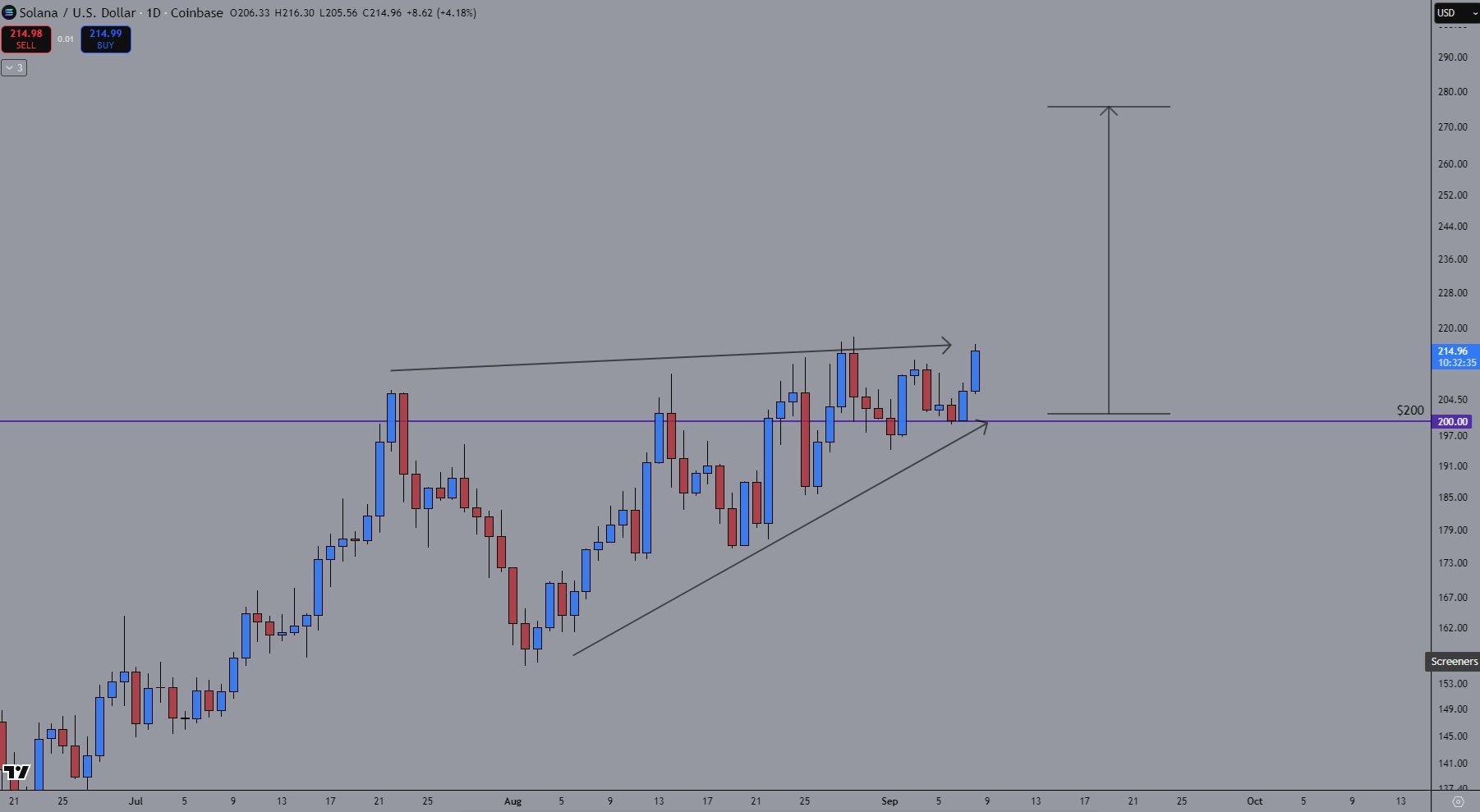
Carmelita
2025-09-08 23:12
💥 $SOL sort enfin de l’étau : cap sur plus haut ?
Penafian:Berisi konten pihak ketiga. Bukan nasihat keuangan.
Lihat Syarat dan Ketentuan.
What is Solana (SOL) Known For?
Introduction to Solana (SOL)
Solana (SOL) has rapidly gained recognition in the blockchain and cryptocurrency communities for its innovative approach to solving common issues faced by traditional blockchain platforms. Launched in March 2020, Solana is an open-source, decentralized platform designed to support high-performance decentralized applications (dApps). Its primary appeal lies in its ability to process transactions quickly and at a low cost, making it a preferred choice for developers and users involved in DeFi, NFTs, and gaming sectors.
Key Features of Solana
High Transaction Speed and Scalability
One of the most defining features of Solana is its exceptional transaction throughput. Unlike many other blockchains that struggle with scalability issues, Solana employs a unique consensus mechanism called "Proof of History" (PoH), combined with proof-of-stake (PoS). This hybrid approach allows the network to process thousands of transactions per second—significantly faster than Bitcoin or Ethereum. This high speed makes it suitable for applications requiring real-time data processing such as gaming platforms or financial trading systems.
Low Transaction Fees
Another critical aspect that sets Solana apart is its minimal transaction costs. The network's efficiency ensures that users can perform numerous transactions without incurring substantial fees. This affordability attracts both individual traders and large-scale projects looking to minimize operational costs while maintaining high performance standards.
Support for Decentralized Finance (DeFi)
Solana has become a hub for DeFi innovations due to its scalability capabilities. The platform hosts various lending protocols, stablecoins, yield farming projects, and decentralized exchanges. Its fast confirmation times enable seamless user experiences essential for DeFi activities like borrowing or liquidity provision without delays or excessive costs.
Growth in NFTs and Gaming Ecosystems
The rise of non-fungible tokens (NFTs) on Solana highlights its versatility beyond finance. Artists, creators, and game developers leverage the platform’s speed and low fees to mint digital assets efficiently—facilitating quick trades on NFT marketplaces or developing immersive blockchain-based games where real-time interactions are crucial.
Recent Developments Impacting SOL
In recent years, several notable events have shaped public perception around Solana’s ecosystem:
Meme Coin Controversy: In 2025, the launch of $TRUMP—a meme coin associated with former U.S. President Donald Trump—sparked controversy due to rapid price fluctuations shortly after launch. Blockchain analytics revealed significant wallet concentration among early holders which raised concerns about market manipulation.
Market Volatility: The price volatility surrounding SOL has been notable; however, market indicators like the VIX index showed decreased anxiety levels during certain periods such as May 2025 when global trade tensions eased temporarily.
These developments underscore both opportunities within the ecosystem as well as challenges related to regulatory scrutiny and market stability.
Regulatory Concerns & Market Sentiment
The launch of controversial tokens like $TRUMP on Solana has attracted attention from regulators worldwide who are increasingly scrutinizing crypto markets for potential manipulation practices or unregulated securities offerings. Such incidents influence investor confidence; consequently affecting SOL’s market value amid fears over possible restrictions or crackdowns on certain types of tokens issued on blockchain platforms like Solana.
Market sentiment remains sensitive; investors closely monitor news regarding regulatory actions alongside technological upgrades within the ecosystem that could enhance security measures against malicious activities or centralization risks posed by token concentration among few wallets.
Why Is Solana Considered a Leading Blockchain Platform?
Solano’s reputation stems from several core strengths:
- Its technical architecture enables unparalleled transaction speeds.
- Low fees make it accessible across different user segments.
- Growing adoption across DeFi projects enhances utility.
- Expanding NFT marketplace activity boosts cultural relevance.
Furthermore, ongoing development efforts aim at improving decentralization levels while maintaining performance benchmarks—an essential factor attracting institutional interest alongside individual developers seeking scalable solutions.
Key Facts About Solana
| Attribute | Details |
|---|---|
| Launch Date | March 2020 |
| Consensus Algorithm | Proof-of-Stake + Proof-of-History |
| Transaction Speed | Thousands per second |
| Native Token Symbol | SOL |
| Market Capitalization | Approximately $10 billion USD as of May 2025 |
These facts highlight how relatively recent but impactful this blockchain platform has become within the broader crypto landscape.
Future Outlook & Challenges Ahead
Looking forward, continued innovation will be vital for sustaining growth on solan networks amidst increasing competition from other scalable blockchains such as Avalanche or Polygon. Addressing concerns related to decentralization—particularly wallet concentration—and navigating evolving regulatory environments will also be crucial factors influencing long-term success.
While recent controversies have temporarily affected market sentiment around SOL tokens’ value stability—they also serve as lessons emphasizing transparency requirements necessary under evolving legal frameworks—the overall trajectory remains positive given ongoing technological advancements coupled with expanding use cases across industries.
Summary: What Makes Solano Stand Out?
In essence,
- It combines cutting-edge technology with practical usability,
- Supports diverse sectors including finance & entertainment,
- Offers fast transaction processing at minimal cost,
- Continues attracting new projects despite occasional setbacks caused by regulatory debates,
making it one of today’s most prominent names in blockchain innovation recognized globally not only for technical prowess but also strategic adaptability amidst dynamic markets.
Keywords: what is solona known for?, solona features?, solona ecosystem?, solona vs ethereum?, best uses case solona
Lo
2025-05-15 00:20
What is Solana (SOL) known for?
What is Solana (SOL) Known For?
Introduction to Solana (SOL)
Solana (SOL) has rapidly gained recognition in the blockchain and cryptocurrency communities for its innovative approach to solving common issues faced by traditional blockchain platforms. Launched in March 2020, Solana is an open-source, decentralized platform designed to support high-performance decentralized applications (dApps). Its primary appeal lies in its ability to process transactions quickly and at a low cost, making it a preferred choice for developers and users involved in DeFi, NFTs, and gaming sectors.
Key Features of Solana
High Transaction Speed and Scalability
One of the most defining features of Solana is its exceptional transaction throughput. Unlike many other blockchains that struggle with scalability issues, Solana employs a unique consensus mechanism called "Proof of History" (PoH), combined with proof-of-stake (PoS). This hybrid approach allows the network to process thousands of transactions per second—significantly faster than Bitcoin or Ethereum. This high speed makes it suitable for applications requiring real-time data processing such as gaming platforms or financial trading systems.
Low Transaction Fees
Another critical aspect that sets Solana apart is its minimal transaction costs. The network's efficiency ensures that users can perform numerous transactions without incurring substantial fees. This affordability attracts both individual traders and large-scale projects looking to minimize operational costs while maintaining high performance standards.
Support for Decentralized Finance (DeFi)
Solana has become a hub for DeFi innovations due to its scalability capabilities. The platform hosts various lending protocols, stablecoins, yield farming projects, and decentralized exchanges. Its fast confirmation times enable seamless user experiences essential for DeFi activities like borrowing or liquidity provision without delays or excessive costs.
Growth in NFTs and Gaming Ecosystems
The rise of non-fungible tokens (NFTs) on Solana highlights its versatility beyond finance. Artists, creators, and game developers leverage the platform’s speed and low fees to mint digital assets efficiently—facilitating quick trades on NFT marketplaces or developing immersive blockchain-based games where real-time interactions are crucial.
Recent Developments Impacting SOL
In recent years, several notable events have shaped public perception around Solana’s ecosystem:
Meme Coin Controversy: In 2025, the launch of $TRUMP—a meme coin associated with former U.S. President Donald Trump—sparked controversy due to rapid price fluctuations shortly after launch. Blockchain analytics revealed significant wallet concentration among early holders which raised concerns about market manipulation.
Market Volatility: The price volatility surrounding SOL has been notable; however, market indicators like the VIX index showed decreased anxiety levels during certain periods such as May 2025 when global trade tensions eased temporarily.
These developments underscore both opportunities within the ecosystem as well as challenges related to regulatory scrutiny and market stability.
Regulatory Concerns & Market Sentiment
The launch of controversial tokens like $TRUMP on Solana has attracted attention from regulators worldwide who are increasingly scrutinizing crypto markets for potential manipulation practices or unregulated securities offerings. Such incidents influence investor confidence; consequently affecting SOL’s market value amid fears over possible restrictions or crackdowns on certain types of tokens issued on blockchain platforms like Solana.
Market sentiment remains sensitive; investors closely monitor news regarding regulatory actions alongside technological upgrades within the ecosystem that could enhance security measures against malicious activities or centralization risks posed by token concentration among few wallets.
Why Is Solana Considered a Leading Blockchain Platform?
Solano’s reputation stems from several core strengths:
- Its technical architecture enables unparalleled transaction speeds.
- Low fees make it accessible across different user segments.
- Growing adoption across DeFi projects enhances utility.
- Expanding NFT marketplace activity boosts cultural relevance.
Furthermore, ongoing development efforts aim at improving decentralization levels while maintaining performance benchmarks—an essential factor attracting institutional interest alongside individual developers seeking scalable solutions.
Key Facts About Solana
| Attribute | Details |
|---|---|
| Launch Date | March 2020 |
| Consensus Algorithm | Proof-of-Stake + Proof-of-History |
| Transaction Speed | Thousands per second |
| Native Token Symbol | SOL |
| Market Capitalization | Approximately $10 billion USD as of May 2025 |
These facts highlight how relatively recent but impactful this blockchain platform has become within the broader crypto landscape.
Future Outlook & Challenges Ahead
Looking forward, continued innovation will be vital for sustaining growth on solan networks amidst increasing competition from other scalable blockchains such as Avalanche or Polygon. Addressing concerns related to decentralization—particularly wallet concentration—and navigating evolving regulatory environments will also be crucial factors influencing long-term success.
While recent controversies have temporarily affected market sentiment around SOL tokens’ value stability—they also serve as lessons emphasizing transparency requirements necessary under evolving legal frameworks—the overall trajectory remains positive given ongoing technological advancements coupled with expanding use cases across industries.
Summary: What Makes Solano Stand Out?
In essence,
- It combines cutting-edge technology with practical usability,
- Supports diverse sectors including finance & entertainment,
- Offers fast transaction processing at minimal cost,
- Continues attracting new projects despite occasional setbacks caused by regulatory debates,
making it one of today’s most prominent names in blockchain innovation recognized globally not only for technical prowess but also strategic adaptability amidst dynamic markets.
Keywords: what is solona known for?, solona features?, solona ecosystem?, solona vs ethereum?, best uses case solona
Penafian:Berisi konten pihak ketiga. Bukan nasihat keuangan.
Lihat Syarat dan Ketentuan.
Cross-Chain Bridges Connecting Solana, Ethereum, and Avalanche
Understanding Cross-Chain Bridges in Blockchain Ecosystems
Cross-chain bridges are essential tools that enable interoperability between different blockchain networks. They allow users to transfer digital assets such as tokens, NFTs, or data seamlessly across various platforms. This capability is vital for expanding the functionalities of decentralized finance (DeFi), gaming, and NFT marketplaces by breaking down the silos created by isolated blockchains.
In essence, cross-chain bridges act as connectors—similar to how physical bridges connect separate landmasses—facilitating secure and trustless asset transfers without relying on centralized exchanges. These protocols often employ complex cryptographic techniques and decentralized consensus mechanisms to ensure security and reliability.
Key Cross-Chain Bridges Connecting Solana with Ethereum and Avalanche
Several prominent bridge protocols facilitate interoperability among Solana (SOL), Ethereum (ETH), and Avalanche (AVAX). Each serves specific network pairs but collectively contribute to a more interconnected blockchain environment.
Major Bridge Protocols
Solana-Ethereum Bridge: Wormhole
The Wormhole bridge stands out as one of the most widely used solutions connecting Solana with Ethereum. It employs a decentralized architecture where trusted validators verify asset transfers across chains. Wormhole supports transferring various assets including tokens like USDC, wrapped SOL (wSOL), NFTs, and other data types[1].Solana-Avalanche Bridge: Celer Network's xRoute
Celer Network’s xRoute protocol enables cross-chain transactions between Solana and Avalanche efficiently. It leverages state-of-the-art routing algorithms to optimize transaction speed while maintaining security standards[2].Ethereum-Avalanche Bridge: Avalanche Bridge
Developed directly by the Avalanche team, this bridge allows seamless movement of assets such as ETH-based tokens into the Avalanche ecosystem. Its design emphasizes low latency transactions with high throughput capabilities[3].
Security Challenges in Cross-Chain Transfers
While these bridges unlock significant potential for DeFi growth, they also introduce notable security risks. The history of cross-chain protocols includes incidents where vulnerabilities were exploited—most notably in 2022 when Wormhole was hacked resulting in losses estimated at around $320 million worth of SOL tokens[4]. Such breaches underscore that despite technological advancements, securing cross-chain infrastructure remains challenging due to complexities like multi-party validation processes.
To address these concerns, developers are integrating advanced security features such as multi-signature wallets requiring multiple approvals before executing transfers or governance models that decentralize control over protocol upgrades.
Recent Developments Enhancing Interoperability
The blockchain community continues innovating rapidly to improve cross-chain connectivity:
Wormhole 2.0 Upgrade
In response to past vulnerabilities, Wormhole announced its upgrade plan called Wormhole 2.0 which introduces enhanced security measures including improved validator consensus mechanisms along with better governance structures[5]. This aims at restoring user confidence while expanding functionality.Expanding Ecosystem Integration by Avalanche
The Avalanche platform actively seeks partnerships beyond its native ecosystem by integrating additional layer-one blockchains through dedicated bridges or interoperability frameworks[6]. These efforts aim at creating a more unified multichain environment where assets can flow freely across diverse networks.
Impact on DeFi & NFT Markets
Interoperable bridges significantly influence DeFi applications by enabling liquidity pools spanning multiple chains; users can leverage assets from different ecosystems without cumbersome conversions or reliance on centralized exchanges. Similarly for NFTs—cross-chain compatibility allows artists and collectors greater flexibility in minting or trading digital collectibles across platforms like Solana’s high-throughput marketplaces or Ethereum’s extensive NFT ecosystem.
However, ongoing security concerns mean that users should exercise caution when transferring large sums via these protocols until further robustness is achieved through technological improvements.
By understanding how these key cross-chain bridges operate—and recognizing both their potential benefits and inherent risks—stakeholders can better navigate this evolving landscape toward safer interconnectivity solutions within blockchain technology.
References
- Wormhole Official Website
- Celer Network Official Website
- Avalanche Official Website
- Coindesk (2022). Wormhole Hackers Steal $320M in Solana Tokens. Retrieved from https://www.coindesk.com/markets/2022/02/03/wormhole-hackers-steal-320m-in-solana-tokens/
- Wormhole Blog
JCUSER-F1IIaxXA
2025-05-11 08:00
What cross-chain bridges connect Solana (SOL) with Ethereum (ETH) and Avalanche (AVAX)?
Cross-Chain Bridges Connecting Solana, Ethereum, and Avalanche
Understanding Cross-Chain Bridges in Blockchain Ecosystems
Cross-chain bridges are essential tools that enable interoperability between different blockchain networks. They allow users to transfer digital assets such as tokens, NFTs, or data seamlessly across various platforms. This capability is vital for expanding the functionalities of decentralized finance (DeFi), gaming, and NFT marketplaces by breaking down the silos created by isolated blockchains.
In essence, cross-chain bridges act as connectors—similar to how physical bridges connect separate landmasses—facilitating secure and trustless asset transfers without relying on centralized exchanges. These protocols often employ complex cryptographic techniques and decentralized consensus mechanisms to ensure security and reliability.
Key Cross-Chain Bridges Connecting Solana with Ethereum and Avalanche
Several prominent bridge protocols facilitate interoperability among Solana (SOL), Ethereum (ETH), and Avalanche (AVAX). Each serves specific network pairs but collectively contribute to a more interconnected blockchain environment.
Major Bridge Protocols
Solana-Ethereum Bridge: Wormhole
The Wormhole bridge stands out as one of the most widely used solutions connecting Solana with Ethereum. It employs a decentralized architecture where trusted validators verify asset transfers across chains. Wormhole supports transferring various assets including tokens like USDC, wrapped SOL (wSOL), NFTs, and other data types[1].Solana-Avalanche Bridge: Celer Network's xRoute
Celer Network’s xRoute protocol enables cross-chain transactions between Solana and Avalanche efficiently. It leverages state-of-the-art routing algorithms to optimize transaction speed while maintaining security standards[2].Ethereum-Avalanche Bridge: Avalanche Bridge
Developed directly by the Avalanche team, this bridge allows seamless movement of assets such as ETH-based tokens into the Avalanche ecosystem. Its design emphasizes low latency transactions with high throughput capabilities[3].
Security Challenges in Cross-Chain Transfers
While these bridges unlock significant potential for DeFi growth, they also introduce notable security risks. The history of cross-chain protocols includes incidents where vulnerabilities were exploited—most notably in 2022 when Wormhole was hacked resulting in losses estimated at around $320 million worth of SOL tokens[4]. Such breaches underscore that despite technological advancements, securing cross-chain infrastructure remains challenging due to complexities like multi-party validation processes.
To address these concerns, developers are integrating advanced security features such as multi-signature wallets requiring multiple approvals before executing transfers or governance models that decentralize control over protocol upgrades.
Recent Developments Enhancing Interoperability
The blockchain community continues innovating rapidly to improve cross-chain connectivity:
Wormhole 2.0 Upgrade
In response to past vulnerabilities, Wormhole announced its upgrade plan called Wormhole 2.0 which introduces enhanced security measures including improved validator consensus mechanisms along with better governance structures[5]. This aims at restoring user confidence while expanding functionality.Expanding Ecosystem Integration by Avalanche
The Avalanche platform actively seeks partnerships beyond its native ecosystem by integrating additional layer-one blockchains through dedicated bridges or interoperability frameworks[6]. These efforts aim at creating a more unified multichain environment where assets can flow freely across diverse networks.
Impact on DeFi & NFT Markets
Interoperable bridges significantly influence DeFi applications by enabling liquidity pools spanning multiple chains; users can leverage assets from different ecosystems without cumbersome conversions or reliance on centralized exchanges. Similarly for NFTs—cross-chain compatibility allows artists and collectors greater flexibility in minting or trading digital collectibles across platforms like Solana’s high-throughput marketplaces or Ethereum’s extensive NFT ecosystem.
However, ongoing security concerns mean that users should exercise caution when transferring large sums via these protocols until further robustness is achieved through technological improvements.
By understanding how these key cross-chain bridges operate—and recognizing both their potential benefits and inherent risks—stakeholders can better navigate this evolving landscape toward safer interconnectivity solutions within blockchain technology.
References
- Wormhole Official Website
- Celer Network Official Website
- Avalanche Official Website
- Coindesk (2022). Wormhole Hackers Steal $320M in Solana Tokens. Retrieved from https://www.coindesk.com/markets/2022/02/03/wormhole-hackers-steal-320m-in-solana-tokens/
- Wormhole Blog
Penafian:Berisi konten pihak ketiga. Bukan nasihat keuangan.
Lihat Syarat dan Ketentuan.
How Solana (SOL) Proof of History Mechanism Sequences Transactions for Block Production
Understanding the Role of Proof of History in Solana
Solana has emerged as one of the most innovative blockchain platforms, primarily due to its unique consensus mechanism called Proof of History (PoH). Unlike traditional blockchain protocols that rely on energy-intensive processes or staking, PoH introduces a novel way to order transactions efficiently. This mechanism is central to Solana’s high throughput and fast transaction speeds, making it suitable for decentralized applications (dApps), DeFi projects, and enterprise solutions.
At its core, PoH acts as a cryptographic clock that timestamps transactions and events within the network. It creates a verifiable sequence that all validators can agree upon without extensive communication overhead. This approach significantly reduces latency and increases scalability—key factors that have contributed to Solana's rapid growth in adoption.
How Does Proof of History Sequence Transactions?
The process by which Solana sequences transactions through PoH involves several interconnected steps rooted in advanced cryptography:
1. Verifiable Delay Function (VDF)
The foundation of PoH is a Verifiable Delay Function (VDF). A VDF is a mathematical function designed so that it takes a predetermined amount of time to compute but can be quickly verified once completed. In the context of Solana, this function generates unique hashes at each step, creating an ongoing cryptographic record.
This delay ensures that each timestamp produced by the VDF cannot be predicted or manipulated ahead of time. As such, it provides an ordered sequence where each event depends on the previous one—forming an immutable chain akin to a cryptographic heartbeat for the network.
2. Block Production via Validator Competition
Validators—special nodes responsible for confirming transactions—compete to produce new blocks based on solving this VDF puzzle. The first validator who completes solving the VDF gains permission to propose and broadcast the next block onto the network.
This process differs from proof-of-work systems like Bitcoin because it does not require intensive computational effort or energy consumption; instead, it relies on solving these cryptographic puzzles efficiently while maintaining security through verifiability.
3. Deterministic Transaction Ordering
Once a block is produced by a validator using PoH’s timestamping method, transactions within that block are ordered deterministically—a process known as "deterministic transaction ordering." This means every node in the network can independently verify both when each transaction occurred relative to others and their position within the block without ambiguity.
This deterministic sequencing ensures fairness among participants since no single validator can manipulate transaction orderings arbitrarily; instead, they follow an agreed-upon chronological sequence derived from PoH timestamps.
4. Broadcasting and Validation
After forming and sealing off with its timestamped data, validators broadcast their blocks across the network for validation by other nodes. These validators verify both:
- The correctness of PoH timestamps
- The validity of contained transactions according to protocol rules
If validated successfully—and if consensus criteria are met—the new block gets added permanently into Solana’s blockchain ledger before subsequent blocks are produced following similar procedures.
Why Is Transaction Sequencing Important?
Accurate transaction sequencing underpins many critical aspects:
- Order Integrity: Ensures transactions are processed exactly in their intended order.
- Conflict Resolution: Prevents double-spending or conflicting operations.
- Network Efficiency: Reduces communication overhead among validators since they do not need extensive messaging about timing.
- High Throughput: Facilitates processing thousands of transactions per second without sacrificing security or decentralization standards typical in traditional proof-based systems like Bitcoin or Ethereum pre-sharding solutions.
By leveraging these features through PoH's cryptographically secure timestamps, Solana achieves remarkable scalability while maintaining trustless operation—a key concern addressed by E-A-T principles: Expertise through technical innovation; Authority via robust security measures; Trust built into transparent verification processes.
Recent Developments Impacting Transaction Sequencing
Since its mainnet launch in March 2020, Solana has continued evolving with upgrades aimed at enhancing performance further while addressing emerging challenges such as security vulnerabilities highlighted during incidents like the Wormhole hack in August 2021—which resulted in approximately $190 million worth stolen funds but also prompted improvements across ecosystem security practices.
Additionally,
- Ongoing research aims at integrating more resilient consensus layers,
- Efforts focus on improving validator incentives,
- And community-driven initiatives seek broader adoption among developers seeking scalable solutions aligned with industry standards like interoperability protocols (e.g., Wormhole bridges).
These developments influence how effectively transaction sequencing remains reliable amid increasing demand and potential threats—a vital consideration for users relying on fast confirmation times combined with strong security guarantees offered by solanized architectures utilizing proof-of-history principles.
Implications for Users and Developers
For end-users engaging with applications built atop Solana’s infrastructure—or developers designing new dApps—the significance lies mainly in speed coupled with trustworthiness:
- Faster confirmation times mean smoother user experiences,
- Accurate ordering prevents disputes over transaction precedence,
- And energy efficiency aligns well with environmentally conscious development practices,
Understanding how PoH sequences transactions helps stakeholders appreciate why Solana outperforms many competitors regarding throughput capacity while maintaining decentralization integrity.
Challenges Facing Proof of History Implementation
Despite its advantages, implementing proof-of-history isn't without hurdles:
- Ensuring robustness against malicious actors attempting timestamp manipulation
- Maintaining synchronization accuracy across geographically dispersed nodes
- Scaling validation infrastructure alongside growing demand
Addressing these challenges requires continuous innovation—not only refining cryptographic techniques but also fostering community trust through transparency about system upgrades and incident responses.
By comprehensively understanding how Solana's Proof of History sequences transactions—from underlying cryptography to practical implications—you gain insight into why this technology represents one promising path forward for scalable blockchain networks aiming at mainstream adoption while upholding core principles like decentralization and security.
Keywords: Blockchain scalability | Proof Of History | Transaction ordering | Validator process | Cryptographic timestamping | Decentralized applications | High throughput blockchain
JCUSER-F1IIaxXA
2025-05-11 07:44
How does Solana (SOL) Proof of History mechanism sequence transactions for block production?
How Solana (SOL) Proof of History Mechanism Sequences Transactions for Block Production
Understanding the Role of Proof of History in Solana
Solana has emerged as one of the most innovative blockchain platforms, primarily due to its unique consensus mechanism called Proof of History (PoH). Unlike traditional blockchain protocols that rely on energy-intensive processes or staking, PoH introduces a novel way to order transactions efficiently. This mechanism is central to Solana’s high throughput and fast transaction speeds, making it suitable for decentralized applications (dApps), DeFi projects, and enterprise solutions.
At its core, PoH acts as a cryptographic clock that timestamps transactions and events within the network. It creates a verifiable sequence that all validators can agree upon without extensive communication overhead. This approach significantly reduces latency and increases scalability—key factors that have contributed to Solana's rapid growth in adoption.
How Does Proof of History Sequence Transactions?
The process by which Solana sequences transactions through PoH involves several interconnected steps rooted in advanced cryptography:
1. Verifiable Delay Function (VDF)
The foundation of PoH is a Verifiable Delay Function (VDF). A VDF is a mathematical function designed so that it takes a predetermined amount of time to compute but can be quickly verified once completed. In the context of Solana, this function generates unique hashes at each step, creating an ongoing cryptographic record.
This delay ensures that each timestamp produced by the VDF cannot be predicted or manipulated ahead of time. As such, it provides an ordered sequence where each event depends on the previous one—forming an immutable chain akin to a cryptographic heartbeat for the network.
2. Block Production via Validator Competition
Validators—special nodes responsible for confirming transactions—compete to produce new blocks based on solving this VDF puzzle. The first validator who completes solving the VDF gains permission to propose and broadcast the next block onto the network.
This process differs from proof-of-work systems like Bitcoin because it does not require intensive computational effort or energy consumption; instead, it relies on solving these cryptographic puzzles efficiently while maintaining security through verifiability.
3. Deterministic Transaction Ordering
Once a block is produced by a validator using PoH’s timestamping method, transactions within that block are ordered deterministically—a process known as "deterministic transaction ordering." This means every node in the network can independently verify both when each transaction occurred relative to others and their position within the block without ambiguity.
This deterministic sequencing ensures fairness among participants since no single validator can manipulate transaction orderings arbitrarily; instead, they follow an agreed-upon chronological sequence derived from PoH timestamps.
4. Broadcasting and Validation
After forming and sealing off with its timestamped data, validators broadcast their blocks across the network for validation by other nodes. These validators verify both:
- The correctness of PoH timestamps
- The validity of contained transactions according to protocol rules
If validated successfully—and if consensus criteria are met—the new block gets added permanently into Solana’s blockchain ledger before subsequent blocks are produced following similar procedures.
Why Is Transaction Sequencing Important?
Accurate transaction sequencing underpins many critical aspects:
- Order Integrity: Ensures transactions are processed exactly in their intended order.
- Conflict Resolution: Prevents double-spending or conflicting operations.
- Network Efficiency: Reduces communication overhead among validators since they do not need extensive messaging about timing.
- High Throughput: Facilitates processing thousands of transactions per second without sacrificing security or decentralization standards typical in traditional proof-based systems like Bitcoin or Ethereum pre-sharding solutions.
By leveraging these features through PoH's cryptographically secure timestamps, Solana achieves remarkable scalability while maintaining trustless operation—a key concern addressed by E-A-T principles: Expertise through technical innovation; Authority via robust security measures; Trust built into transparent verification processes.
Recent Developments Impacting Transaction Sequencing
Since its mainnet launch in March 2020, Solana has continued evolving with upgrades aimed at enhancing performance further while addressing emerging challenges such as security vulnerabilities highlighted during incidents like the Wormhole hack in August 2021—which resulted in approximately $190 million worth stolen funds but also prompted improvements across ecosystem security practices.
Additionally,
- Ongoing research aims at integrating more resilient consensus layers,
- Efforts focus on improving validator incentives,
- And community-driven initiatives seek broader adoption among developers seeking scalable solutions aligned with industry standards like interoperability protocols (e.g., Wormhole bridges).
These developments influence how effectively transaction sequencing remains reliable amid increasing demand and potential threats—a vital consideration for users relying on fast confirmation times combined with strong security guarantees offered by solanized architectures utilizing proof-of-history principles.
Implications for Users and Developers
For end-users engaging with applications built atop Solana’s infrastructure—or developers designing new dApps—the significance lies mainly in speed coupled with trustworthiness:
- Faster confirmation times mean smoother user experiences,
- Accurate ordering prevents disputes over transaction precedence,
- And energy efficiency aligns well with environmentally conscious development practices,
Understanding how PoH sequences transactions helps stakeholders appreciate why Solana outperforms many competitors regarding throughput capacity while maintaining decentralization integrity.
Challenges Facing Proof of History Implementation
Despite its advantages, implementing proof-of-history isn't without hurdles:
- Ensuring robustness against malicious actors attempting timestamp manipulation
- Maintaining synchronization accuracy across geographically dispersed nodes
- Scaling validation infrastructure alongside growing demand
Addressing these challenges requires continuous innovation—not only refining cryptographic techniques but also fostering community trust through transparency about system upgrades and incident responses.
By comprehensively understanding how Solana's Proof of History sequences transactions—from underlying cryptography to practical implications—you gain insight into why this technology represents one promising path forward for scalable blockchain networks aiming at mainstream adoption while upholding core principles like decentralization and security.
Keywords: Blockchain scalability | Proof Of History | Transaction ordering | Validator process | Cryptographic timestamping | Decentralized applications | High throughput blockchain
Penafian:Berisi konten pihak ketiga. Bukan nasihat keuangan.
Lihat Syarat dan Ketentuan.
How Past Network Outages Have Affected Developer Confidence in Solana (SOL)
Introduction: The Impact of Network Stability on Developer Trust
Solana has rapidly gained recognition as a high-performance blockchain platform, primarily due to its impressive transaction speeds and low fees. However, its journey has not been without hurdles. Notably, several network outages have raised questions about the platform’s reliability and long-term viability. For developers considering building on Solana or integrating it into their projects, understanding how these outages influence confidence is crucial. This article explores the history of Solana’s network disruptions, their effects on developer sentiment, and recent efforts to restore trust.
The Early Days of Solana and Initial Growth
Founded in 2017 by Anatoly Yakovenko and Greg Fitzgerald among others, Solana was designed to address scalability issues faced by earlier blockchains like Ethereum. Its innovative proof-of-history consensus mechanism promised faster transactions at lower costs, attracting a vibrant community of developers early on. By 2021, the platform had become one of the fastest-growing blockchain ecosystems with numerous projects launching on it.
This rapid adoption created high expectations for stability; however, early success was soon challenged by technical setbacks that tested developer confidence.
Major Outages in 2021: Disruptions That Shook Trust
First Major Outage (May 2021)
In May 2021, Solana experienced its first significant network outage lasting several hours. The cause was linked to a combination of factors including a denial-of-service (DoS) attack aimed at overwhelming the network with excessive transactions and a bug within the protocol itself. While some developers understood that such teething problems are common during early-stage growth phases—acknowledging that no system is perfect—they also expressed concern over potential vulnerabilities.
The outage temporarily halted transaction processing across the network but did not result in permanent damage to overall trust among most active developers.
Second Major Outage (September 2021)
A few months later—in September—another substantial outage occurred due to congestion caused by an influx of transactions from popular decentralized applications (dApps). This overload led to transaction delays and temporary halts in processing activities. Developers observed this incident as evidence that scalability remained an issue under heavy demand conditions.
While many acknowledged ongoing efforts from the Solana team to improve infrastructure stability—such as deploying new protocols—the recurring nature of outages prompted some skepticism regarding whether future growth could be sustained without further disruptions.
Centralization Concerns Amplify Developer Skepticism
Beyond technical failures, concerns about decentralization have also influenced developer perceptions negatively. Critics point out that reliance on a relatively small number of large validators raises questions about control over the network's governance structure—a key aspect for those committed to decentralization principles.
These centralization fears can diminish confidence among developers who prioritize open-source ethos or seek platforms with distributed authority models for security reasons.
Recent Efforts Toward Improving Network Reliability
Recognizing past shortcomings, the Solana development team has actively worked toward enhancing stability:
- Implementation of New Protocols: In 2022, they introduced "Max Gas," a protocol designed specifically for managing transaction fees more effectively during periods of congestion.
- Architectural Upgrades: Improvements aimed at making nodes more resilient against overloads have been prioritized.
- Monitoring & Community Feedback: Ongoing engagement with community members helps identify potential vulnerabilities before they escalate into outages.
These initiatives demonstrate proactive steps toward restoring developer confidence by addressing core issues contributing to previous failures.
Community Response & Developer Sentiment Today
Despite past setbacks, many within the developer community remain optimistic about Solana’s future prospects:
- A significant portion continues building innovative dApps leveraging its high throughput capabilities.
- Active forums show ongoing discussions around best practices for avoiding congestion-related issues.
- Some developers view recent upgrades as promising signs that stability is improving steadily over time.
However — while enthusiasm persists — cautious optimism prevails; trust rebuilds gradually through consistent performance improvements rather than promises alone.
Potential Impact Of Regulatory Developments On Confidence
The possibility of regulatory approval—specifically concerning exchange-traded funds (ETFs)—has added another layer influencing investor and developer sentiment:
- Approval from authorities like SEC could bolster institutional interest.
- Increased legitimacy might translate into greater project funding opportunities.
Conversely,
- Delays or rejections may dampen enthusiasm or reinforce doubts stemming from past instability episodes.
Key Dates Recap:
| Year | Event |
|---|---|
| 2017 | Platform launch |
| May 2021 | First major outage |
| September 2021 | Second major outage |
| 2022 | Introduction of Max Gas Protocol |
How Developer Confidence Continues To Evolve With Ongoing Improvements
While historical outages initially shook faith among some builders and investors alike—highlighting concerns around reliability—the narrative is shifting positively thanks to concerted efforts by team members behind Solana's development ecosystem. Continuous upgrades aimed at mitigating congestion risks alongside active community engagement foster renewed optimism among existing users while attracting new ones seeking fast yet reliable blockchain solutions.
Final Thoughts: Balancing Challenges With Progress in Building Trust
Past network outages undeniably impacted how many developers viewed Solana’s long-term potential; however—and importantly—the platform's proactive approach towards fixing vulnerabilities signals resilience rather than weakness alone. As infrastructure stabilizes further through technological advancements coupled with growing institutional interest via regulatory approvals like ETFs—the outlook remains cautiously optimistic for those committed both technically—and philosophically—to decentralized networks built upon transparency and robustness.
Keywords:
Solana outages impact
developer confidence in SOL
Solana network reliability
blockchain scalability challenges
Solana technical improvements
decentralization concerns solona
Semantic & LSI Keywords:
Blockchain stability issues
cryptocurrency development trends
network congestion solutions
DeFi project development solona
regulatory impact on crypto platforms
JCUSER-F1IIaxXA
2025-05-11 07:58
How did past network outages impact developer confidence in Solana (SOL)?
How Past Network Outages Have Affected Developer Confidence in Solana (SOL)
Introduction: The Impact of Network Stability on Developer Trust
Solana has rapidly gained recognition as a high-performance blockchain platform, primarily due to its impressive transaction speeds and low fees. However, its journey has not been without hurdles. Notably, several network outages have raised questions about the platform’s reliability and long-term viability. For developers considering building on Solana or integrating it into their projects, understanding how these outages influence confidence is crucial. This article explores the history of Solana’s network disruptions, their effects on developer sentiment, and recent efforts to restore trust.
The Early Days of Solana and Initial Growth
Founded in 2017 by Anatoly Yakovenko and Greg Fitzgerald among others, Solana was designed to address scalability issues faced by earlier blockchains like Ethereum. Its innovative proof-of-history consensus mechanism promised faster transactions at lower costs, attracting a vibrant community of developers early on. By 2021, the platform had become one of the fastest-growing blockchain ecosystems with numerous projects launching on it.
This rapid adoption created high expectations for stability; however, early success was soon challenged by technical setbacks that tested developer confidence.
Major Outages in 2021: Disruptions That Shook Trust
First Major Outage (May 2021)
In May 2021, Solana experienced its first significant network outage lasting several hours. The cause was linked to a combination of factors including a denial-of-service (DoS) attack aimed at overwhelming the network with excessive transactions and a bug within the protocol itself. While some developers understood that such teething problems are common during early-stage growth phases—acknowledging that no system is perfect—they also expressed concern over potential vulnerabilities.
The outage temporarily halted transaction processing across the network but did not result in permanent damage to overall trust among most active developers.
Second Major Outage (September 2021)
A few months later—in September—another substantial outage occurred due to congestion caused by an influx of transactions from popular decentralized applications (dApps). This overload led to transaction delays and temporary halts in processing activities. Developers observed this incident as evidence that scalability remained an issue under heavy demand conditions.
While many acknowledged ongoing efforts from the Solana team to improve infrastructure stability—such as deploying new protocols—the recurring nature of outages prompted some skepticism regarding whether future growth could be sustained without further disruptions.
Centralization Concerns Amplify Developer Skepticism
Beyond technical failures, concerns about decentralization have also influenced developer perceptions negatively. Critics point out that reliance on a relatively small number of large validators raises questions about control over the network's governance structure—a key aspect for those committed to decentralization principles.
These centralization fears can diminish confidence among developers who prioritize open-source ethos or seek platforms with distributed authority models for security reasons.
Recent Efforts Toward Improving Network Reliability
Recognizing past shortcomings, the Solana development team has actively worked toward enhancing stability:
- Implementation of New Protocols: In 2022, they introduced "Max Gas," a protocol designed specifically for managing transaction fees more effectively during periods of congestion.
- Architectural Upgrades: Improvements aimed at making nodes more resilient against overloads have been prioritized.
- Monitoring & Community Feedback: Ongoing engagement with community members helps identify potential vulnerabilities before they escalate into outages.
These initiatives demonstrate proactive steps toward restoring developer confidence by addressing core issues contributing to previous failures.
Community Response & Developer Sentiment Today
Despite past setbacks, many within the developer community remain optimistic about Solana’s future prospects:
- A significant portion continues building innovative dApps leveraging its high throughput capabilities.
- Active forums show ongoing discussions around best practices for avoiding congestion-related issues.
- Some developers view recent upgrades as promising signs that stability is improving steadily over time.
However — while enthusiasm persists — cautious optimism prevails; trust rebuilds gradually through consistent performance improvements rather than promises alone.
Potential Impact Of Regulatory Developments On Confidence
The possibility of regulatory approval—specifically concerning exchange-traded funds (ETFs)—has added another layer influencing investor and developer sentiment:
- Approval from authorities like SEC could bolster institutional interest.
- Increased legitimacy might translate into greater project funding opportunities.
Conversely,
- Delays or rejections may dampen enthusiasm or reinforce doubts stemming from past instability episodes.
Key Dates Recap:
| Year | Event |
|---|---|
| 2017 | Platform launch |
| May 2021 | First major outage |
| September 2021 | Second major outage |
| 2022 | Introduction of Max Gas Protocol |
How Developer Confidence Continues To Evolve With Ongoing Improvements
While historical outages initially shook faith among some builders and investors alike—highlighting concerns around reliability—the narrative is shifting positively thanks to concerted efforts by team members behind Solana's development ecosystem. Continuous upgrades aimed at mitigating congestion risks alongside active community engagement foster renewed optimism among existing users while attracting new ones seeking fast yet reliable blockchain solutions.
Final Thoughts: Balancing Challenges With Progress in Building Trust
Past network outages undeniably impacted how many developers viewed Solana’s long-term potential; however—and importantly—the platform's proactive approach towards fixing vulnerabilities signals resilience rather than weakness alone. As infrastructure stabilizes further through technological advancements coupled with growing institutional interest via regulatory approvals like ETFs—the outlook remains cautiously optimistic for those committed both technically—and philosophically—to decentralized networks built upon transparency and robustness.
Keywords:
Solana outages impact
developer confidence in SOL
Solana network reliability
blockchain scalability challenges
Solana technical improvements
decentralization concerns solona
Semantic & LSI Keywords:
Blockchain stability issues
cryptocurrency development trends
network congestion solutions
DeFi project development solona
regulatory impact on crypto platforms
Penafian:Berisi konten pihak ketiga. Bukan nasihat keuangan.
Lihat Syarat dan Ketentuan.
Three crypto industry titans Galaxy Digital, Multicoin Capital, and Jump Crypto are raising $1 billion to build the world's largest Solana treasury fund, potentially positioning SOL as the third major corporate treasury asset alongside Bitcoin and Ethereum!
💰 What's Breaking:
-
$1 billion fund would more than double existing SOL corporate reserves
Backed by Cantor Fitzgerald as lead banker
Official endorsement from Solana Foundation
Target closing: September 2025 via public company acquisition
🎯 Scale Comparison:
-
Current largest holder: Upexi with 2M+ SOL (~$400M)
Proposed fund: Could accumulate 5M+ SOL tokens
Market impact: Removing ~1% of total SOL supply from circulation
🏆 Strategic Powerhouse Behind the Fund:
-
Multicoin Capital: Early Solana investor, led $20M Series A in 2019
Galaxy Digital: Post-FTX invested $600M+ in SOL recovery play
Jump Crypto: Advanced trading infrastructure and ecosystem expertise
💡 Solana's Unique Treasury Advantages:
-
Staking rewards (unlike Bitcoin's store-of-value only)
DeFi ecosystem participation (48% of DEX retail trading volume)
Direct collaboration with Solana Foundation
High-performance blockchain infrastructure benefits
📊 Market Dynamics & Price Outlook:
-
Current price: ~$197 (hit $293.31 ATH in January 2025)
Expert predictions: $220-$1,000 range for 2025 (avg $425)
ETF probability: Bloomberg analysts see 95% approval chance by year-end
Technical support: $174-$190 consolidation zone
🔥 Game-Changing Impact:
-
Supply shock: 5M SOL tokens removed from active trading
Institutional confidence signal for alternative L1s
Potential catalyst for sustained price appreciation
New model beyond Bitcoin-only treasury strategies
⚠️ Key Risks to Monitor:
-
Crypto market volatility during execution phase
Evolving regulatory frameworks for digital asset treasuries
Technical challenges in large-scale staking operations
Single blockchain ecosystem concentration risk
🎯 Bottom Line: This initiative could fundamentally reshape institutional crypto adoption, moving from Bitcoin-only strategies to diversified digital asset treasury models. If successful, expect accelerated institutional FOMO and sustained buying pressure similar to MicroStrategy's Bitcoin playbook.
With SOL ETF approval likely and network fundamentals strong, this $1B commitment validates Solana's position as a serious institutional-grade blockchain asset.
Read the complete analysis with technical details and risk assessment: 👇 https://blog.jucoin.com/billion-dollar-solana-treasury-fund/?utm_source=blog
#Solana #SOL #GalaxyDigital #MulticoinCapital #JumpCrypto
JU Blog
2025-08-26 11:47
$1 Billion Solana Treasury Fund: Institutional Giants Signal Major Confidence in SOL
Penafian:Berisi konten pihak ketiga. Bukan nasihat keuangan.
Lihat Syarat dan Ketentuan.
How Past Network Outages Have Affected Developer Confidence in Solana (SOL)
Solana has rapidly gained recognition as a high-performance blockchain platform, primarily due to its impressive transaction speeds and low fees. However, its journey has been marred by several significant network outages that have raised concerns among developers and investors alike. Understanding how these outages have influenced developer confidence is crucial for assessing Solana’s future potential within the competitive blockchain ecosystem.
The History of Major Outages on Solana
Since its launch, Solana has experienced multiple network disruptions that have tested the resilience of the platform. These outages are not isolated incidents but part of a pattern that highlights underlying vulnerabilities.
2021 Outages:
The first major outage occurred in March 2021 when a bug within the protocol caused widespread transaction failures. This event resulted in tangible losses for users and cast doubt on the platform's stability. Later that year, in September 2021, another outage was triggered by an overload from high transaction volumes combined with a protocol bug, leading to network freezing and prolonged downtime. These incidents underscored scalability issues and questioned whether Solana could handle increased demand without compromising reliability.
2022 Security Breach:
In January 2022, a denial-of-service (DoS) attack exploited security flaws within Solana’s protocol, rendering the network unresponsive temporarily. This attack not only disrupted operations but also brought security concerns into focus—highlighting vulnerabilities that could be exploited maliciously rather than just through technical glitches or overloads.
Impact on Developer Confidence
Repeated outages significantly influence how developers perceive the reliability of any blockchain platform—including Solana. Developers seek platforms with consistent uptime because their applications depend heavily on uninterrupted service for user trust and operational efficiency.
Reliability Concerns:
Frequent disruptions create doubts about whether Solana can support mission-critical decentralized applications (dApps). For developers considering building on this platform, stability is non-negotiable; recurring failures diminish their confidence in long-term viability.
Security Skepticism:
Outages caused by bugs or attacks reveal potential security gaps—raising questions about whether proper safeguards are in place to protect user assets and data integrity. Developers tend to prefer platforms with proven security measures; ongoing vulnerabilities can lead them to explore alternatives perceived as more secure.
User Trust Erosion:
Developers often build applications intended for end-users who expect seamless experiences. When outages cause users to lose funds or face delays, it damages trust—not just between users and dApps but also between developers and the underlying infrastructure they rely upon. This erosion of trust discourages new development projects on affected platforms like Solana.
Community Perception & Market Sentiment:
The broader cryptocurrency community closely monitors such incidents since they influence market sentiment around SOL tokens and related projects. Negative perceptions stemming from these outages can slow adoption rates as both retail investors and institutional players become cautious about committing resources or integrating with unstable networks.
Efforts Toward Stability: Recent Developments
Recognizing these challenges, the team behind Solana has committed to improving system robustness through various initiatives:
- Protocol Updates & Bug Fixes: The development team regularly releases updates aimed at patching known bugs contributing to previous outages.
- Enhanced Monitoring & Security Measures: Implementing advanced monitoring tools helps detect anomalies early before they escalate into full-blown failures.
- Community Engagement & Transparency: Through bug bounty programs and open discussions about vulnerabilities, there is an increased emphasis on collaborative problem-solving involving community members—fostering greater transparency around ongoing improvements.
- Testing & Audits: Rigorous testing protocols are now prioritized before deploying major updates or new features—a move designed to prevent recurrence of past issues.
While these efforts demonstrate proactive steps toward restoring confidence—and indeed show promise—they take time to fully manifest into reliable performance levels appreciated by developers seeking dependable infrastructure for their projects.
Long-Term Risks if Challenges Persist
If unresolved issues continue affecting network stability or security remains compromised over time:
- Reduced Adoption Rates: Developers may migrate toward more stable blockchains like Ethereum or Polkadot if they perceive persistent risks associated with using Solana.
- Competitive Disadvantage: Other platforms might capitalize on perceived weaknesses by positioning themselves as more reliable options for decentralized application development.
- Regulatory Scrutiny & Investor Caution: Repeated failures could attract regulatory attention concerned with systemic risks within crypto ecosystems—potentially leading to stricter oversight impacting project growth prospects globally.
Building Trust Through Continuous Improvement
For long-term success amidst past setbacks, it’s essential that Solana maintains transparency regarding ongoing improvements while demonstrating tangible progress toward system stability — including regular audits from third-party experts—and actively engaging its developer community through open communication channels focused on addressing concerns promptly.
Developers’ confidence hinges not only on technical robustness but also on perceived commitment from project teams towards resolving core issues swiftly while maintaining transparent dialogue about challenges faced along the way.
Final Thoughts: Navigating Future Opportunities Amid Past Challenges
While past network outages have undeniably shaken developer confidence in Solana’s ecosystem initially rooted in optimism over speed advantages alone, recent efforts indicate a strategic shift towards prioritizing reliability and security enhancements. As blockchain technology matures across various platforms—including Ethereum's continued upgrades—the ability of networks like Solana to recover credibility will determine whether it remains competitive as an infrastructure choice for decentralized applications moving forward.
By understanding this history deeply rooted in technical hurdles yet driven by active improvement initiatives—and recognizing how critical trust is—the broader crypto community can better evaluate whether future developments will restore faith among developers eager for scalable yet secure solutions.
This comprehensive overview aims at providing clarity around how historical disruptions shape perceptions today while emphasizing ongoing efforts aimed at restoring confidence—a vital aspect influencing adoption trajectories across blockchain ecosystems worldwide.
JCUSER-F1IIaxXA
2025-05-14 21:28
How did past network outages impact developer confidence in Solana (SOL)?
How Past Network Outages Have Affected Developer Confidence in Solana (SOL)
Solana has rapidly gained recognition as a high-performance blockchain platform, primarily due to its impressive transaction speeds and low fees. However, its journey has been marred by several significant network outages that have raised concerns among developers and investors alike. Understanding how these outages have influenced developer confidence is crucial for assessing Solana’s future potential within the competitive blockchain ecosystem.
The History of Major Outages on Solana
Since its launch, Solana has experienced multiple network disruptions that have tested the resilience of the platform. These outages are not isolated incidents but part of a pattern that highlights underlying vulnerabilities.
2021 Outages:
The first major outage occurred in March 2021 when a bug within the protocol caused widespread transaction failures. This event resulted in tangible losses for users and cast doubt on the platform's stability. Later that year, in September 2021, another outage was triggered by an overload from high transaction volumes combined with a protocol bug, leading to network freezing and prolonged downtime. These incidents underscored scalability issues and questioned whether Solana could handle increased demand without compromising reliability.
2022 Security Breach:
In January 2022, a denial-of-service (DoS) attack exploited security flaws within Solana’s protocol, rendering the network unresponsive temporarily. This attack not only disrupted operations but also brought security concerns into focus—highlighting vulnerabilities that could be exploited maliciously rather than just through technical glitches or overloads.
Impact on Developer Confidence
Repeated outages significantly influence how developers perceive the reliability of any blockchain platform—including Solana. Developers seek platforms with consistent uptime because their applications depend heavily on uninterrupted service for user trust and operational efficiency.
Reliability Concerns:
Frequent disruptions create doubts about whether Solana can support mission-critical decentralized applications (dApps). For developers considering building on this platform, stability is non-negotiable; recurring failures diminish their confidence in long-term viability.
Security Skepticism:
Outages caused by bugs or attacks reveal potential security gaps—raising questions about whether proper safeguards are in place to protect user assets and data integrity. Developers tend to prefer platforms with proven security measures; ongoing vulnerabilities can lead them to explore alternatives perceived as more secure.
User Trust Erosion:
Developers often build applications intended for end-users who expect seamless experiences. When outages cause users to lose funds or face delays, it damages trust—not just between users and dApps but also between developers and the underlying infrastructure they rely upon. This erosion of trust discourages new development projects on affected platforms like Solana.
Community Perception & Market Sentiment:
The broader cryptocurrency community closely monitors such incidents since they influence market sentiment around SOL tokens and related projects. Negative perceptions stemming from these outages can slow adoption rates as both retail investors and institutional players become cautious about committing resources or integrating with unstable networks.
Efforts Toward Stability: Recent Developments
Recognizing these challenges, the team behind Solana has committed to improving system robustness through various initiatives:
- Protocol Updates & Bug Fixes: The development team regularly releases updates aimed at patching known bugs contributing to previous outages.
- Enhanced Monitoring & Security Measures: Implementing advanced monitoring tools helps detect anomalies early before they escalate into full-blown failures.
- Community Engagement & Transparency: Through bug bounty programs and open discussions about vulnerabilities, there is an increased emphasis on collaborative problem-solving involving community members—fostering greater transparency around ongoing improvements.
- Testing & Audits: Rigorous testing protocols are now prioritized before deploying major updates or new features—a move designed to prevent recurrence of past issues.
While these efforts demonstrate proactive steps toward restoring confidence—and indeed show promise—they take time to fully manifest into reliable performance levels appreciated by developers seeking dependable infrastructure for their projects.
Long-Term Risks if Challenges Persist
If unresolved issues continue affecting network stability or security remains compromised over time:
- Reduced Adoption Rates: Developers may migrate toward more stable blockchains like Ethereum or Polkadot if they perceive persistent risks associated with using Solana.
- Competitive Disadvantage: Other platforms might capitalize on perceived weaknesses by positioning themselves as more reliable options for decentralized application development.
- Regulatory Scrutiny & Investor Caution: Repeated failures could attract regulatory attention concerned with systemic risks within crypto ecosystems—potentially leading to stricter oversight impacting project growth prospects globally.
Building Trust Through Continuous Improvement
For long-term success amidst past setbacks, it’s essential that Solana maintains transparency regarding ongoing improvements while demonstrating tangible progress toward system stability — including regular audits from third-party experts—and actively engaging its developer community through open communication channels focused on addressing concerns promptly.
Developers’ confidence hinges not only on technical robustness but also on perceived commitment from project teams towards resolving core issues swiftly while maintaining transparent dialogue about challenges faced along the way.
Final Thoughts: Navigating Future Opportunities Amid Past Challenges
While past network outages have undeniably shaken developer confidence in Solana’s ecosystem initially rooted in optimism over speed advantages alone, recent efforts indicate a strategic shift towards prioritizing reliability and security enhancements. As blockchain technology matures across various platforms—including Ethereum's continued upgrades—the ability of networks like Solana to recover credibility will determine whether it remains competitive as an infrastructure choice for decentralized applications moving forward.
By understanding this history deeply rooted in technical hurdles yet driven by active improvement initiatives—and recognizing how critical trust is—the broader crypto community can better evaluate whether future developments will restore faith among developers eager for scalable yet secure solutions.
This comprehensive overview aims at providing clarity around how historical disruptions shape perceptions today while emphasizing ongoing efforts aimed at restoring confidence—a vital aspect influencing adoption trajectories across blockchain ecosystems worldwide.
Penafian:Berisi konten pihak ketiga. Bukan nasihat keuangan.
Lihat Syarat dan Ketentuan.
👀 Forward Industries (NASDAQ: FORD), soutenu par Galaxy Digital, Jump Crypto & Multicoin Capital, lance une
trésorerie massive sur Solana.
📊 Résultat immédiat : l’action FORD bondit de +128% en pré-market — preuve que $SOL entre clairement dans le viseur des institutionnels.
👉 La question : simple coup d’éclat… ou début d’un nouveau cycle institutionnel pour Solana ? 🔥
#Solana #SOL #cryptocurrency #blockchain
Carmelita
2025-09-08 22:40
🚀 BIG SOLANA MOVE : $1,65B levés pour un trésor dédié à $SOL !
Penafian:Berisi konten pihak ketiga. Bukan nasihat keuangan.
Lihat Syarat dan Ketentuan.